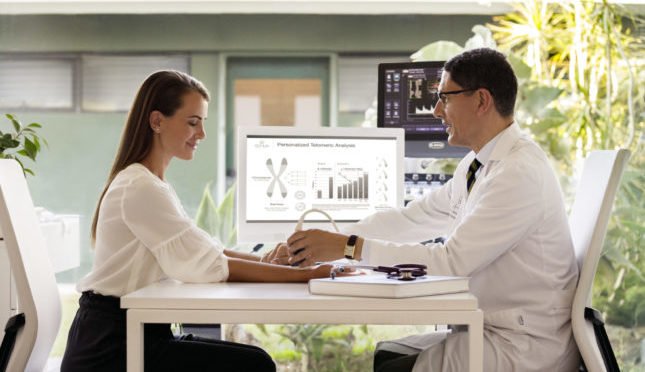
The Pioneering Testing That Will Change How We Think About Personal Health
At hospitals, wellness clinics and even at home, new technology makes it possible for people to harness the power of genetic testing to take control of their health. Here’s what you should know about the trend.
July 30, 2019
Lab100. Photo courtesy of Mount SinaiFrank LipmanLab 100. Photo courtesy of Mount SinaiLab 100. Photo courtesy of Mount SinaiA breathing exercise at REVĪVŌ. Photo courtesy of REVĪVŌREVIVO Bali. Photo courtesy of REVIVOCal-a-Vie at sunset. Photo courtesy of Cal-a-VieA clinic meeting at SHA Wellness Center. Photo courtesy of SHAYoga at Cal-a-Vie. Photo courtesy of Cal-a-VieYoga at Cal-a-Vie. Photo courtesy of Cal-a-Vie
Tucked away behind a library on the 11th floor of Manhattan’s Mount Sinai Hospital, the future of medicine is humming along at Lab100, a new high-tech, high-touch assemblage of machines that quickly and efficiently analyze everything from glucose levels (a precursor of diabetes) to grip strength (an indicator of morbidity). The glossy, 1,000-square-foot space includes virtual reality games that test cognition and a 3D body surface scan, all in the service of identifying potential health risks before they become actual problems.
“Most health systems aren’t incentivized for prevention,” says Joel Dudley, the director of Mount Sinai’s Institute for Next Generation Healthcare, which is pioneering the venture. “We spend about $1.4 trillion on pharmacological R&D and about $40 billion of NIH funding on people who are already sick. We spend about $4 per citizen, in the United States, on prevention. It’s crazy.”
At Mount Sinai, Dudley, who holds a PhD in biomedical informatics from Stanford, measures millions of data points. Using a combination of DNA, which shows genetic predispositions to certain diseases, and biomarkers in the blood, which reveal whether those genetic predispositions are expressed, Dudley and his team can address health concerns in real time.
“We have big gene sequencing studies, but the reason genetics really hasn’t had a big impact on medicine is because we don’t have the phenotypic information to layer on top of the genetic information,” he says. “Actually, we have a paucity of phenotypes compared to our ability to measure phenotypes. Lab100 was really built to fill in that phenotypic data gap.”
To fill that gap, the center supplements the DNA testing with analysis of balance, grip strength, and body composition. A visit to Lab100 costs $399 and is not covered by insurance, an industry lacking in what Dudley calls “market-based incentives for prevention.” Still, he and his colleagues predict that as the technology becomes more available, costs will drop and coverage will increase.
Prior to coming in, patients take extensive surveys about sleep, nutrition, mental health and physical activity. At Mount Sinai, they take a blood test and are scanned by a depth-sensing camera called Fit 3D, which provides images in what Lab100’s clinical director of operations Sarah Pesce admits, with a cringe, is “excruciating detail.” This is followed by the In-Body Machine, which measures the distribution of skeletal muscle, body fat and visceral fat. Patients are also tested on cognitive function using a timed test developed by NIH; on balance and on grip strength. After the tests are complete, patients have a lengthy consultation to review all of their results and receive recommendations for further action, as needed.
This kind of deep data, Dudley hopes, will address frustrating issues created by America’s system of siloed medicine, both for patients and for physicians.
“I’m obsessed with how we blur the lines between the traditional healthcare system and consumer health,” Dudley says. “You’re out doing a bunch of things that actually have the biggest influence on your health 364 days a year, but traditional health systems have no view into that part of your life and don’t equip you to make smarter decisions,” he says. “After you get chemotherapy, after we’ve hopefully cured your cancer, we’re like, ‘Come back and see us when the cancer comes back’ rather than using all the available data to rebuild your body, metabolism and gut microbiome.”
Using a broad spectrum of tests, Dudley and his colleagues say, will vastly improve patient outcomes, and they’re determined to make Lab100 widespread. Mount Sinai has signed an agreement with outside parties to commercialize the approach and is planning to roll out versions of Lab100 to additional clinical settings, workplaces and pharmacies.
There are now millions of people doing their own mini experiments on themselves and finding what works for them, which is exciting.
Indeed, rapidly evolving technology is removing most of these tests from the confines of doctor’s offices and hospitals. Increasingly, testing canbe easily performed at home, yielding insights about nutrition and exercise. The global genetic testing market is expected to surpass $22 billion by 2024, according to consulting firm Global Market Insights, and genetic genealogy tests more than doubled during 2017, exceeding 12 million, according to the MIT Technology Review.
“There are now millions of people doing their own mini experiments on themselves and finding what works for them, which is exciting,” says geneticist David Sinclair, codirector of the Paul F. Glenn Center for the Biology of Aging at Harvard Medical School, where his lab is working on restoring youthful function to aging human tissues, essentially reprograming them “to be young again.”
David Sinclair
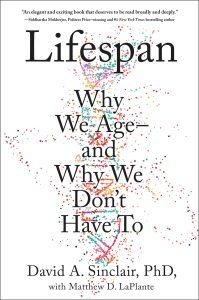
Sinclair, author of the forthcoming book Lifespan: Why We Age―and Why We Don’t Have To (Atria, September 2019), has access to incredibly sophisticated testing instruments, but like an estimated 56 million Americans, he’s embracing wearable tech to give him quick information about his daily health. He wears an OURA ring that analyzes his sleeping, an Apple watch to track his activity and, having become alarmed by his rising blood sugar levels, uses readings from both devices in his increasingly vigilant approach to diet and exercise.
An authority on genetics and aging, Sinclair is particularly excited about innovations in artificial intelligence. Private testing companies like InsideTracker, where Sinclair sits on the medical advisory board, “are getting large amounts of genetic and biochemical data from blood, telling individuals how to make decisions about lifestyle, including what to eat. There are now a few genes known to affect how people process food, and that can be tested.”
InsideTracker’s testing measures 43 blood biomarkers and 261 DNA variants and is currently used by tens of thousands of clients. In the works: integrating Fitbit data on resting heart rate and sleep duration. Prices range from $49 for a DIY kit that allows clients to upload existing blood test data and receive software guidance on exercise and nutrition, to $618 for what the company calls a “comprehensive snapshot of your health,” including DNA analysis. InsideTracker’s staff of nutritionists, data scientists and exercise physiologists analyze the results to make recommendations that help clients optimize body composition, overall health, strength and endurance and healthy aging.
That specificity is key, says Gil Blander, InsideTracker’s founder and chief scientific officer. “An average physician will look at a normal range of blood testing, which is calculated the same for male and female, and whether you’re active or not active. We develop an optimal zone based on age, ethnicity, gender. Then we can see whether you’re in or out of your optimal zone and give recommendations based on that,” explains Blander. “Blood is liquid gold that validates and calibrates everything else and gives you information you can act upon, including your nutrition, lifestyle, exercise and which supplements can optimize biomarkers.”
To test InsideTracker’s efficacy during development, Blander and his team evaluated 1,032 clients, all of whom had provided blood samples at least twice, comparing base line indicators of glucose, vitamin D and cholesterol over seven months. As a group, the clients engaged in 525 different “interventions” like adding high-intensity interval training, eating more fiber and drinking green tea and consuming more dairy products. When retested, individuals who were out-of-range at baseline showed significant improvements in biomarker levels. The experiment was published in the peer-reviewed journal Scientific Reports last October. The data, Blander says, “shows the precision nutrition approach is working.”
Beyond nutrition, InsideTracker measures for other signs of fitness with so-called “exercise markers” like iron levels, particularly in pre-menopausal women; testosterone; cortisol, which indicates stress levels and the level of creatine kinase present in muscle tissue (a high level may indicate muscle damage related to over-training). “Couch potato” clients, Blander says, often get results showing excessive amounts of glucose, cholesterol and triglycerides.
All of the information can be acted upon, Blander says, though metabolic markers like glucose take longer to improve than deficiencies in vitamin D and iron, which can usually be addressed quickly through supplementation. “Our customers can choose a goal: whether they want to sleep better, destress, improve athletic performance or lose fat. Based on the goal, we evaluate which biomarkers you can optimize,” he says.
Even as they embrace the use of precise medical markers, physicians stress the importance of taking the tests within the context of overall medical care, and not focusing exclusively on any onesingle number.
Frank Lipman
“The genetic testing is interesting because there are now SNPs [single nucleotide polymorphisms, the most common type of genetic variation among people] which can for many people help tell how well you’re breaking down certain neurotransmitters, how you’re breaking down toxins, how you process sugar,” says functional medicine practitioner Frank Lipman, founder of Eleven Eleven Wellness Center and chief medical officer of The WELL, a wellness club opening soon in Manhattan. “They can be helpful in guiding you nutritionally. Many of the modalities and things we recommend—sleep more, meditate, exercise—affect these markers, and now we can actually measure them and see how well you’re doing.”
At the moment, it’s like the wild west out there.
Still, Lipman notes testing “has to be done responsibly and with the right people, intelligently and carefully. At the moment, it’s like the wild west out there. Some of the measurements aren’t yet particularly accurate, like microbiome testing. You’ve got to take the whole context: how people are sleeping, are they exercising, are they dealing with stress, do they have a community. Taking a good history is probably more important than these markers.”
Wellness experts say some of the potential fear of opening a Pandora’s box is offset by how often dietary and lifestyle tweaks can create substantial health benefits.
“It can be disappointing if people find they have a genetic propensity to put on weight or have the Alzheimer’s gene. The good news is—and this is the future—you can change that. You can do a lot of preventative things to assure that those genes are not likely to be expressed,” says Susie Ellis, chairman and CEO of the Global Wellness Institute, which hosts an annual summit of 600 wellness executives.
Yoga at Cal-a-Vie. Photo courtesy of Cal-a-Vie
At Cal-a-Vie Health Spa, in Vista, Calif., registered dietician May Tom has been assessing her clients’ metabolic health using a company called Wellness FX, doing “a really deep dive” into blood sugar levels, hormonal imbalances, inflammation markers and cholesterol levels. Many of her clients use the testing information for weight management.
A breathing exercise at REVĪVŌ. Photo courtesy of REVĪVŌ
Across the world, Bali’s REVĪVŌ Wellness Resort started offering DNA testing when it opened last spring, requesting guests take the test a minimum of 40 days prior to arrival. Using the results, the spa designs a specific nutrition plan for each guest, as well as activities to help with metabolic reactions and overall fitness goals.
Clinical analysis at SHA Wellness Center. Photo courtesy of SHA
In Alicante, Spain, the SHA Wellness Clinic has run its own in-house genetic and genomic studies lab since 2008. “The main objective is to find connections between genetic alterations that increase the risk and/or the likelihood of the patient suffering from diseases that could be prevented, or improve their state of health by making changes to their lifestyle,” says Vicente Mera, SHA’s head of preventative and genetic medicine. “For example, what type of food is beneficial, what drugs might be harmful, what is the most suitable type of physical activity. In short: what to do to effectively protect yourself from environmental factors that could induce health problems.”
Among SHA’s most frequently requested tests: hepatic desintoxication, which analyzes the liver’s detoxification capacity, and analyses of skin aging and mental, cardiovascular and bone health.
“The future is towards improvement: more information, more speed and with more practical applications, especially in the areas of oncology, metabolism, neurodegenerative and cardiovascular diseases,” Mera says.
Harvard’s Sinclair agrees, saying the combination of genetic and biomarker technology is at “the tip of the iceberg.”
“Huge advances are coming. We’re developing technologies to swab a wound, and 24 hours later a doctor will be able to say what’s causing the infection and presumably how to treat it,” says Sinclair. “It will eventually make the idea of using petri dishes to identify infectious agents look as primitive as using leeches.”
Teaching your children how to set up a spending plan rather than giving them an allowance is a very effective way to prepare them for financial fitness in the years to come.





 An authority on genetics and aging, Sinclair is particularly excited about innovations in artificial intelligence. Private testing companies like