

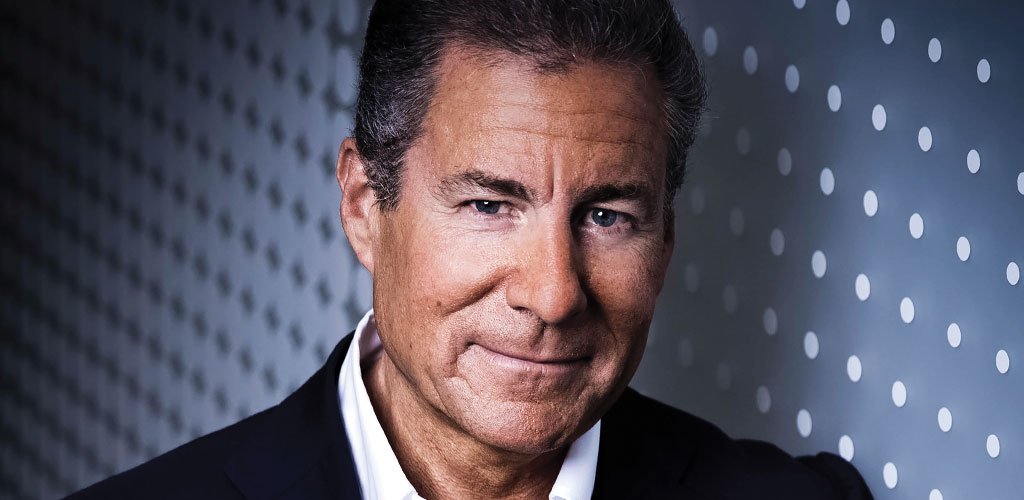
HBO CEO Richard Plepler has been with the company since the days when “Home Box Office” just meant a place to watch movies. The Connecticut native joined the premium channel in 1992 as an executive vice president, then advanced to copresident in 2007, right as the company’s smash The Sopranos was ending. Plepler met that challenge by green-lighting shows such as True Blood, Boardwalk Empire, Game of Thrones, Girls and Veep. Thanks to his success, in 2013, he took over the top job when former CEO Bill Nelson retired.
Plepler, who lives on New York’s Upper East Side with his wife, Lisa, and teenage daughter, has been critical to turning HBO into one of the world’s most valuable producers and distributors of original content. The company, which generated nearly $1.5 billion in revenue in the second quarter of 2016 alone, won its first Emmy in 1988 for Jackie Mason on Broadway. In recent years it has dominated the awards, winning 546 of them overall. He also has helped HBO become a serious competitor in streaming entertainment with HBO Now, which allows users to view content without a cable subscription.

Plepler sat down with Worth in his eighth-floor office on New York’s Sixth Avenue, overlooking Bryant Park, in late October. Looking tanned and relaxed, a congenial Plepler talked about how he came to be one of entertainment’s leading executives, and HBO’s current challenges. The company is at an inflection point: Money machine Game of Thrones is winding down in two seasons, and it’s still unclear if Westworld can fill the gap. Growth in demand from other countries, especially China, is creating new competitive pressures. And it remains uncertain what AT&T’s $85.4 billion deal to buy HBO parent Time Warner will mean for the premium channel.
Plepler is a news junkie—CNN is always on in his office—and HBO is creeping into territory more often associated with traditional cable channels with the addition of a daily news program from Vice and commentary offerings from John Oliver and Jon Stewart. Programming from HBO reaches around 131 million subscribers in over 60 countries. But with Netflix and Amazon spending big on original programming, Plepler will need to be creative in the coming years to maintain HBO’s position. “It’s a huge responsibility,” says Plepler. “One I take very seriously.”
Q: GAME OF THRONES IS ENDING IN TWO SEASONS. WHAT’S THE CONTINUITY PLAN?
A: We’re always refreshing, and we’re always iterating. Back in summer of 2007, the big conversation was, of course, The Sopranos is gone. “What’s next? What’s next?” I remember people saying, “Aren’t you unsettled by the fact that you’re assuming this position, copresident in charge of creative brief, when The Sopranos is going off the air?” I said, “This is about bringing the best talent, the best writers, the best producers, the best directors, the best actors, into the house to paint on our canvas.”
OK. BUT IN TERMS OF A POST-GAME OF THRONES WORLD…
We have this embarrassment of riches, which is that so many extraordinary artists want to hang their work in our gallery. We’re always nurturing the next great voices. Now you see Westworld and Divorce and Insecure with Issa Rae—truly an original voice—John Oliver getting the full embrace that he deserves, winning the Emmy this year and breaking the 22-year streak of Comedy Central. The range of talent coming into the house for the next pilot season, where we’re going to be shooting three or four new pilots, we’re very excited about that.
HOW DO YOU CONTINUE TO GUARANTEE THIS “EMBARRASSMENT OF RICHES”?
People have come to understand that being inside HBO, you are taken care of as talent. You are nurtured and embraced. A great producer said to me recently, “Having a show on HBO is like having a sneaker at Nike.” I thought that put it pretty well.
SO HBO’S ADVANTAGE IS THAT IT’S THE FIRST PORT OF CALL FOR THE BEST TALENT?
I think that gets socialized over and over again in the creative world. Talent talks to talent. Directors talk to directors. Producers talk to producers. Actors talk to actors. They say, “I had a great experience here.” The HBO experience is a special one, a unique one, and we think it’s very much part of our DNA.
AND HOW DO YOU SELL THAT TO CONSUMERS?
While you may not love this show, we’re betting you’re going to love that show or this show. We’re selling a brand, not CPMs [cost per impressions], which means that our definition of success is quality and differentiation across a lot of different categories.
WOULD THAT DEFINITION CHANGE IF THE MERGER WITH AT&T GOES THROUGH?
I honestly don’t think so. [AT&T CEO] Randall [Stephenson] was gracious enough to come in and spend some time with me. The message he delivered—and I believe him sincerely—is, “We bought Time Warner because of the jewels inside of it, HBO being one of those, and the last thing we have any intention of doing is messing around with something that is such an extraordinary part of the culture.” What they want to do is help us grow it.
HBO just did a deal this summer with AT&T that is a microcosm in many ways because it talks about HBO being distributed across all of their platforms. The AT&T merger will only turbocharge that.
CHINA IS ALWAYS A HUGE QUESTION FOR MEDIA THESE DAYS—HOW ARE YOU FARING THERE? AND GLOBALLY IN GENERAL?
We have a partnership with Tencent in China—they license our programming—that is very exciting. In addition to our networks business, our licensing business and our “Home of HBO” business—where we lend the name along with the programming, like “Sky Italia, Home of HBO”—we now have an over-the-top capacity [standalone streaming service HBO Now], which is moving ahead in Mexico and Colombia and Argentina. In Spain we’ll be making HBO available OTT later this year.
What we want to do internationally is create many different ways for people to see our product, monetize it and win profits. If a licensing deal makes more sense for us in a particular country, like Canada, we’re going to do a licensing deal. In the Nordics we’ve grown exponentially as an OTT business over the last two years. Because we own our content, we have the capacity to monetize it all over the world, and that means we’re going to reinvest back into the brand.
YOU ALREADY HAVE SPANISH-LANGUAGE PROGRAMMING SUCH AS DIOS, INC. CAN WE EXPECT PROGRAMMING IN MANDARIN?
Yes, potentially. We’re very clear that indigenously produced shows—whether it’s in Asia, where we’re doing more, Eastern Europe, where we’re doing more, Latin America, where we’re doing more—always outperform even the best shows that are created in the United States. We’ve doubled the amount of production internationally.
HBO HAS ESTABLISHED A REPUTATION FOR AMBITIOUS DOCUMENTARIES LIKE ALEX GIBNEY’S GOING CLEAR, WHICH TOOK ON NOTORIOUSLY LITIGIOUS SCIENTOLOGY. WHY MAKE A POINT OF SUCH CONTROVERSIAL CONTENT?
Our brand has always been credited with a kind of boldness and fearlessness from the very early days where we did uncut, uncensored comedy of Richard Pryor and Chris Rock. We should be bold. There’s no advertising. We’re an invited guest into people’s home. That makes it different.
“We trust artists. We knew we were going to do something special.”
YOU ALWAYS KNOW THAT PEOPLE WANT YOU THERE.
If they don’t want that kind of boldness, they don’t need to subscribe. We always are responsible when we deal with historical issues, and we bring in people from all sides. For example, when we did a movie like Recount [the 2008 look at the 2000 Bush-Gore Florida recount], I went to James Baker [George W. Bush’s key campaign strategist]. I showed him the script. We went to the principals for Al Gore. We showed them the script. We always say to them, “Look, you don’t have veto power, but if we don’t have something right, we want to know about it.”
In the case of Scientology, I had read Lawrence Wright’s book Going Clear: Scientology, Hollywood, and the Prison of Belief. We thought maybe there was a movie in it. [Producer and director] Alex Gibney very shrewdly saw that it was probably a better documentary. We brought in Larry, who is one of the people I most admire in journalism. He said yes right away. We, again, trust artists. We knew we were going to do something special.
YOU’VE DONE A LOT OF MOVIES AT HBO ABOUT POLITICS—GAME CHANGE, RECOUNT, TOO BIG TO FAIL, ALL THE WAY. IS THERE A HILLARY AND DONALD MOVIE IN THE WORKS?
Who knows? If you’re privileged to be in my chair, you never want to impose your particular taste writ large. That’s a very, very dangerous thing to do. I’m 57 years old; I live in a particular part of the country. You want to have an expansive team of many different sensibilities and instincts and points of view, many demographics, thinking with you. I’m very much a believer in a process of collective wisdom, which in many instances could be an oxymoron, but in our case I think it’s always been the Holy Grail. It’s also true “to govern is to choose.” Ultimately, if something goes wrong, it’s my responsibility. You want to choose carefully. The real question is always: Is it a compelling story? “Tell me a story of deep delight,” as Robert Penn Warren wrote. It’s always the essence. Tell me a story.
LET’S TALK ABOUT YOUR STORY. YOU GREW UP IN MANCHESTER, CONN., NEAR HARTFORD. WHAT WAS YOUR CHILDHOOD LIKE?
My dad, Sanford, who passed away three years ago, was a small-town trial lawyer. He was…I call him the Jewish Atticus Finch. He was a guy of enormous erudition and integrity and decency. He believed that you had a responsibility to be an informed citizen, which I think speaks to my passion to over-read and over-marinate in journalism. I take at least two to two-and-a-half hours a day reading about the world, and it’s part of my very essence. When I was a young kid, we’d sit at the table and my dad would say, “Did you read James Reston today? Did you read Russell Baker today? Did you read William Safire?”
My dad instilled in my brother and me, do the right thing, family first and be a good citizen. My father wasn’t didactic in that way, but that’s how he lived, so we watched that and we inherited that. He was very, very involved in the civil rights movement and the anti-war movement. He was a delegate for Eugene McCarthy at the 1968 Democratic Convention. And he loved McCarthy. He loved this bold, insurgent candidate.
I remember deciding I didn’t want to go to law school. I said, “I want to go to Washington, and I want to work for [Connecticut] Senator [Christopher] Dodd.” That was a nontraditional choice for a kid like me who was expected to be a lawyer. My dad said, “Look, if that’s what you want to do, you should go do it.”
DID YOU ASPIRE TO A CAREER IN POLITICS?
What does a 21-year-old know? I loved politics. Here was a young United States senator from my state who had just been elected. I loved him, and I learned an enormous amount from him in those four years just by watching him. We’re dear friends to this day.
I think that I had an instinct that you could probably do really interesting things with the issues and the subject matter that would echo through television. When I was fortunate enough to come here in the early ’90s, HBO wasn’t the HBO it is today. There were some specials, but there was very little original programming. I owe Michael Fuchs, who was the CEO at the time, a debt of enormous gratitude because he saw something in me and said, “I think this will be a good place for you to be able to improvise and invent the things that you care about.”
BUT YOU DIDN’T GO STRAIGHT TO HBO WHEN YOU CAME TO NEW YORK.
I worked for a famous political media consultant named John Scanlon, who was a wonderful, wonderful man. In a little alcove of my office I keep a tribute from the Century Association that was written about him when he passed away. I keep it there because John showed me so much of the magic of New York, introduced me to so many people and was so encouraging of me as a young guy, 24 years old, making my way here.
I set up my own little enterprise, called RLP International, and did some public affairs stuff. Then I made a documentary on the Middle East, the conflict between the Israelis and the Palestinians, that aired on public television in 1990. It was called The Search for Solid Ground: The Intifada Through Israeli Eyes. It’s sadly quite timely. I made that, and Michael Fuchs was very impressed that I had the ingenuity to produce it and write it and get it done. He said to me, “You won’t be satisfied within the confines of your own little enterprise. You should really come over to this interesting place.”
I was fortunate enough to be able to improvise successfully. E.B. White has a wonderful line about New York: “No one should come to New York to live unless he is willing to be lucky.” I think that’s right. You must be lucky, and you must be prepared. You need to be lucky that your skills, whatever skills you may have, are aligned with the place you end up. I wouldn’t be very good at Intel, working on computers and computer chips. There’s a wonderful poem by Seamus Heaney [“The Cure at Troy”] that ends, “It was a fortunate wind that blew me here.” That’s how I feel about HBO.
SO EVEN AS A YOUNG MAN YOU WANTED TO HAVE A VOICE.
I wouldn’t be so presumptuous as to say that I thought I was going to have a voice. I wanted to be engaged with issues. I wanted to be engaged with telling stories. I had no idea that I would be fortunate enough to evolve to the place that I have. But I did know that, as a lover of journalism, as a lover of books, as a lover of this medium of storytelling through television and through movies, I wanted to be around these things.
THERE HAVE BEEN NUMEROUS STORIES ABOUT YOUR DINNER PARTIES, WHICH DRAW A WIDE RANGE OF POLITICAL AND CREATIVE PEOPLE. YOU’RE KNOWN FOR BEING A SOCIAL CONNECTOR. IS THAT SOMETHING YOU’VE CULTIVATED?
I’ve never, ever tried to cultivate it. I’m a very, very curious guy. I love people who know more than I do. I’m very passionate about the world, and that passion has introduced me to a wide range of people who are breathtaking in their fields. I’ve had the joy over the years of many of them becoming friends.
I’m a huge fan of the artist George Condo—my wife and I have a couple of his paintings—and he was at our house for dinner the other night. I just kind of sat on his lap, if you will, throughout dinner, talking to him about his work and his history. I went last week and spoke with the State Department through my friend Rick Stengel, who is under secretary of state for public diplomacy and public affairs, and had lunch after with deputy secretaries and Secretary Kerry’s chief of staff. It was just catnip for me to be able to sit with people who are the principal architects of what’s going on.
WHO HAS REALLY CHANGED HOW YOU THINK ABOUT THE WORLD?
In the last line of my eulogy to my father I said, “Your example was your great gift to me.” He had no jealousy. He believed you lived for your passions, not for other people’s. You did what was right for you, and you did it the best you could.
“I feel like HBO is my family too. It’s a little bit corny. But we rely on each other.”
AND YOUR IMMEDIATE FAMILY?
I have a fantastic wife and daughter—they’re the anchor of my life. I got married a little late. I was 42. I knew exactly who I was, and I married a spectacular person. As the Talmud says, shalom bayit, “home and peace.” I have that, thankfully and blessedly. I feel like HBO is my family too. It’s a little bit corny. But we rely on each other.
HOW DO YOU CREATE THAT KIND OF CULTURE?
There are two truths to a culture. There’s the putative truth, which is what people say they are. Everybody says, “Oh, yes, we’re transparent. We’re a team, and we’re a family.” Then there’s the emotional truth, which is, OK, what do people really feel? What do they say when they go home? I like to think that our putative truth and our emotional truth are as aligned as a company’s can be. I spend 20 percent of my time, every day, trying to say “thank you,” because “thank you” is deserved.