
I first visited Playa del Carmen almost 20 years ago, and if I couldn’t quite see its future, I certainly embraced its present. The beachfront town in Mexico’s state of Quintana Roo, about 45 minutes south of Cancun, felt like a largely undiscovered outpost of the sophisticated Mediterranean. The beaches were pristine, the water stunning, crystal-clear shades of aquamarine that extended for hundreds of yards from the shoreline. The city’s main thoroughfare, Quinta Avenida (Fifth Avenue) was a great place to eat, shop and people-watch. With no cars allowed, Quinta Avenida teemed with visitors from all over the world, ambling the street in various stages of undress, relaxation and intoxication at any hour, except, perhaps, the early morning. Visitors who wanted to venture out of Playa could take daytrips to the ruins at Tulum about an hour south, or snorkel in a nearby cenote, or hop the ferry to Cozumel island for a day of scuba diving. Sophisticated, worldly and cool, Playa was a sleeper destination—if only for a little while longer.
I’ve visited pretty much every year since then, usually on longer trips to Cozumel, where I dive. In some ways, Playa del Carmen is much the same as it was. The vibe is still laid back, young people still love to party on the beach, Quinta Avenida still offers some of the best people-watching on the planet. But a recent visit to Playa’s Mahekal Beach Resort made me wonder—and worry—about Playa’s next 20 years.

Mahekal occupies prime real estate. It’s on Calle 38, which is on the northern end of Fifth Avenue, an area that has become considerably more developed over the past couple of decades. The growth is a mixed bag. There’s a multi-story shopping mall on the street now, which seems out of place, and a seriously large Thompson Hotel—“sun-splashed luxury in the heart of Riviera Maya,” according to its website—that seem like a better fit for Cancun. Still, Quinta Avenida hasn’t lost its charm, which is a testament to how extremely charming it once was.
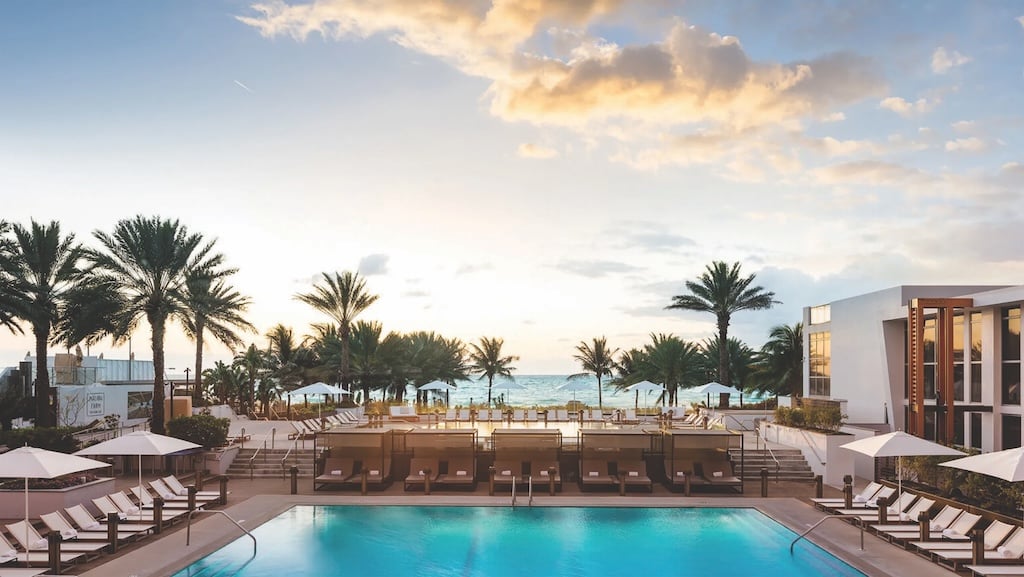
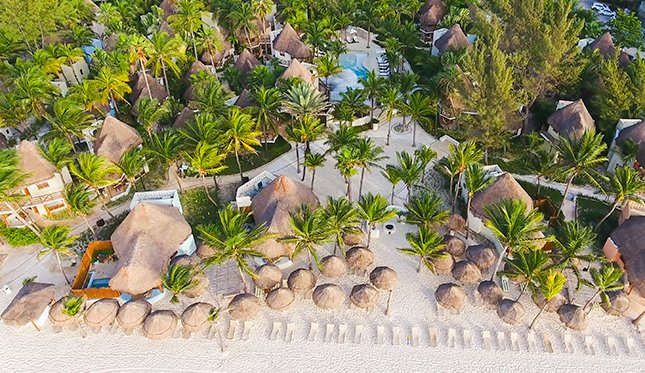
About three blocks east of Quinta Avenida—which is to say, beachfront—Mahekal consists of two rectangular plots of land throughout which are woven snaking paths, palm trees and single- and multi-room cabanas. The two sections are divided by Calle 38, so you have to walk across the street to get from one to the other. In addition to the cabanas, the hotel’s main section contains the lobby, two restaurants, two pools, a gift shop, a spa, a “sports bar”—none of whose patrons, rather endearingly, seemed to give a whit about sports—and an open cabana where guests can try their hand at pottery. There’s also a small garden where people get married, and it looked like a lovely spot to start a life together. Country music star Jason Aldean and former American Idol contestant Brittany Kerr were married at Mahekal in 2015. You can see their wedding pics on usweekly.com.
Mahekal’s other section, across the street, is called Aventura. It contains a restaurant, a pool and more rooms. Press materials say that Aventura is “separated from the rest of the resort by just a few steps,” making it available for “exclusive buyouts…providing a resort-within-a-resort concept.” This sounds excellent in theory.
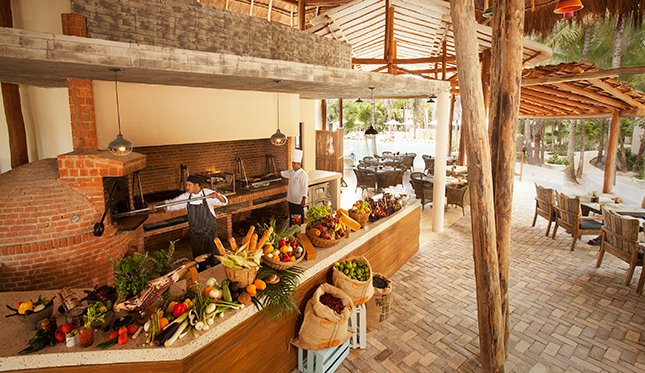
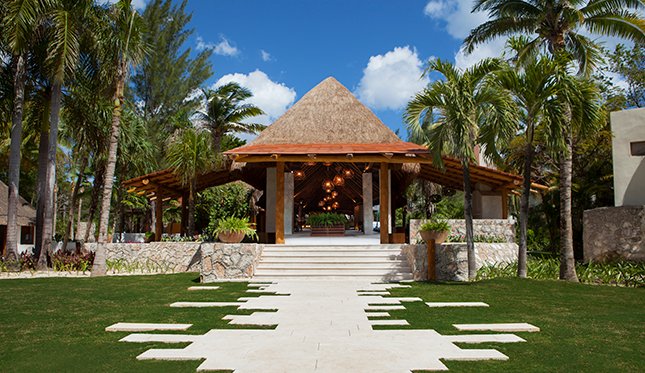
The resort contains three restaurants, all of which are good, and one of which, Fuego, is worth eating at even if you’re not staying at Mahekal. Fuego is an open-air pavilion facing the water, a gorgeous spot for dinner in particular; during my two dinners there, the quiet and the beauty of the evening, with the lights of Cozumel across the water, seemed to facilitate long, relaxed conversations—I saw multiple tables of diners lingering over their meals for hours. Restaurants in this part of Mexico that serve other than Mexican food usually aren’t very good, but Fuego is terrific. Over the course of two dinners, I had an excellent pizza with prosciutto and a flavorful, well-cooked steak. A friend who joined me had a surprisingly ambitious New Zealand rack of lamb, and we washed it all down with hearty reds from Mexico’s Casa Madero winery. The mutual favorite: the 2014 Syrah, which compared favorably to excellent, and more expensive, Syrahs from northern California.
Alas, I did have to return to my room after dinner. The hotel had me across the street in Aventura, and unfortunately the energy of Mahekal changes instantly once one makes that crossing. By “changes,” I mean that it plunges, as you sense that you’ve departed the chic, fun part of the hotel for the odds-and-ends table at a wedding. I recognize that this is a subjective reaction and some people might prefer a more remote vibe, but Mahekal’s center of gravity does feel like it’s across the street.
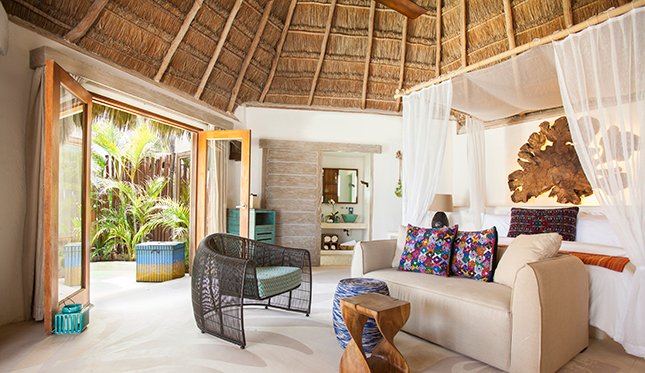
My room was the last on the property; the view from its otherwise pleasant balcony was dominated by a wall that separated the hotel from a raucous beach club next door. (Think loud Mexican pop music. Then think it frequently.) It was actually quite a nice room—big, clean, sunny, with two comfortable king size beds. But it looked out on a wall. If you go to Mahekal—and I would, again—stay on the main property. Unless you’re feeling anti-social, or you really like Mexican pop music.
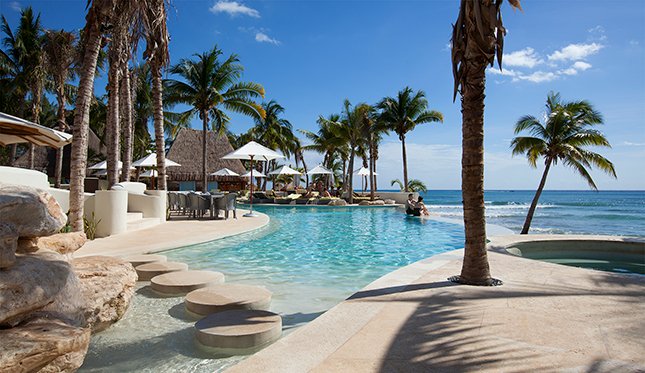
To be sure, Mahekal—and Playa del Carmen itself—have bigger challenges. One is the environment. As invigorating as Quinta Avenida is, the two great draws of Playa have always been its sand and its water. In recent years, both have been degraded. Coastal erosion has shrunk the Playa beach so severely that in many places there are only a few feet between the water line and development; the waves literally lap at doorways. A long walk on the beach quickly becomes more a hassle than an amble, as there’s so little room between sunbathers and waterline that you’re forced to wade.
Which might be pleasant, if you weren’t wading through seaweed. Beginning in 2014, clumps of brown seaweed known as Sargassum began washing ashore on the Playa beaches. The seaweed that didn’t pile up on the beach filled the water, turning those otherworldly Playa blues into murky, uninviting browns. Now, if you get up at sunrise, you’ll see Mexican workers raking the beaches or driving a tractor with rotating tines that pick up the seaweed. Many of these seaweed-removers bury the Sargassum in the sand, a tactic about which there is some controversy; some say the decomposing seaweed adds to the amount of sand and fights erosion, others that it is organic pollution that discolors both water and beach. And did I mention its sewage-esque stench?

The situation is so dire that there’s actually a website, a joint product of NASA and Texas A&M, that forecasts the flow of Sargassum around the Caribbean and Gulf of Mexico. (To be fair, Playa isn’t the only place facing a seaweed surge.) It’s cool, but webcams tracking Sargassum are not what you want to plan a vacation around.
There is an upside: Sargassum is host to all sorts of small fish that hatch and/or live within the seaweed, as well as being a nursery habitat for larger animals such as dolphin, sailfish and jacks. The bad news: Nobody quite knows why this combination of seaweed and erosion has hit Playa, but the possible answers—global warming, ocean pollution that inadvertently feeds the seaweed—don’t augur a bright future. It’s impossible to walk the beach at Playa without wondering about the survivability of all that costly new real estate development…if you can walk the beach at Playa.
There’s also a land-based threat. The Riviera Maya was for many years immune to the drug violence that plagues other regions of Mexico. Sadly, that’s changing. There have been shootings at Cancun and Playa, reports of drug money infiltrating once lonely, now swanky Tulum. It’s hard to know if there’s a direct connection, but on Quinta Avenida, it’s rare now to walk a block without a young man or woman sidling up to you and asking if you want to buy pot and cocaine. That used to happen occasionally; now, it happens a lot, it’s, ironically, a huge buzzkill, and the police don’t seem to care.
In late February, a bomb exploded on one of the busy ferries transporting locals and tourists to and from Cozumel. No one was killed, but rumor had it that the bombing was a response by drug lords over a kickback dispute, and the U.S. State Department issued a travel advisory. (It’s since been downgraded.) Things in Playa are starting to feel a little ragged, and not in a good way.
How much of a threat is drug-related violence to a tourist? If you’re careful—don’t, for example, say yes when asked if you’d like to buy drugs—not much. And Mexicans will tell you that there’s more danger in the United States, which is an entirely fair point: No one’s shot up a school in Mexico lately. Still, after the bombing, the tourism industry gave a collective shudder and hastened to assure potential visitors that the incident was minor, a one-off, possibly the result of an insurance dispute. Why then during my March visit was an armored police vehicle with a turret and high-powered weapon parked ominously just off Avenida Quinta? Or police officers who looked more like heavily armed soldiers patrolling the ferry dock?

My last night in Playa, a local amphitheater hosted a reggae concert down the beach a couple hundred yards from my hotel room. The band was good, and loud; if my Spanish were better, I could have sung along, as the several thousand people in attendance were happily doing. The band played till about 2 in the morning, which meant that I didn’t fall asleep till 2:01. Part of me was irritated by the intrusion—how the hell can the city government allow open-air concerts that end at 2 a.m.? But part of me appreciated the fact that Playa remains at least a little untamed. And so, for a couple insomniac hours, I lay in bed, frustrated and admiring, wondering how long Playa’s party can go on.
For more information on Mahekal, visit mahekalbeachresort.com.