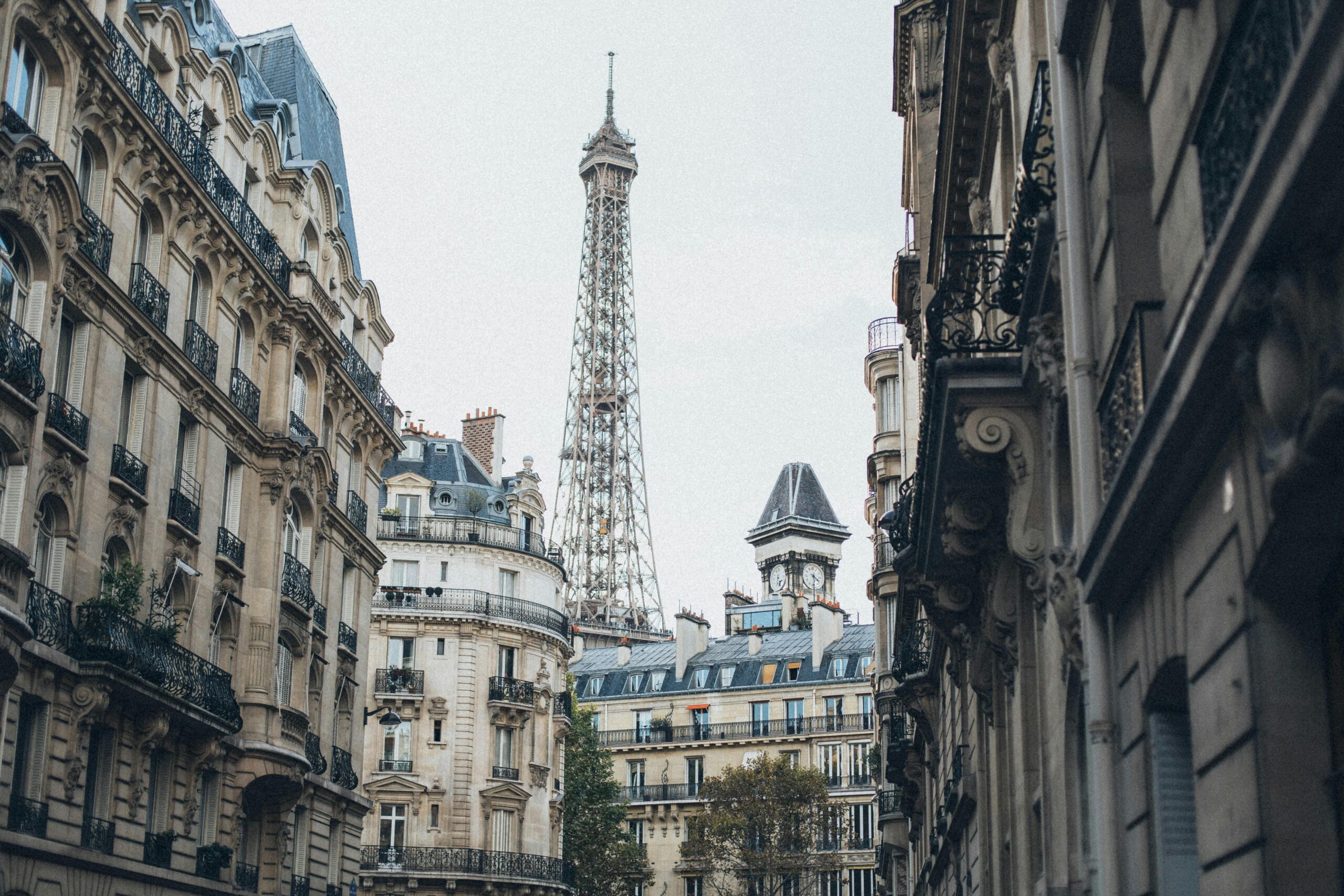


Three captivating artistic expressions come together: Stanley Tucci’s “Searching for Italy,” Don Norman’s “Design for a Better World,” and Aïda Muluneh’s powerful photography. Tucci’s culinary exploration, Norman’s design philosophy, and Muluneh’s thought-provoking visuals offer diverse perspectives on culture, human experiences, and societal reflections. These works engage viewers and readers, offering glimpses into the world we inhabit and the creative endeavors that shape it.
Television
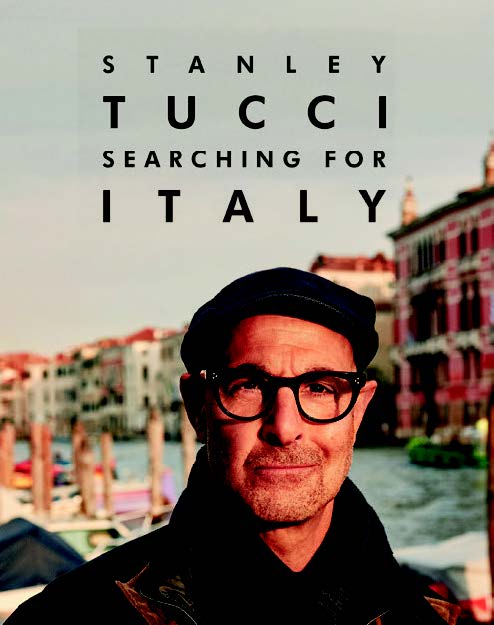
Five years without Bourdain. Half a decade since he disappeared in the dead of summer, scattered among a hundred cities. Since: our collective wandering in search of another Moses. Who could chauffeur us like the chef, hype like the hedonist, evoke wonder like the wanderer? The answer’s been clear since the dark, cold day of his death: nobody.

To replace a genius takes a tribe, his facets distributed across a chosen few whose gifts collectively re-aggregate the once-in-a-generation unification of voice and gut and mind and skill. To backfill Moses, we need a herd of Joshuas. The combinatory power of a Samin Nosrat, Roy Choi, Romesh Ranganathan, and a growing cadre of similarly nuanced, international voices.

Until recently, Stanley Tucci may have been an unlikely addition to such a cohort. Yet there he is, striding coolly across Italian streets and sidetracks, as much at home with Michelin-star chefs as local historians and farmers and bistro camerieri in his short-lived travel documentary series “Searching for Italy.” Suddenly the long shadow of Chef Bourdain seems to stretch behind him.
The previous vehicles for Tucci’s voicey, wry blend of story and food—cookbooks, memoir, social media videos—all succeed in their own way to bring to the page and social scroll a compelling, hospitable presence. But Tucci is, first of all and after all, an actor of immense talent: the screen is as much home as his nonna’s cucina. Cameras rolling, Tucci transmits an ineluctable magnetism. In Searching, he’s ostensibly tracking the soul of a national cuisine, a task rendered delightfully impossible by the extraordinary diversity of geography, agriculture, marine life, terroir, identity, politics, and more. Tucci’s not just in on that joke, of course. He wrote it. Like all travelogues, the joy is in the journey, and some questions are more fun to ask than to answer.
Over two seasons and 14 episodes, Tucci’s virtues clearly exceed those of a smooth-mannered host and dancing troubadour. More than his charisma that’s often celebrated, it’s the set-piece set-up of the show, the conversational investigations, and the depth of focus on the dimensions and complexities of Italian culture and cuisine that create an undeniably Bourdanian experience. Like “Parts Unknown”, or “No Reservations”, Searching is persona-driven, place-based, and precision-penned. It’s seasoned differently thought—with Tucci’s admirable restraint, companionable wit, boyish delight, and old-soul wisdom. Tucci is no raconteur, and nowhere here is the rebelliousness or knife-sharp irony of Bourdain. Edges have been smoothed, and any tension found is shortly released—a scan of political upheaval here, a hat-tip to environmental concern there. But the adoration of individual and community remains, the beating heart of a series that’s less about food than the people who grow it, find it, make it, and share it.

Searching for Italy is searching for a new home, having been cut loose by the cash-concerned corporate types at CNN’s new parent company Warner Bros. Discovery. Rumors of its rescue by another streaming service abound. Will Tucci be allowed to finish his circumnavigation of Italy, tucking into a bowl of something beautiful in the many regions he has left to visit? It is a question still unanswered. One question’s been settled, though: he certainly ought to.
Books
Retrospectives challenge even the most gifted of curators. Looking back is rarely as successful as hoped. U2’s “Songs of Surrender” is an unnecessary, indulgent gloss on a legacy that does not require it. The hagiographied Joan Didion’s Let Me Tell You What I Mean added nothing to the verve and dynamism of the original essays—a mere commercial repackaging. The gargantuan Guggenheim Alex Katz retrospective was harrowingly good at creating more detractors than devotees.
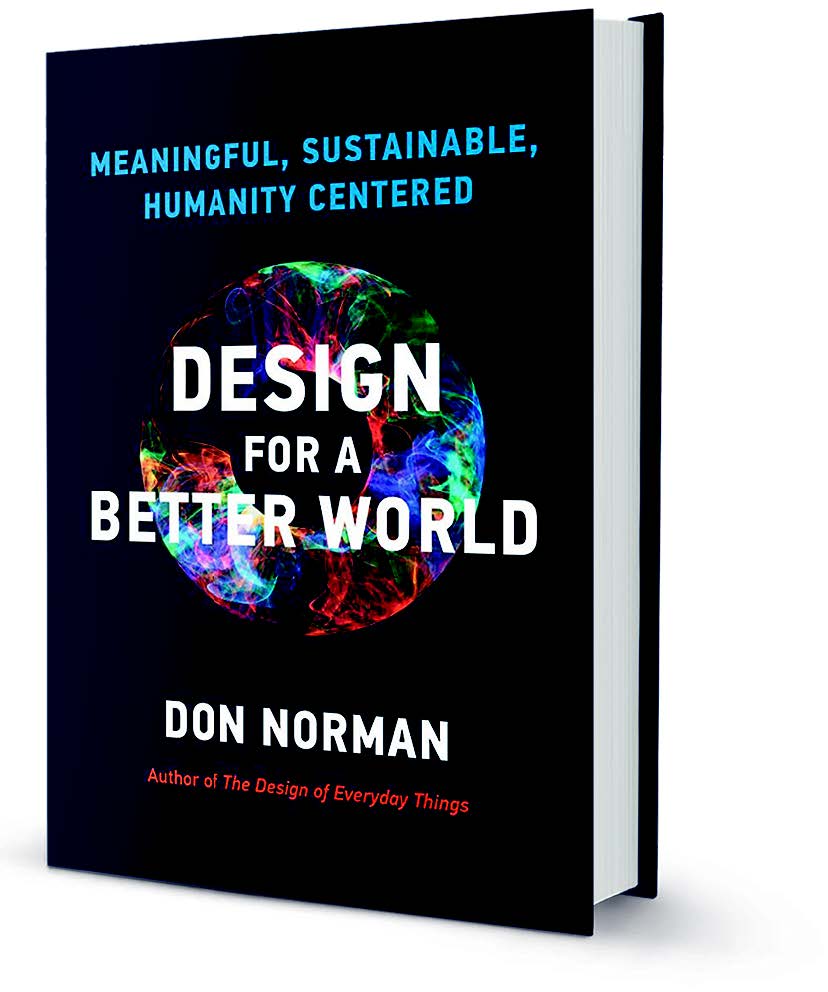
So what should we make of Don Norman’s latest work Design for a Better World: Meaningful, Sustainable, Humanity Center? Is the sui generis thinker, who gave frame and language to a movement that has shaped much of our contemporary relationship with consumer products, engaging in regurgitation (at worst), retrospective (slightly better), or, dare we imagine it, revelation?

The question, though it does not sound like it, is a compliment. Looking back—and looking deeper—at one’s foundational work is a luxury afforded only to those whose dent in the universe was sufficiently deep to deserve a second or sixty-sixth glance.
Norman qualifies. His Design of Everyday Things, first published 25 years ago, was a seminal work of the now-ubiquitous concept of user-first design. His work is as likely to be evoked by transit designers and city planners as front-end developers, industrial creatives, automotive designers, and beyond. How to escape the gravity of such a profound accomplishment would be a puzzle for any artist. Norman seems to know this and thus doesn’t try. Instead, he keeps faith with his original premise while bringing new queries to his first principles. The result is a brave attempt to expand the scope of what one considers the possibility and responsibility of good design.
Such bravery is required, as the backdrop of this work is notably darker than that of his break-out thesis. Quite literally, the weather has changed. The tactics that Norman popularized seem quaint against planetary distress caused, at least in part, by the efficient application of his ideas. Can we design our way out of a problem we designed? The question requires multi-dimensional thinking and an unlikely blend of hubris and humility. Lucky for us, Norman is an endlessly curious polymath, and the book approaches its basic query with cross-disciplinary choreography. Diverging, then converging; zooming into the microscopic and back out to the cosmic; visiting crowd-sourced solutions before navigating the bureaucracy of cities and nations. Norman finds everywhere a common problem: artificiality, an approach to designing systems and products that jettisons meaning, disregards negative externalities, and, worst of all, masquerades as natural order. To rebel against the tyranny of the artificial requires messianic intervention by the Norman-esque ideal of a designer. As said, he keeps the faith.

In the broadened mandate for designers, Norman’s no longer interested in your teapot. He’s after the big structures that govern our hours and epochs: Work, Education, Healthcare, Politics, and Rewards. If Norman’s right, the next decades will introduce a set of liberating new approaches to living in society. If he’s wrong, we’ll have succeeded at designing our own effortless catastrophe.
Photography
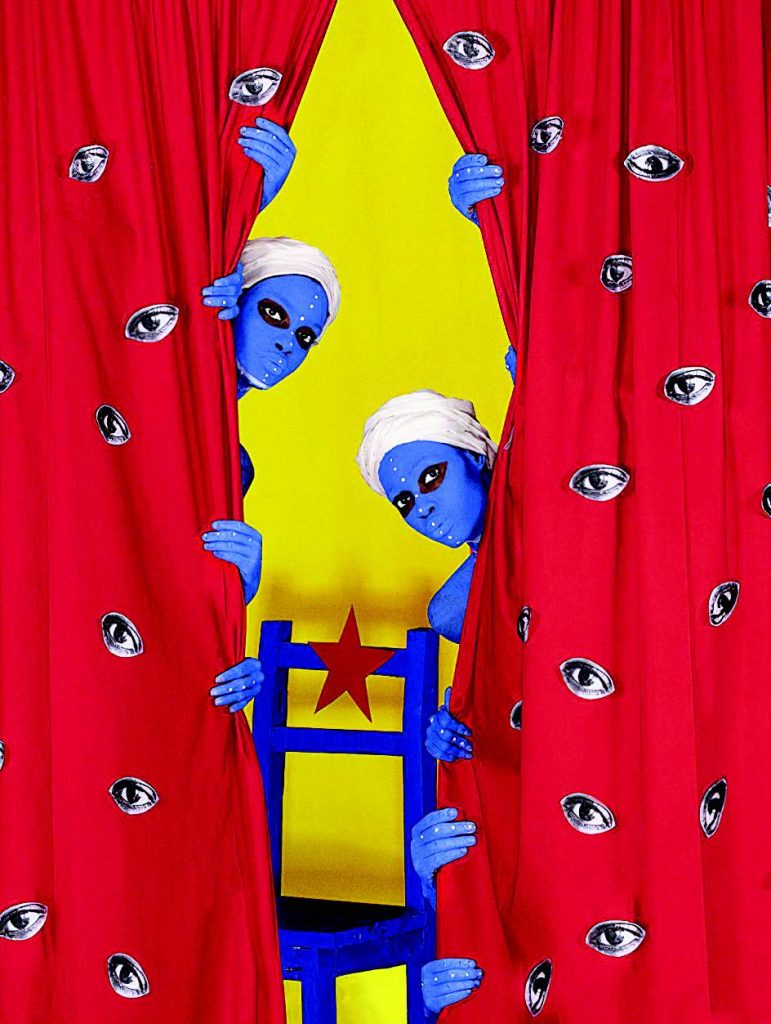
“Poetry,” Auden wrote, “makes nothing happen.” Or maybe it just takes its time. Five decades after Ethiopian poet Tsegaye Gabre-Medhin wrote his dagger of a poem, “This is Where I Am,” a fellow countrywoman takes his work as provocation for an arresting series of photographs that comprise Public Art Fund’s most globally-distributed installment to date. More than 300 bus stops across New York City, Chicago, Boston, and Abidjan, Côte d’Ivoire showcase Aïda Muluneh’s vibrant, startling, transportive images.
In one photograph, two white-masked women sit in scarlet Van Gogh chairs on either side of a yellow obelisk that splits the photograph. Above them, a parade of red-robed women hoist brooms like militia during drills. In another, the locks of three women converge in the center of a photograph. Two frame-facing figures stand back-to-back in profile, symmetrically tilting red jebena, traditional Ethiopian coffee pots. In the foreground, a regal figure draped in red turns her head slightly toward the frame—and suddenly flashes her eyes back at the viewer. In accusation? Defense? Invitation?
The photographs unsettle. Muluneh’s visual voice is loud—marked by swaths of pronounced color, masked faces, floating eyes, and luscious chromatic backdrops—but crisp, without dissonance or vibrato. The effect is immediate and lasting, the iconography familiar enough to snap into an archetypal memory but fresh enough to demand a head tilt of curiosity.
To this temporary gallery, located in the dot of a transit map, a bus is coming. Or it’s going. And so are you. Locating Muluneh’s images in the flat box of the human holding pen lifts her work from photography to performance. Public art rarely strides so boldly into such truly public space. Muluneh’s project doesn’t climb atop a facade, project upon a multi-story wall, or dominate a public park. The human-sized, liminal arena of a bus stop is a metaphor for Muluneh’s experience of a refugee and immigrant, a life lived in movement—and not always of one’s choosing.

Of course, art in the age of mechanical reproduction ensures Muluneh is not in one place but many at one time, each installation instance linked by the standardized shape of a metro billboard. That her images replace adverts for mobile phones and perfume and tequila is an act of both delightful subversion and portal creation. One imagines each of her images tethered somehow to the next, opening like the magical doors of Mohsin Hamid’s Exit West, on the other side a fellow traveler.
If such displacement is her backdrop, place-making is her project. Evoked in each photograph is a sense of the fierce urgency of now. In the fragmented reality of war, famine, and migration, Muluneh is suggesting all one has is here and now. Look deeply, feel your feet on the ground. This is where you are.