

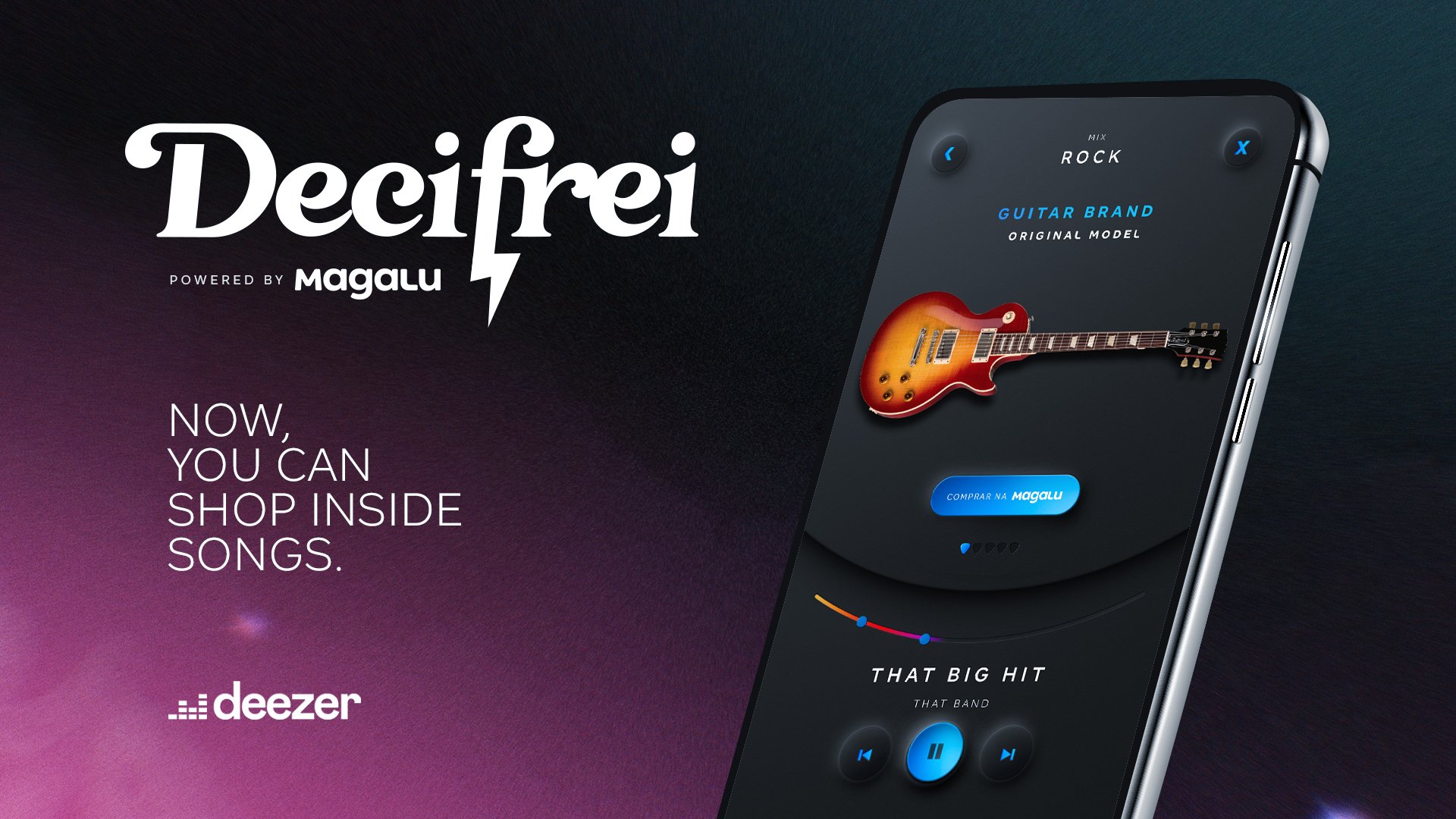
If you love rock ‘n’ roll, on more than a few occasions you have probably found yourself listening to a favorite song wondering exactly what type of guitar was used to record the opening riff from Deep Purple’s “Smoke On The Water” or what type of set-up powered that memorable Phil Collins drum solo from “In The Air Tonight.” For musicians—amateurs and professionals alike—this same curiosity is far more palpable; many not only want to know what was the exact model of instrument used in a specific recording, but they want to be able to purchase that precise instrument—or at least the closest thing still commercially available—and be able to recreate those same sounds in the studio or at home.
And now, thanks to a Brazilian retailing juggernaut, realizing this dream has become reality. Welcome to the era of s-commerce. (And, by the way, the “s” is for “sound.”)
In simple terms, s-commerce not only represents a massive innovation into the next-generation monetization of music—a beleaguered industry that has taken quite a beating over the past two decades ever since the advent of Napster—but also serves as an important window into what much of e-commerce may look like a few years down the road, as community, content and commerce begin to converge in new and dynamic ways.

Pioneering this global trend in s-commerce is an unlikely protagonist: Brazilian mega retailer Magazine Luiza—known in its home country simply as Magalu. Although the company has a market capitalization surpassing $30 billion, most Americans have never heard of the brand as it operates only in Brazil and has no plans to expand internationally; in fact, it still has plenty of new territory to conquer within its home market of Brazil. (Only this month did it finally begin operating in Brazil’s second most important market, Rio de Janeiro, opening a record 23 stores in one day).
Magalu: Retail Rule-Breaker
Although calling Magalu a retailer is a fair designation, it’s a term that falls quite a bit short of truly capturing the breadth of the company’s reach in its home market of Brazil. On one hand, Magalu is a network of over 1,300 brick-and-mortar retail stores that focuses principally on home appliances and consumer electronics. But in recent years, the company has transformed into much more than a traditional purveyor of hard goods as it built up a vast digital ecosystem of e-commerce properties that work together to sell an array of products ranging from diapers and dog food to home décor. Moreover, the company has also been on something of a shopping spree, strategically acquiring an array of content platforms spanning everything from fashion trends to consumer electronics enthusiasts. These platforms aggregate new audiences that feed into a network of interconnected digital, financial, third-party marketplaces and last-mile delivery services that dot the land of green and gold.

Led by chief executive officer Frederico Trajano, Magalu has embarked upon a sui generis approach to modern omnichannel commerce that is paying dividends in spades. Not only did the company successfully fend off Amazon’s encroachment into Brazil, but a recent BSG study also concluded that Magalu was, by far, the world’s most successful retail operation over the past five years in terms of shareholder value, generating a total average annual return of 226 percent in market valuation and dividends during the period.
Innovation and rule-breaking are part and parcel of Magalu’s genetic code.
By putting Magalu’s DNA under a microscope, one will find an organizational culture rooted in innovation, measured risk-taking and high growth among its foundational building blocks—all key to understanding how this company found itself at the epicenter of perhaps the biggest revolution in e-commerce in recent years. Indeed, Magalu has come up with something that now has music industry executives across the globe rethinking their entire business models—the floodgates to brand new revenue streams having been pried open by Trajano and his crack team of digital innovators.
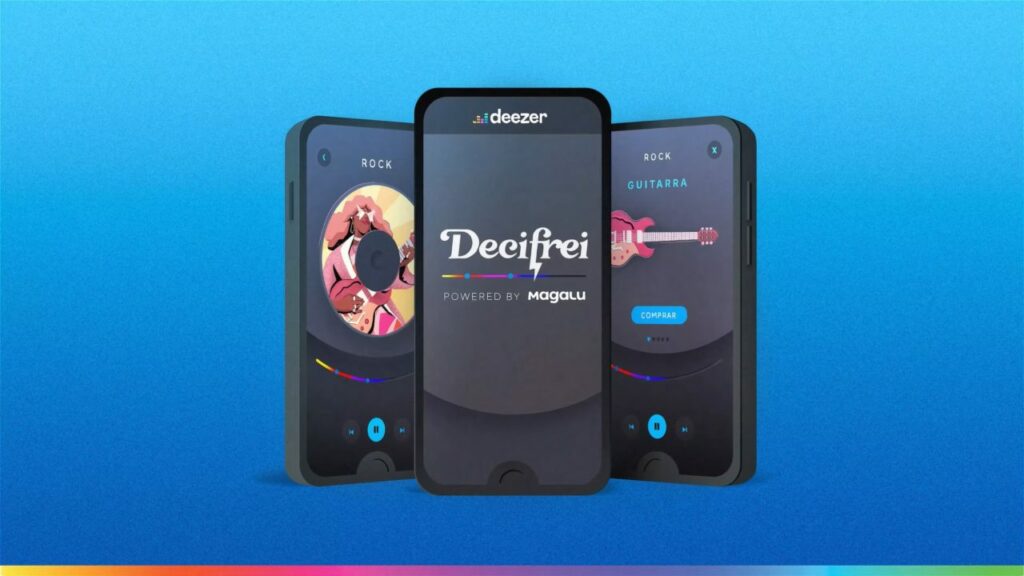
It all started back in the early days of the pandemic when the marketers at Magalu and their advertising partners at Ogilvy were contemplating ways to communicate that Magalu’s online marketplace offered much more than just the hard goods it was known for across Brazilian shopping malls and commercial centers. Although its brick-and-mortar stores had firmly cemented its leadership position in items such as washing machines, TVs and cell phones, the challenge was figuring out a unique messaging tactic to showcase a robust online marketplace that offered far more product categories. That’s when the idea of sound commerce was born. Magalu calls the platform Decifrei, which in Portuguese means “I Deciphered,” but in English, it has been branded by the far more descriptive phrase, “Shoppin’ Inside Songs.” No matter what it’s called, it represents a watershed moment in e-commerce that points to the future marriage of retail monetization and entertainment content.
Magalu was, by far, the world’s most successful retail operation over the past five years in terms of shareholder value.
On one level, the “Shoppin’ Inside Songs” initiative was a way to tout Magalu’s immense bench strength in the annual $7.5 billion global musical instrument category—the site sports well over 100,000 unique products spanning instruments, drum machines, amplifiers and microphones, as well as mixing and recording equipment. But by creating a unique shopping experience with access to a new product category, Magalu was signaling to consumers that its digital marketplace was much more than what consumers had grown accustomed to seeing in the shopping malls around the country; Trajano was betting that “Shoppin’ Inside Songs” would serve as a beacon for driving awareness—and untimely customers—toward Magalu’s robust and dynamic online ecosystem.
And his bet has paid off in more ways than one.
“The impact and success of ‘Shoppin’ Inside Songs’ has far outstripped our expectations,” Trajano told Worth. “Not only did it drive unprecedented levels of traffic and sales through our musical instrument vertical, but it really reset consumer perceptions about Magalu’s product mix in our online marketplace—that was the overarching goal.”
“That some industry analysts believe that, by launching ‘Shoppin’ Inside Songs,’ we may have augured in a new way of thinking about e-commerce, and that’s just icing on the cake, as they say,” he added.
The Birth of S-Commerce
To bring this new musical instrument shopping category to life, Magalu ignored the traditional swim lanes of e-commerce and offered up instead a brand new way of thinking about online shopping—a major reason why industry analysts, as well as the periodical bible of startup culture Fast Company, pegged a new term for what the company ultimately came up with: sound commerce.
First, Magalu teamed up with Deezer, a France-based music streaming service that is popular in Brazil. Then, they brought in a cadre of seasoned music producers to not only develop streaming playlists spanning virtually every musical category from hip-hop to bossa nova, but to also identify the actual instruments and equipment used to produce each song, enabling fans the opportunity to buy the exact same model of instrument or piece of equipment used in the original recording of the song, or the closest item still sold. In cases where a given instrument was no longer produced—think the model of microphone crooner Frank Sinatra used to sing into—the producers flagged the most similar item currently still in production and available for purchase.
As users scroll through the s-commerce app, they will find curated playlists spanning an array of different musical genres from pop and rock to Brazilian hip hop. Each featured track has its major instruments—guitars, pianos and keyboards, drum, amps, etc.—singled out, with a “buy now” button that connects the listener to a bespoke Magalu shopping page where that very same model of instrument, or a close equivalent, can be purchased.
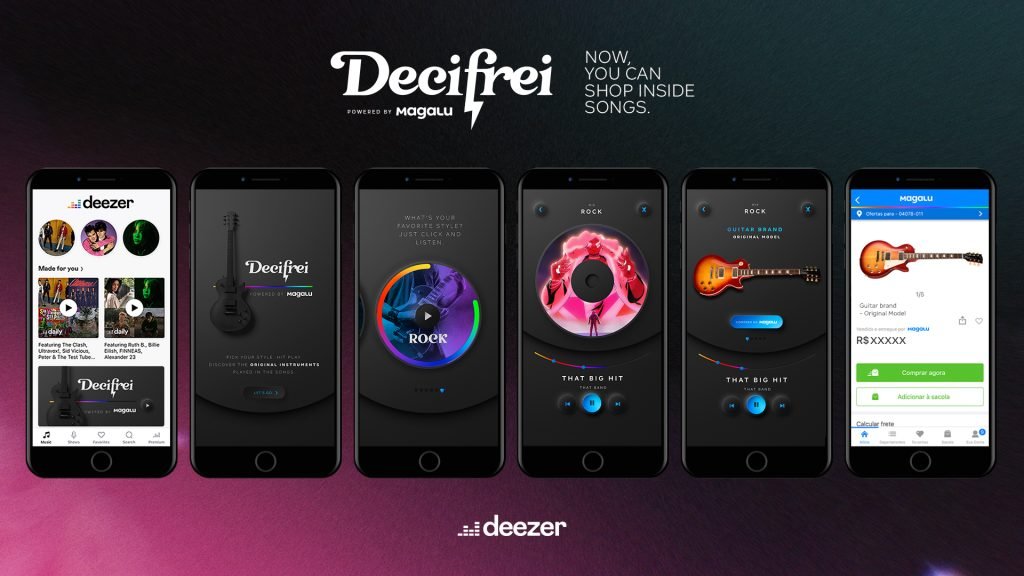
This innovative way of listening to music, transforming each track into a personalized musical instrument store, gave Magalu immediate success; sales of musical instruments were up over 50 percent within the first 30 days, and traffic to the instrument store was up nearly 200 percent. The groundbreaking nature of the campaign effort was justly awarded a trophy in the e-commerce categories at Cannes Lion.
Magalu’s initiative marks a watershed moment in e-commerce that points to the future marriage of retail monetization and entertainment.
Thinking ‘Outside the Box’ Is Nothing New for Magalu
The zeitgeist of “Shoppin’ Inside Songs,” comes on the heels of a host of other company initiatives that seemingly indicate that innovation and rule-breaking are part and parcel of Magalu’s genetic code. For example, Magalu’s official company spokeswoman, Lu, is in a category of her own in that she is, well, not real. Lu is the world’s most widely followed virtual (i.e., non-human) influencer, boasting over 25 million fans on social media. On social issues dear to the company’s heart, Magalu has developed an array of initiatives that embrace equity, social justice and inclusion, including a somewhat controversial effort to combat systemic racism by announcing that the makeup of its 2020 class of recruits to its prestigious trainee program would be comprised entirely of people of color, only hiring those of African or indigenous Brazilian heritage. The company has been equally exertive—leading with action and initiatives as opposed to issuing dithering corporate platitudes—on a host of other progressive issues, such as climate change and the environment.

And it is in this mise-en-scène of innovation and experimentation at Magalu that we are witnessing not only the birth of s-commerce but also that of an entirely new form of digital capitalism, which we will all likely be hearing a lot more about as content and commerce begin to coalesce in ways that were inconceivable just a few years ago.
It doesn’t take a crystal ball to see the potential evolution that this new shopping paradigm has unlocked—one which takes product placement to the next level with media companies furnishing their fanbases with immediate deep engagement shopping opportunities embedded within content. Imagine a Bond film where you can click on 007’s shaken, not stirred martini glass and be brought to a Macy’s glassware shopping page where a set of four can be yours for $75. Or reruns of Sex and the City on HBO Max that enable viewers to pause, point, click and buy any number of pairs of heels from Carrie’s famous collection of Manolo Blahniks on eBay.
That, of course, is where this all seems to be heading, but until that time comes, what we have now, thanks to Magalu, is a platform that tells you what guitar and amp combo you need to get the exact decibel-level of crunch one hears in “Is This Love” by Bob Marley and the Wailers or which microphones are deemed worthy of capturing Beyonce’s “Single Ladies.”
In the end, you very well may not end up sounding like Queen Bey, but it won’t be for lack of having the right equipment at your disposal.