
You’ve always wanted to visit the Holy Land because of the rich history of the three major Western religions you’ll encounter there. Whether you’re visiting the Western Wall, the Via Dolorosa or the Dome of the Rock, you will connect with your faith in Jerusalem as never before. So why not stay in a hotel with a history that’s intricately bound up with Jerusalem’s own story?
The King David Hotel, part of Dan Hotels Israel, is perched on four and a half acres in downtown Jerusalem, overlooking the historic Old City where the aforementioned holy sites can be found. The hotel was the dream of an Egyptian Jewish banking family all the way back in the 1920s, who recognized the need for a world-class hotel in Jerusalem. At the time, however, the world had just entered the Great Depression, and few made the arduous trek to Jerusalem. So, opening the King David in 1931 was an absolute act of faith, appropriate enough for a city founded on belief.

The proprietor had little faith that the locals could provide the necessary services for the esteemed guests they hoped to welcome—who would one day include heads of state like Ethiopia’s Haile Selassie, Egypt’s Anwar Sadat, Jordan’s King Hussein and almost every U.S. president from Richard Nixon to Donald Trump. So, the owners brought in food twice a day by train from Cairo and imported their hotel staff from Switzerland and the Berber community in Africa.
As the British Mandate ramped up in the 1930s, Jerusalem grew in political and strategic importance. The British made the King David their headquarters, which made the hotel an irresistible attraction for factions seeking an independent Jewish state. One such group wheeled in more than 800 pounds of explosives on the morning of July 22, 1946. Warning calls to the hotel, the nearby French Legation and the Palestine Post, which later became the Jerusalem Post, were ignored. The explosion killed 91, destroyed the southern end of the hotel and hastened the British departure from Palestine.
After Israel was founded, the hotel remained open, but the country lacked the resources to repair the damage from the bombing, so the hotel operated with a gaping hole in its southern side. Nonetheless, the King David became an important site in the new country of Israel, adopting a kosher menu in the 1950s and becoming a setting for peace talks and the signing of peace agreements over the ensuing decades. Actor Kirk Douglas called the King David home when he was filming To Cast a Giant Shadow, and he quipped that the hotel’s initials, KD, were perfectly chosen for him as well. Recently, Jon Voight stayed at the King David while filming a series on the history of Jerusalem—the perfect location for such an endeavor.
If you look at the King David from a distance, you’ll notice that in between the fourth and fifth floors—the hotel has six—is a smaller floor not of the same dimensions as the others. The explanation: When the hotel applied to the Jerusalem municipality in 1966 to add a fifth and sixth story, permission was granted on the condition that in between floors four and five would be a floor that the Israel Defense Forces (IDF) could use to watch for snipers coming from Jordan. At the time, the Old City, a thousand yards from the hotel, marked the border with Jordan. Now, that mini-floor is used mostly for storage, and part of the space is also taken up by the duplex presidential suite.
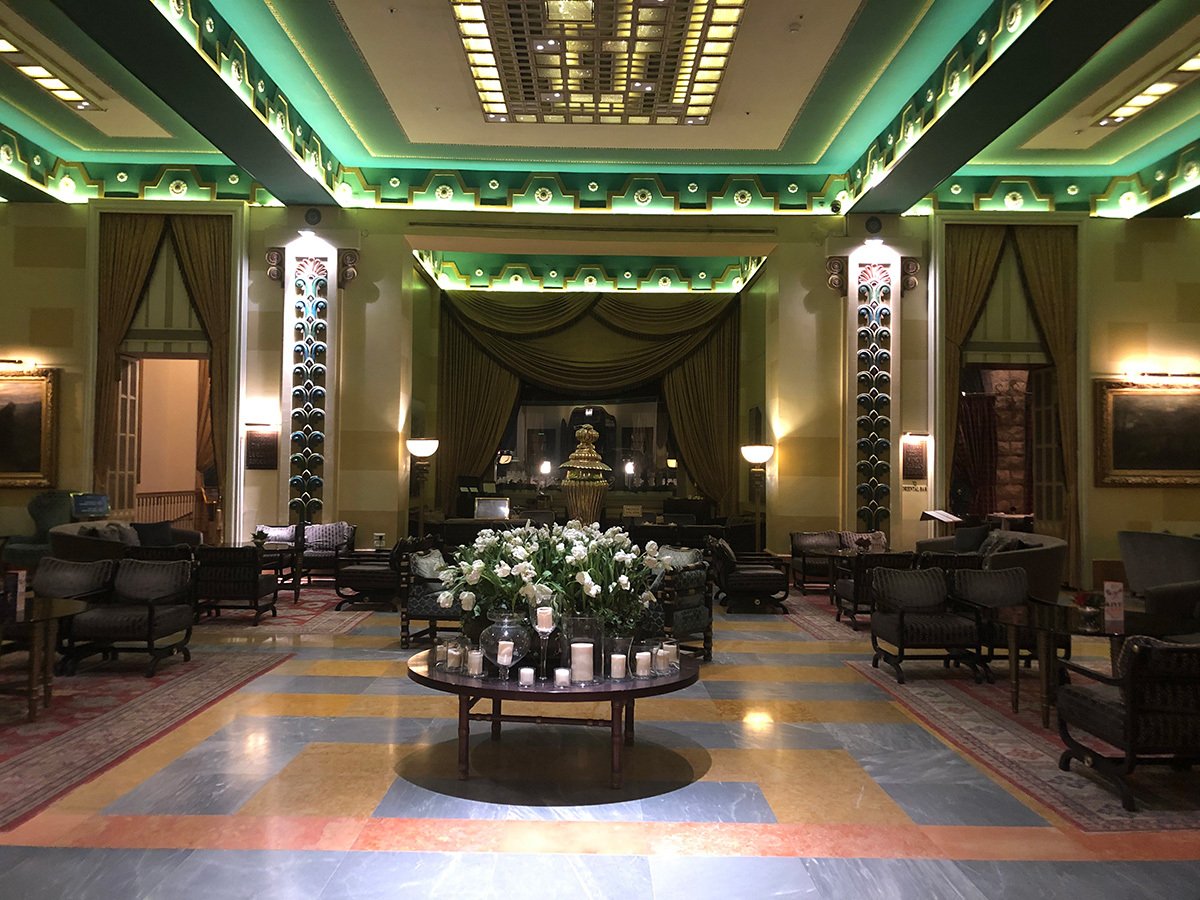
Jerusalem boasts multiple luxury hotels these days, but only the King David gives you a sense, as they say in Hamilton, of being “in the room where it happens.” The décor is based on the founder’s concept of what the palaces of Solomon and David must have looked like, drawing on elements of early Semitic art. The high ceilings give a sense of grandeur and importance to any visit, and the food, now cooked on the premises and no longer imported from Egypt, is out of this world.
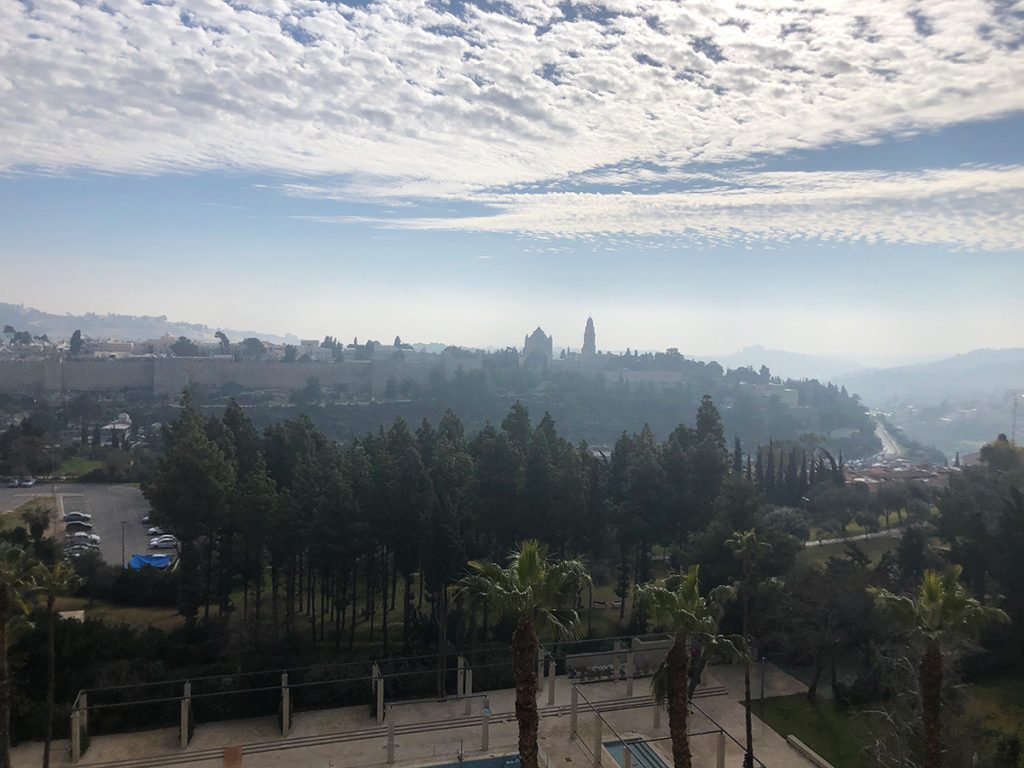
It’s quite a feeling to look out of the hotel and witness the Old City, with its ancient Turkish walls encircling the holy sites, directly in front of you. The view alone is worth the price of admission. When you enter the hotel foyer and view the adjacent rooms built like the palaces of David and Solomon, you’ll feel as though you have stepped into history. At the King David, a visitor to Israel’s multitude of holy sites can truly live like a king.