

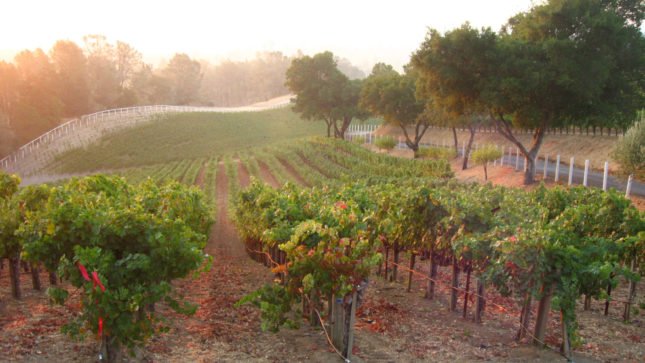
Two years ago, Napa Valley vintner Ann Colgin and her husband, investment banker Joe Wender, made headlines when she sold a 60 percent stake of her wine business, Colgin Cellars, to French luxury group LVMH Louis Vuitton Moët Hennessy. Rumored to be valued at more than $65 million, the transaction was the enviable next phase of her winery’s near-perfect life cycle. After all, Colgin Cellars has been one of Napa’s most revered cult wineries almost from its inception in the 1990s. It became known for its limited-production cabernet sauvignon and Bordeaux-style reds, drawing consistently high praise from critics and consumers throughout the years as well as commanding prices exceeding $600 per bottle. “The partnership has worked out really well for us because really what Bernard Arnault and LVMH champion is entrepreneurship,” Colgin says modestly. “They said, ‘We would not be interested in buying this business outright—we are here to invest in you and help you take it to the next level.’ That was an incredibly appealing statement.”
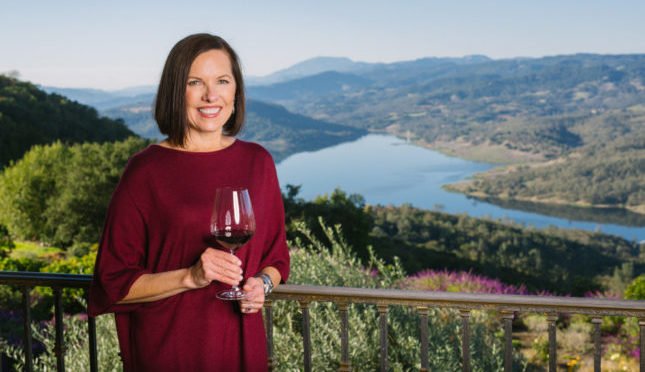
While life among the vines has always held a certain mystique, the idea of owning a vineyard has become more intoxicating in recent years as many estates have experienced acquisitions like Colgin Cellars’. In the last six months alone, another cult cabernet producer, Grace Family Vineyards, sold to a relative newcomer to the industry, Bay Area strategy consultant Kathryn Green; and the high-end Pritchard Hill label, Brand, sold to former Apple executives Jim Bean and Christine O’Sullivan. Yet few winemakers attain a journey like Ann Colgin’s, whose progression from wine enthusiast to iconic vintner with vineyards on storied terroirs seems almost mythical.


Despite the fact that the U.S. wine industry has experienced continuous growth since 1994—it is now a $70.5 billion market, according to wine data firm Wines Vines Analytics—the odds of creating a profitable vineyard are slim. “It’s a very capitally intensive business,” says Robert Nicholson, principal of International Wine Associates, a consulting firm based in Healdsburg, Calif., specializing in wine industry mergers and acquisitions. “There’s no formula for success, but finding the right place, terroir, vineyard—this can be a long-term proposition.” Locating, purchasing, developing and farming the land takes years before the first commercially apt harvest can occur.
To be successful in this industry, you have to be really committed and passionate about what you produce.
As with many passion investments, the ownership of a vineyard is primarily led by emotion. “To be successful in this industry,” says Colgin, “you have to be really committed and passionate about what you produce. That’s the first and foremost.” Following her example, here’s what you need to know to buy and develop a vineyard.
Immerse Yourself in the Industry
Colgin first developed a fascination with wine while she was working at Sotheby’s in London in 1981 after graduating from Vanderbilt University. Eventually the Texas native, who became an arts and antiques dealer, made her way to Napa Valley—first as a tourist, then as an attendee of the Napa Valley Wine Auction and finally as a part-time resident by renting a house between Calistoga and St. Helena. “That gave me the opportunity to get to know a lot of the people involved in the industry,” she recalls. Colgin began her label in 1992.
You need to quickly make connections within not only the industry but the region.
The complexity of the wine industry is perhaps its first barrier of entry—and Colgin’s deep dive into Napa Valley was the ideal first step. James Keller, a third-generation Napa native and wine real estate power broker, recommends anyone thinking of buying a vineyard in the region to start attending industry functions and explore associations like Napa Valley Vintners or Napa Valley Grapegrowers. “You need to quickly make connections within not only the industry but the region,” he says. “You also need to find a broker or an attorney who knows the opportunities.”

Before even looking for a property, have an idea of what you want to do with it, says Robert Nicholson, whose firm has completed more than $1.8 billion in wine asset transactions. “Do you want to sell grapes and have a nice house on a vineyard, or do you want to produce wine?” he asks. Selling grapes is the more financially accessible pursuit but is unlikely to cover the costs of operating a vineyard; on the other hand, growing and bottling wine offers higher returns, but requires larger capital expenditures upfront for equipment and facilities. Both options require years of investment before seeing any profit. Surrounding yourself with the right people—a viticulturist, a winemaker, a financial advisor versed in the wine industry—will help you understand the economics of a vineyard and how you decide to make use of it.
Take a Real Estate Reality Check
Many first-time buyers understandably want to find land that suits their varietal and personal preferences. However, in highly saturated regions such as Napa Valley, budget usually dictates your acquisition—or lack thereof.
Prices for planted vineyards in Napa are somewhere between $350,000 to $1 million per acre, according to Barry Belli, cofounder and CEO of Atlas Vineyard Management in Napa. “Those prices knock most folks out of the ballgame,” he says. Sonoma County is slightly less, in the $85,000 to $300,000 range. Oregon offers vineyards for $55,000 to $85,000 an acre. And other regions in the U.S. that are less in demand may offer better deals. To put it in perspective, a commercially viable vineyard should be at minimum 10 acres in size.
Another factor to consider when purchasing a vineyard is whether it is already up and running or needs to be developed from scratch. While the former is certainly the easier option, it is not without its challenges. “If you’re going to buy a vineyard that’s producing, it’s going to be the worst one on the block—you will eventually need to redevelop it,” says Belli. “If a vineyard’s cranking and doing great, no one’s going to want to sell it.” As part of your due diligence, you will also need to test the vineyard for viruses, perform soil analysis and check the weather and freezing levels, among other indicators of economic viability.
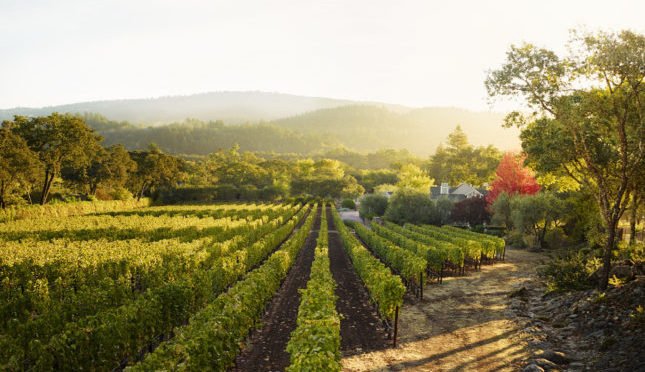
When Ann Colgin purchased her first vineyard, Tychson Hill, in 1996, it was not the trophy estate it is today. Though it sat on a historic parcel where Josephine Tychson became the first woman to plant a winery in Napa in 1881, and the rocky volcanic loam offered great potential, the vines had been ripped out during Prohibition. “They had not been replanted since that time when I did it in 1997,” Colgin says. “I feel incredibly fortunate that we were able to invest so many years ago and find property that is just exceptional.”
Know the Costs of Doing Business
In addition to the real estate cost, you also need to plan for the farming and maintenance of a vineyard, which can be accomplished with a management company such as Atlas. “Plan on anywhere from $35,000 to $65,000 per acre per year, depending on the spacing, terrain, soil, design—all these things factor into the cost,” says Belli, adding that it’s “a four- to five-year process before you see a dollar coming back from selling grapes.” In addition, there are costs related to permitting, land preparation and clearing, and water management, among other things, that also add up. “Once you’re fully up and running during your fifth or sixth year, management of the vineyard is about $10,000 to 12,000 a year,” he says. This excludes, of course, winemaking facilities and processes, staff salaries, marketing, licensing, distribution, insurance, property taxes and other miscellaneous costs.
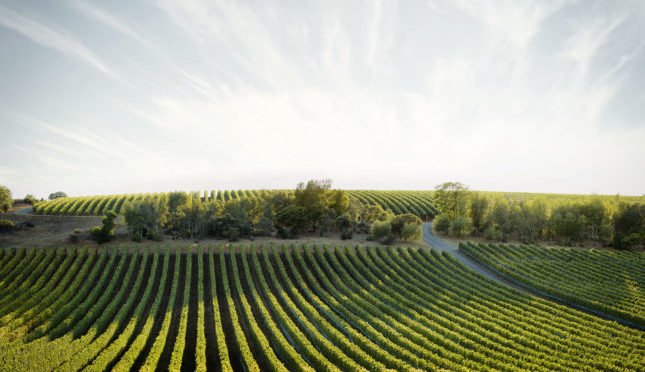
Even for Ann Colgin, the process was challenging when it came time to buy her second vineyard, IX Estate, on Pritchard Hill in 1998. “The development costs were higher than we expected. When you’re dealing with land that has never been touched before, you can do all the investigation and all the studies that you want, but you never really know what you’ve got,” she says, referring to an expensive rock and boulder removal process that involved dynamite and large earth-movers. “We went through a lot to develop our land.”
There’s a passion requirement, to be sure—but like any other business you have to know what you’re doing.
With all these hurdles, is it any wonder that passion and emotion are often touted as the keys to successfully owning a vineyard? “Many are very unprofitable lifestyle businesses,” points out Robert Nicholson. He attributes the success of labels like Colgin Cellars to less esoteric forces. “There’s a passion requirement, to be sure—but like any other business you have to know what you’re doing.”
Getting Started
Interested in owning a vineyard? These six resources will help you learn more.
Atlas Vineyard Management, a vineyard management company, Barry Belli, CEO, [email protected], 877.232.9429, atlasvm.com
International Wine Associates, a wine merger and acquisition consultant concentrating on asset sales, Robert Nicholson, principal, [email protected], 707.433.8122, intlwine.com
James Keller, Napa-based wine real estate developer and broker, [email protected], 707.333.1184, jameskellerrealestate.com
Napa Valley Vintners, a trade association, [email protected], 707.963.3388, napavintners.com
University of California Cooperative Extension Sonoma County, offers research support for the viticulture industry, Rhonda J. Smith, [email protected], viticulture farm advisor, 707.565.2621, cesonoma.ucanr.edu/viticulture717
Zepponi & Co., a merger and acquisition advisory firm in the beverage alcohol industry, Mario Zepponi, founder, [email protected], 707.542.7500, zepponi.com