

Microsoft founder Bill Gates had been a billionaire for over a decade before he bought his first private plane. In 1998, after years of legendary coach travel out of Seattle’s Sea-Tac Airport—“That guy back there with the blanket over his head is Bill Gates!” people would whisper—he finally broke down and forked over $21 million for a Bombardier Challenger 604, an aircraft that seated nine or 10 people and had a 5,000-mile range. The official word from Microsoft was that travel had become so frequent for the world’s richest man that it made sense, but “he doesn’t think the company should be paying for it,” affirmed a spokesperson at the time, as if to absolve Gates from the sin of flying private. Since that time, Gates has grown fond of private jets, his current one being a $41 million customized Bombardier Global 5000 that seats up to 19 people, has a range of nearly 6,000 miles and can fly practically anywhere in the world. And yet, he often tempers his genuine excitement for what he calls a guilty pleasure by citing its benefit as a tool for his work with the Bill & Melinda Gates Foundation.
Private jets have symbolized extravagance since the dawn of air travel—the stuff of billionaires, celebrities and spendthrift Fortune 500 CEOs. But as the Democratization of Everything has shown, even jet travel can shed the stench of excess. Thanks to lower-cost Uber-style jet charter businesses like Victor and private air shuttles such as JSX and Tradewind Aviation, whose growth have coincided with the rise in jet usage and ownership, the experience of flying private has become more accessible, and its users less ashamed. In 2018, the industry surpassed 3 million flights for the third straight year, according to aviation data company Argus. Meanwhile, VistaJet, a Malta-based luxury charter operator, reported in a 2018 study that the average age of private jet passengers was a younger-than-you-might-expect 38. And there is no shortage of private jet packages offered by hotel companies seeking a piece of the pie: Four Seasons offers weeks-long journeys around the world on a customized 48-person jet run by tour operator TCS World Travel, and Fairmont Hotels and Resorts recently launched cocktail-themed destination-hopping packages with Canadian jet operator AirSprint.

But flying on a private jet and owning one are entirely different things. You still should be a billionaire, or at least a centimillionaire, to comfortably afford a guilty pleasure like Bill Gates’. With that said, let’s break down the reasons for buying a jet—and what it takes to do so.
You’re Buying Time, Not Luxury
“Business jets are just time machines,” says Steve Gade, vice president of aircraft sales at Duncan Aviation, a business jet support company based in Lincoln, Neb. He’s referring to the time-saving capacities of flying privately—avoiding hours of preparation and waiting for commercial flights, as well as the time spent after landing to exit planes and collect baggage. By most estimates, commercial fliers lose two hours each way. “The majority of our clients own business aircraft because it helps their businesses be more efficient or helps them reach out to new customers and prospects. And it helps their executives be in multiple places on the same day.”
Business jets are just time machines.
The industry has touted this advantage for years, and with good reason: It’s the most sensible case for what can be seen as an indulgence. Contrary to the image of the Champagne-swilling socialites that jet-setting influencers project on social media, most aviation companies actually market to business clientele by stressing the increased productivity resulting from private aircraft use. While the evidence for this has been mostly anecdotal, a study published in 2017 by the National Business Aviation Association, the industry’s D.C.–based advocacy group, drew a correlation between companies in the S&P 500 that deploy business aircraft versus those that don’t; the users outperformed non-users by 70 percent. “There’s a huge business benefit by having access to a fleet of aircraft anytime anywhere in the world at a moment’s notice,” Thomas Flohr, founder and chairman of VistaJet, told me at the time. “I can use the executive time of my decision makers better by not flying commercial.”
This is all to say that time is money. Aviation, after all, is an industry governed by time: of arrival or takeoff, of flight duration, of maintenance. Even the value of a jet, when sold in the fractional market, is measured in operating hours. “Private aviation can create a huge profit as demonstrated by how our clients use business aircraft to grow their businesses,” Gade says. Whatever the costs of ownership are, the time savings are worth it for a select clientele.
Operating Costs Range From High to Sky-High
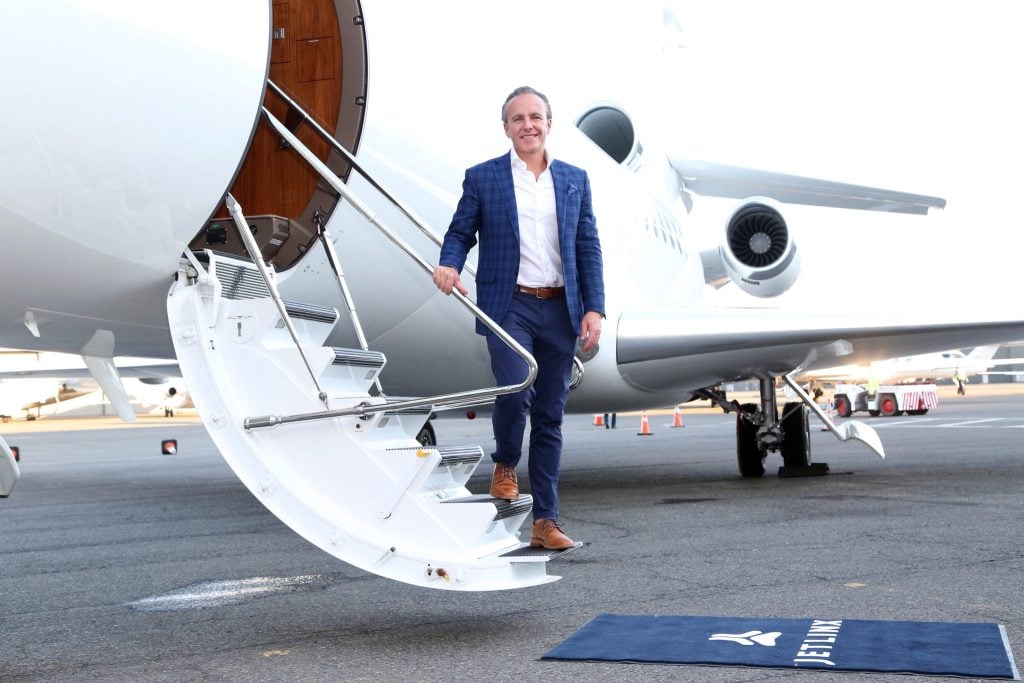
If time management isn’t your top priority, there is very little objective justification to own a plane. But you may have other personal needs that are just as important to you, so every supplier or broker that you sit down with will begin the conversation with an extensive analysis of why you want to buy a jet. “We will address the mission profile questions rather than the emotional questions that come with aircraft ownership,” explains Jamie Walker, CEO of Omaha-based Jet Linx, one of the largest private jet management companies in the U.S., which also handles sales and acquisitions for their clients.
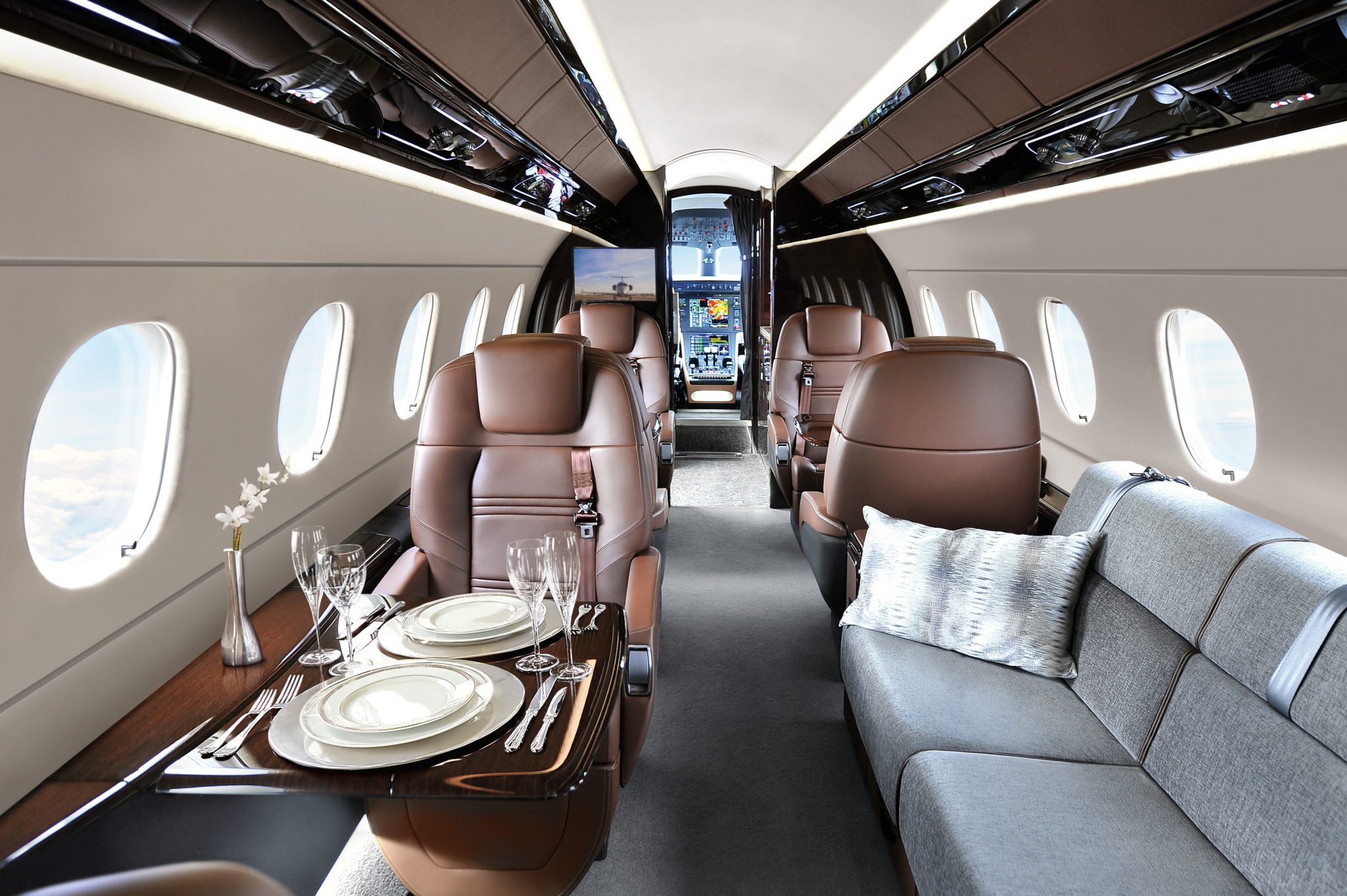
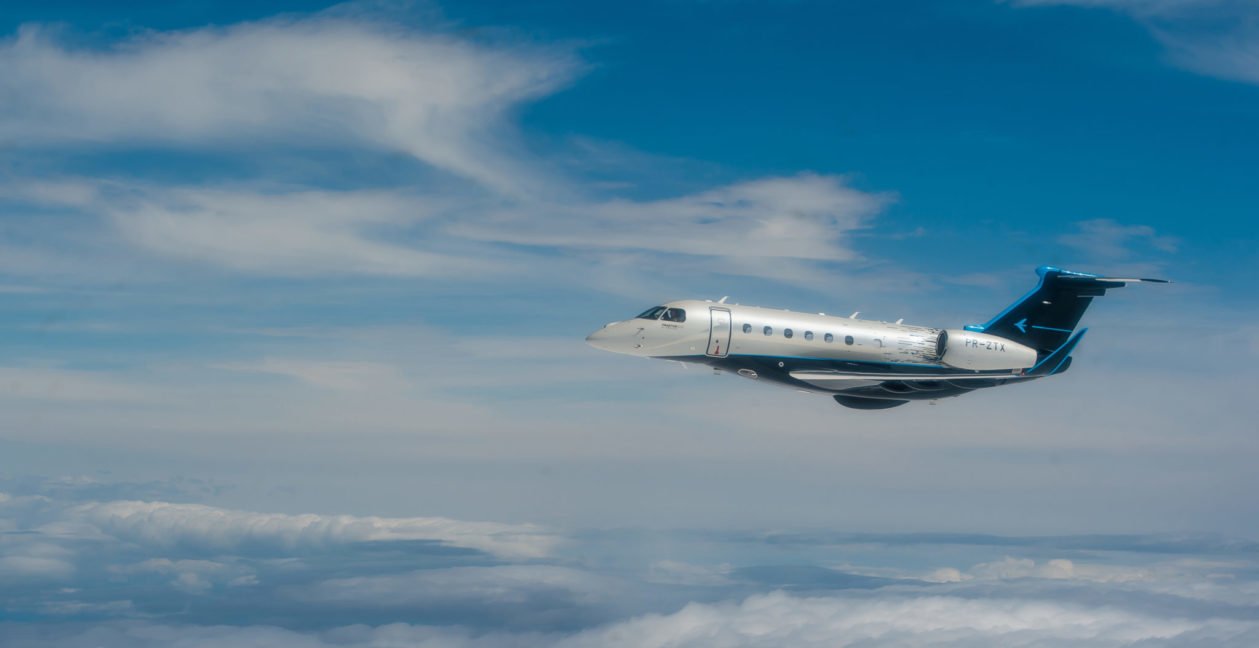
“Mission” is industry jargon for the specifics of a trip: distance traveled, operating hours, number of passengers, number of flight segments, luggage, cabin size, etc. These variables factor into how much you pay for fuel, pilot and staff salaries and engine maintenance, making the cost structure of one plane very different from that of another aircraft. According to your flight patterns, your average missions might differ from those of, say, Bill Gates. Instead of a $41 million Bombardier Global 5000, perhaps you only need a $22 million Embraer Praetor 600, which has a smaller cabin but still has an intercontinental range of 4,600 miles. “An airplane is going to cost anywhere from $500,000 a year for a very light jet to several million dollars a year as you get into the heavy jets,” Walker says.
A rule of thumb is to budget 5 to 10 percent of the purchase price toward operating costs per year. In the case of an Embraer Praetor 600, “a customer who operates it 400 hours per year can expect variable costs ranging from 3 to 6 percent of the purchase price per year,” says Embraer’s chief commercial officer, Stephen Friedrich. These include fuel—the largest operating cost, which can run into the millions per year with heavy usage—and maintenance. “Fixed costs can range from 2 to 4 percent of the purchase price per year,” he says. Among those are pilot salaries ($100,000 to $250,000 a year, depending on the experience and aircraft) plus benefits, hangar fees (ranging from $80,000 to upwards of $250,000 a year, depending on size and location) and insurance ($30,000 and up, contingent on age of aircraft, size, hours of operation and other factors).
And no, you will not make money on an airplane. Depreciation rates for aircraft remain very high, in the 7 to 12 percent range annually, according to an analysis by Georgia–based Shearwater Aero Capital, a private lender for business jet owners. While you may offset the cost of aircraft ownership by having a company like Jet Linx operate it as a charter—potentially saving you up to $250,000 in costs—it’s unlikely that would turn a profit. The 2017 Tax Cuts and Jobs Act, which allows owners to fully write off the cost of a new plane used for business purposes in its first year, has opened the floodgates to some dubious ideas for gaming the system, but generally there is no direct profitability from aircraft ownership.
New vs. Preowned
The capital investment you choose to make is entirely personal. While a new plane will have a higher cost up-front, it will require less maintenance for the duration of the warranty period. Plus, says Embraer’s Stephen Friedrich, it allows you to build a relationship with a manufacturer and gives you access to newer technology that is nonexistent in the preowned aircraft market. “The Praetor 600 can fly nonstop from Paris to New York. If you were to buy a preowned jet, you currently wouldn’t be able to find an aircraft that consistently delivers this important mission.”
On the other hand, buying a preowned plane can result in significant immediate savings—and it’s not like you’re buying a jalopy. “Some of those preowned aircraft are barely used, almost new,” says Jamie Walker of Jet Linx, who has seen preowned planes with seats still wrapped in plastic. “Preowned doesn’t necessarily mean 10 years old. It could be a year old. We try to encourage our clients to look at both.”
The 2018 VistaJet report claimed that some potential buyers view preowned planes with suspicion in terms of safety. But because of mandated aircraft refits, the safety factor generally remains the same for both newer and previously owned planes. “You may have to make a significant investment on the preowned to have it at the same spec level as a new plane,” says Steve Gade of Duncan Aviation. “It’s what the FAA has said an aircraft requires in order to be operational. Those are not optional events.”
Consider All the Options
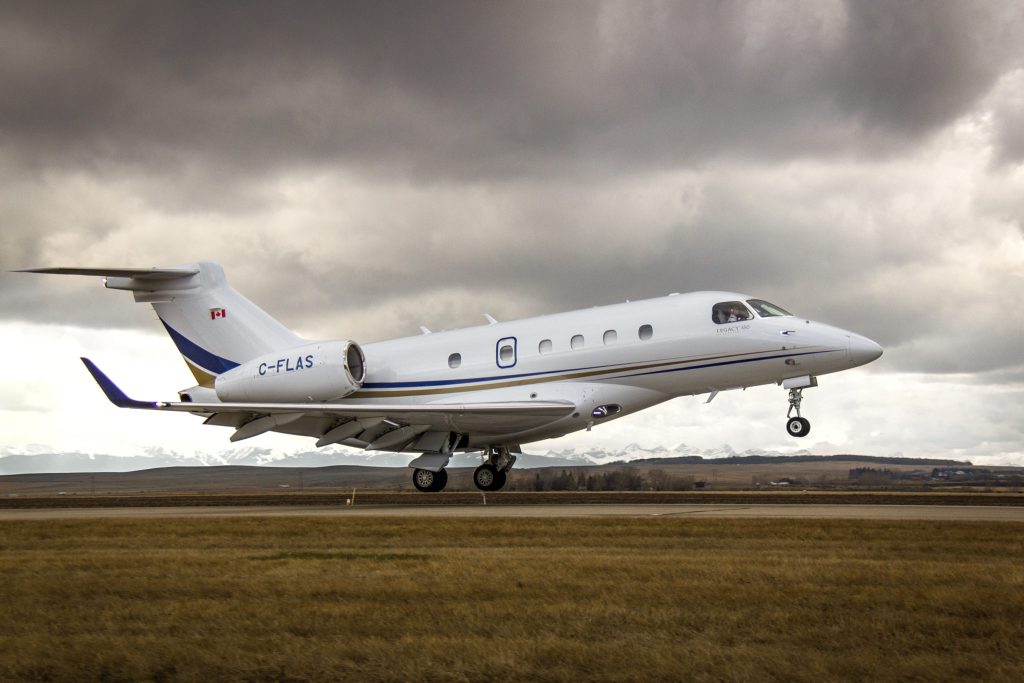
Private aviation is a uniquely fragmented industry, and before buying a plane there are various ownership models to consider. Whole ownership of a plane may be alluring for its convenience, but its cost is out of reach even for most ultra high net worth individuals. “Often it can be a hassle because you have to worry about the management behind it,” adds James Elian, president and COO of Toronto–based AirSprint, a fractional jet ownership provider. “And if your plane goes down for maintenance for two or three weeks or your crew member gets sick, you’re stuck.”
With fractional ownership, you are essentially buying a share of a physical aircraft. Based on the assumption that a plane operates 800 hours per year, shares are divided into 50-hour increments or less. In the case of AirSprint, it’s 25 hours, which equals a share of 3.125 percent of that aircraft. The advantage is a lower capital cost—that AirSprint 25-hour share costs $575,000—and access to an entire fleet rather than just the individual plane whose share you own. “When your airplane is down for scheduled maintenance, you don’t have to worry because you have guaranteed access to an aircraft that is identical to your own,” Elian says.
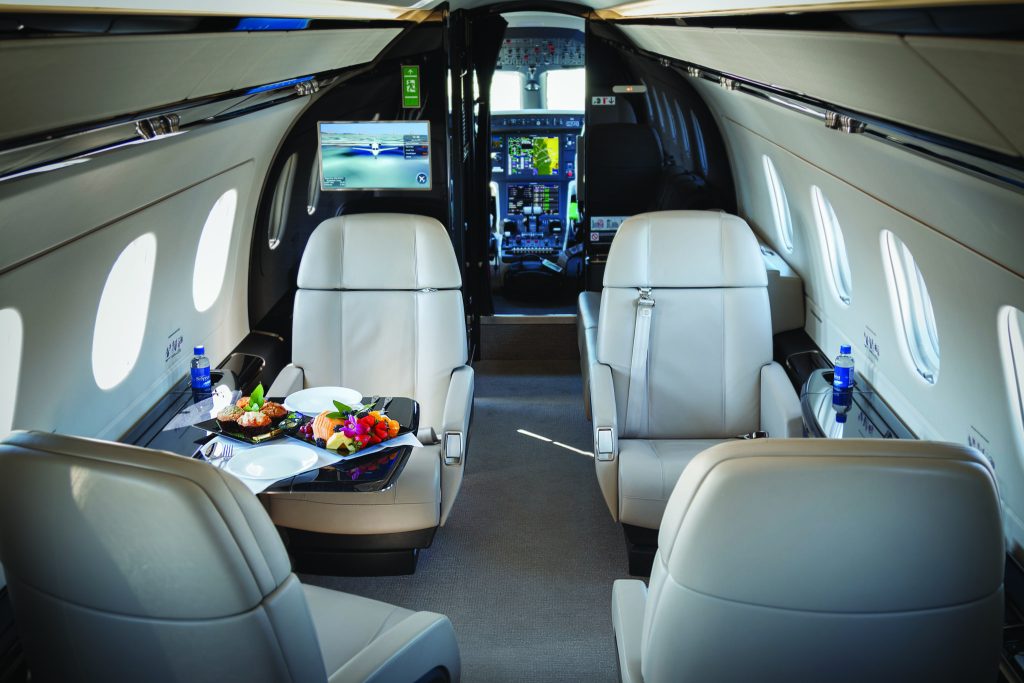
Ownership into this model, popularized in the U.S. by NetJets, also requires an annual overhead membership that covers the plane’s fixed costs—around $85,000 per year for AirSprint—in addition to paying an hourly fee on board. AirSprint’s hourly rate is $3,000, which covers fuel and other operating costs. While less than owning a jet, the fractional model can add up according to usage, and has its limits. “If you fly 300 hours or more, from a break-even standpoint, it does start to approach similar costs as whole jet ownership,” Elian says, “but that kind of usage is rare. The average usage is around 150 to 200 hours.”
Other options include jet cards, which are flexible variants of fractional models that offer access to a private jet without the physical ownership of an asset. Jet Linx, for example, offers memberships with a one-time fee of $12,500 with hourly rates starting at around $3,375. For the vast majority who relish the private flight experience, this non-ownership option may be the easiest solution. But it can also be the test track to prepare someone for whole ownership. As one of a few jet card companies that actually manages and operates its fleet, Jet Linx often transitions a customer from one model to the other. It’s natural, says CEO Jamie Walker: “We earn their business on a flight-by-flight basis.”
Getting Started
Interested in owning a private jet? These six resources will help you learn more.
AirSprint, a fractional jet ownership provider based in Toronto, 877.588.2344, airsprint.com
Duncan Aviation, a Lincoln, Neb.–based company offering comprehensive business jet support, including maintenance, repair and overhaul. 800.228.4277, duncanaviation.aero
Embraer, the world’s third-largest aircraft manufacturer with headquarters in São Paulo and Fort Lauderdale, Fla. executive.embraer.com/global/en
Jet Linx, a private jet operator and aircraft management company that offers a jet card membership as well as management services, 402.991.8060, jetlinx.com
National Business Aviation Association, a Washington, D.C.–based nonprofit advocate for the business jet industry, 202.783.9000, nbaa.org
VistaJet, a Malta–based luxury jet charter operator with a variety of membership options, vistajet.com