
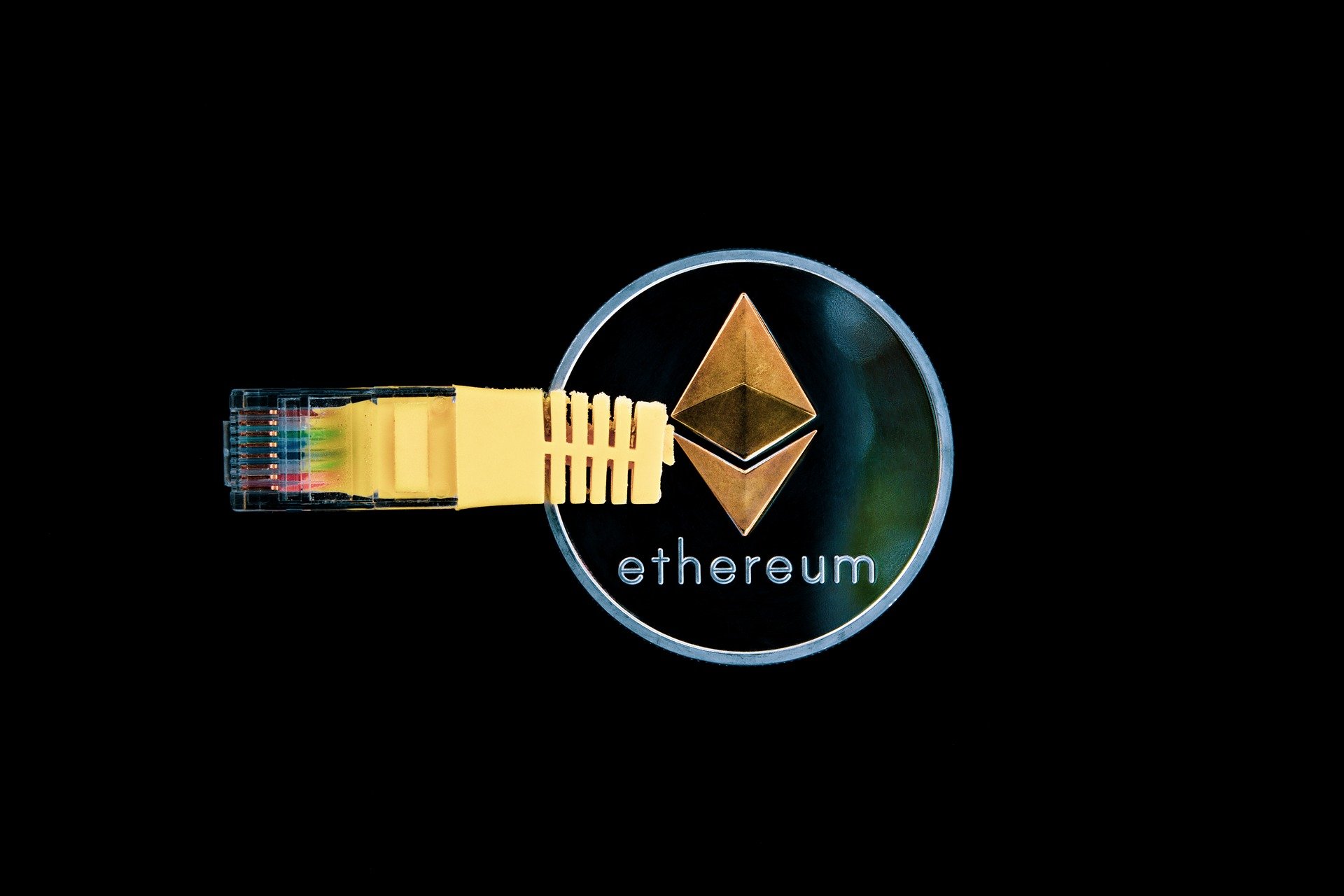
It’s already a mad, mad world; add cryptocurrency, and it seems like we’re living in a futuristic alternate universe. It appears that new crypto technologies are popping up every week, and more people are becoming accustomed to investing money into digital coins. But what many of us don’t understand is that blockchain—the man behind the curtain of crypto—can be used for purposes beyond our current imaginations, the second-most-popular platform being Ethereum. Recently, the ether coin reached an all-time high of $2,200. But before we dive into Ethereum, let’s do a recap on how blockchain works.
Blockchain is revolutionary because it’s a decentralized technology that isn’t backed by a central authority. It’s a type of database that stores information; specifically for Bitcoin, it reserves the comprehensive history of Bitcoin transactions. This coin has been making headlines because of its institutionalization by everyone from Elon Musk and governments to banks and politicians—not to mention its skyrocketing value. Blockchain is difficult to alter, so that’s why it’s used in the digital currency space.

The cryptocurrency revolution is already affecting the way we live, how we view the world and—more fundamentally—the way our economy works. As of now, our economy depends on institutions for transactions. So, if you go to the store and buy something, it’s with cash that’s originated by a) the Federal Reserve or b) a credit card that uses U.S. dollars. And you have to go through a bank, so, at every transaction, there’s a touchpoint between centralized institutions—public or private, whether they’re governments or banks. The thing about cryptocurrency is it doesn’t depend on central players to get business across the finish line.
A lot of the news focuses on Bitcoin, but it’s just a currency. In December 2020, the World Economic Forum released a report titled “Crypto: What Is It Good For?” and they didn’t focus on Bitcoin. There are new emerging players.
The biggest story you’ve never heard of is Ethereum. It’s more advanced than Bitcoin in the sense that it’s customizable and open source. It can be used in such a vast capacity that we don’t know the extent of its possibilities. Ethereum is the new kid on the block.
Ethereum has a decentralized finance (DeFi) system, and it powers its own digital currency: ether (ETH). But according to their website, Ethereum builds upon Bitcoin’s innovation. Ether is the “gas” that “fuels” the network which is a programmable blockchain. Our world’s brightest minds can come up with endless possibilities for this technology; you can even use it for Bitcoin. It also runs thousands of decentralized applications (dapps).
Bank of America recently stated that “Bitcoin is the most talked about cryptocurrency, but Ethereum [the blockchain] has more features, including being more flexible,” according to CoinDesk.
Ethereum is much more flexible than Bitcoin because it’s not just a coin. The platform calls itself a “marketplace of financial services, games and apps that can’t steal your data or censor you.” One example of an Ethereum application is the use of non-fungible tokens (NFTs). Any of your assets can be tokenized, like how Kings of Leon sold their latest album.
And they extend an open invitation to all of the coders and programmers out there.
“…[E]verything here is open-source and ready for you to extend and improve,” they stated.
So, get ready to learn some new vocabulary and adjust to new technologies in every facet of life. Bitcoin isn’t the height of blockchain technology. NFTs and DeFi aren’t the most advanced applications we will see. The world is changing so fast that it’s tough to understand where the crypto revolution is going, but Ethereum will be part of that story.
David Grasso is the host of the Follow the Profit podcast, where he shares simple ideas for financial success and lessons learned the hard way. He is also the CEO of Bold TV, Inc, a nonprofit media company dedicated to entrepreneurship and cultural empowerment.
Hannah Buczek is the managing editor and journalist for Bold TV. She also reports and edits for GenBiz, a nonprofit media brand focused on promoting financial freedom.