

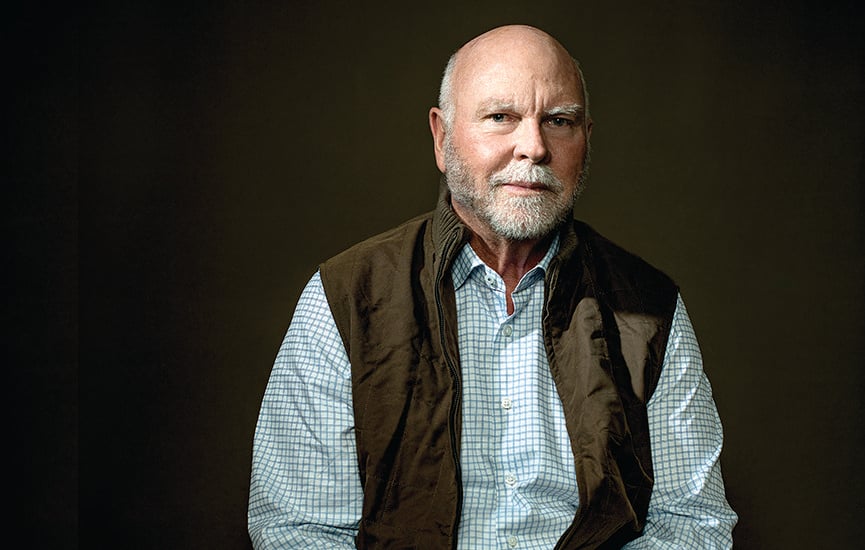
Legendary biologist Craig Venter sequenced the human genome and created the first synthetic organism. Now his genomics company, Human Longevity Inc. (HLI), is studying the science behind living longer and healthier lives. In October 2015, HLI launched Health Nucleus, a genomic health clinic in San Diego. Worth spoke with Venter in May to learn about Health Nucleus and how it works.
HLI HAS BEEN WORKING ON SEQUENCING HUMAN GENOMES FOR A WHILE. NOW YOU’VE OPENED A GENOMIC HEALTH CLINIC—HEALTH NUCLEUS. HOW DID WE GET TO THIS POINT?
HLI is trying to create a preventative, predictive medicine paradigm largely based around the human genome. It’s not possible to interpret very much in the field without having very large numbers of genomes. The reason for that is that we all vary about 3 percent from each other, but that’s 3 percent over about 6.2 billion letters of genetic code. The only way to truly understand that variation is to have very large numbers, but also large numbers with phenotype and clinical data, otherwise we’re just comparing genomes to each other, not to what that actually codes for. We’re sequencing a human genome on average every 15 minutes.

SO IT’S NOT JUST SEQUENCING GENOMES BUT BEING ABLE TO MATCH SPECIFIC SEQUENCES OF CODE WITH ACTUAL MEDICAL OUTCOMES?
For all the [genomes] we do we have both extensive phenotype and/or clinical data to the extent possible on anybody. A key part of that is we started the Health Nucleus to really get comprehensive phenotype data on people and to also try along with the genome find or predict the early presence of disease when its easily treatable, curable—instead of the current practice of medicine where you wait until you have symptoms and then you go to your physician to try and sort out what the symptoms mean and then they try to alleviate the symptoms or cure the disease.
What that means for diseases like cancer is most cancer gets diagnosed or discovered at stage 4 when your chances of survival go way down. So we’re trying from the genome to predict risk in the first place. Then, with all of the extensive phenotyping we do, we do quantitative full body MRI imaging to see if we can detect cancer. Quantitative imaging of the brain primarily to get a baseline for future detection of dementia. We can sometimes predict dementia a decade before people have the symptoms.
IN ESSENCE, WHAT THE CLINIC DOES IS COLLECT GENETIC INFORMATION TO DRAW CONCLUSIONS ABOUT RISK?
As new drug treatments start getting to preventing the disease versus treating it after it occurs, that’s going to be critical in the future. There’s not going to be some magic drug that restores a third of your brain after you’ve lost those functions. But we can prevent those changes in the first place, probably. We also do extensive cardiac analysis, CT scans, we do… bone density, muscle content, etc., various psychological exams, physiological exams, neurological exams. It’s the most comprehensive data you can get on yourself. It includes the genome and the microbiome and the metabolome.
DOES IT WORK?
In about 40 percent of people who think they’re normal healthy people, we’re finding medically significant and clinically significant findings that in some cases are life saving. For example, early detection of cancers. We’re finding [cancer] at stage 0 or stage 1; whereas there are the types of cancer that if they were found later, they probably would have been fatal in a few years. We’re discovering brain aneurism and aortic aneurisms. We have people wearing a small patch that measures their EKG over a two-week period. So far we’ve found three people that have episodic AFIB for eight hours or more, and they’re completely unaware of it—that’s the single biggest risk for stroke. Just putting them on anticoagulants is probably going to be life-saving for them. Finding a huge range of things across the spectrum and being able to link that to the genome for understanding and predictions is going to change the future in terms of the practice of medicine.
IT SOUNDS LIKE THE TECHNOLOGY IS WELL ON ITS WAY, BUT IS THE MEDICAL FIELD PREPARED TO ACTUALLY USE THIS INFORMATION?
There’s a huge learning curve because most physicians have no training whatsoever in this space. So we do spend a great deal of time on educating all the patients and their personal physicians, when possible. Part of the challenge is in many cases personal physicians are more afraid of this information and don’t want to participate. It’s really an amazing finding. Getting educated physicians that can deal with the future of science is a huge challenge for medical education.
MEDICAL SCHOOLS AREN’T TEACHING DOCTORS HOW TO USE GENOMIC INFORMATION ABOUT THEIR PATIENTS?
Medical schools are absolutely not doing it. We’re trying to get something started at UCSD where medical students would examine their own genomes, and that’s really hard to get going. People don’t want to do that. How physicians deal with the most important information in the line of medicine when there’s no training in it is going to be a huge problem in the future.