

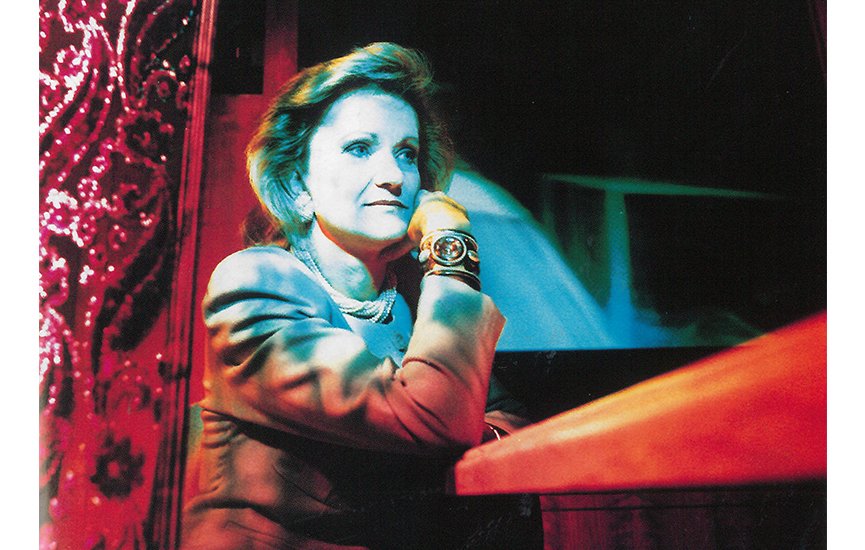
In its August-September 1992 issue Worth profiled cable television pioneer Kay Koplovitz, who at the time was founder, president and CEO of USA Network and was about to launch the Sci-Fi Network. This year, to commemorate Worth‘s 25th Anniversary, Koplovitz was the subject of a follow-up feature, which traces her rise to success and her challenges and triumphs along the way.
Kay Koplovitz was a pre-med student when she heard Arthur C. Clarke, author of 2001, lecture on the potential impact of satellite technology on communications. She promptly switched her major, wrote a thesis on Clarke’s prophecy and went to work for the satellite giant Comsat.

Twenty-five years later, Koplovitz, 47, the founder, president and CEO of cable’s booming USA Network, is launching her own satellite: The Sci-Fi Channel, a USA spin-off beaming down in late September and blessed by TV Guide as “the last great idea for basic cable.”

Champagne corks popped at USA’s New York headquarters in March, when its ratings nudged cable rival TBS out of the No. 1 spot. Hooked into 58 million homes, USA’s blend of sports, kid stuff, reruns and movies will reap an estimated $379 million in 1991. Ninety-five million dollars in profit will be split between USA’s owners, Paramount Communications Inc. and MCA.
PCI’s equity interest in USA will account for about 17 percent of its 1992 operating income. Effuses Koplovitz’s PCI boss, chairman Martin S. Davis: “She’s done a superb job. Couldn’t do better.”
Ambition drove Koplovitz out of broadcast television because she figured they’d never let a woman run a network.
After helping start the Madison Square Garden Network in 1977, she refereed when Paramount, MCA and Time, Inc. took over joint ownership four years later and changed the name to USA. (Time exited in 1987.) When ESPN started a bidding war for sports, she diversified, snapping up reruns at the right price while buying crowd-pleasing movies, wrestle-mania and sex-and-sin series like “Silk Stalkings.”
“We’re unabashedly, unapologetically entertainers at USA,” Koplovitz says. At a meeting of cable honchos last September, she and Ted Turner tiffed over the industry’s “Cable Contributes to Life” ad campaign and USA’s reputation as the “murder-and-mayhem” network. “Ted gets extremely riled whenever we beat them in anything. There’s nothing personal about it,” she says.

Ambition drove Koplovitz out of broadcast television because she figured they’d never let a woman run a network. Cable was different: “In chaos,” she says, “there is always opportunity.”
Pushing Sci-Fi, lobbying for cable on Capitol Hill and laying plans to launch more channels while “extending our brand” globally, Koplovitz’s game is going high stakes and high risk. Says the sky-TV pioneer: “We’re comfortable in high altitudes.”—Rick Marin
Reprinted from the August-September 1992 issue of Worth.