

The monumentality of the pandemic—with a Second Wave that is more devastating than the initial one—has the curious effect of apotheosizing the small. That’s not a new idea, of course, poets and philosophers of every generation have urged contained explosions of delight upon us. But the extent of this crisis, which subsumes and to some degree incapacitates all our usual thoughts, elevates—at least for me, and I suspect for you, since this column has captured your attention—the need for us to find and hold close what Wordsworth called “spots of time.”
It is in the spirit of allowing our minds to be “nourished and invisibly repaired” in the course of “trivial occupations”—and I am confident that some of these entries reach a level of triviality that is beyond what Wordsworth had in mind—that I bring you this third edition of “Annals of Attraction.”

“I Arrest You for Threatening the Future”

I was both charmed and impressed when I discovered that in 2015, the government of Wales named the world’s first “Future Generations Commissioner”—with a mission to enforce seven well-being goals. That was a while ago, but it is of screaming saliency right now. Sophie Howe has statutory powers to represent the “unborn citizens of Wales,” notes The Guardian. Could this be a moment when we actually start measuring our choices based upon their consequences, since we have obviously been doing such a shabby job of forethought?
The Guardian goes on to say, with unironic obviousness, that “today’s crises, threaten calamity not for the people currently on the planet but for their descendants.” Descendent consciousness transcends polarization, but what doesn’t is the need to agree upon what the actual problems are and how to address them. But even if this position is a rebranding of what every government agency should be doing, the emotional wallop of “Future Generations” could move, or at least vibrate, the needle.
Casting for Truth

Jill Lepore is one of those freakishly protean and prolific people who simply encourage most of us to lie down and take a nap. She is a professor of American history at Harvard, a staff writer at the New Yorker and an author responsible for a gap-less unspooling of books, including, most recently, This America: The Case for the Nation, arguing on behalf of a “generous patriotism that requires an honest reckoning with America’s past.”
Her new podcast series “The Last Archive” is a timely and wonkily addictive “search for truth.” The hunt for the perpetrators—in this admittedly leading-the-witness question (“When did you stop beating the truth?”)—explores the “history of evidence, proof and knowledge, in troubled epistemological times.”
Lest that sound like a remote “Introduction to Philosophy” class, the episodes, which are “produced in the style of classic 1930s radio dramas,”are brilliant storytelling, using original source material that often jumps decades and creates startling juxtapositions—minutes from 1966 hearings titled The Computer and Invasion Of Privacy meet recordings of Mark Zuckerberg’s Senate testimony.
The first season begins in 1919 with a cold case murder in Vermont and concludes with a look at Silicon Valley and how the Cold War is actually responsible for the “fall of fact and the rise of data.” The episodes’ “weird foreshortening of history” includes a company called Simulmatics, which is the subject of Lepore’s upcoming book If/Then.
I can’t wait for it, and I suspect you’ll be in high-anticipation mode as well.
Love Your Butcher
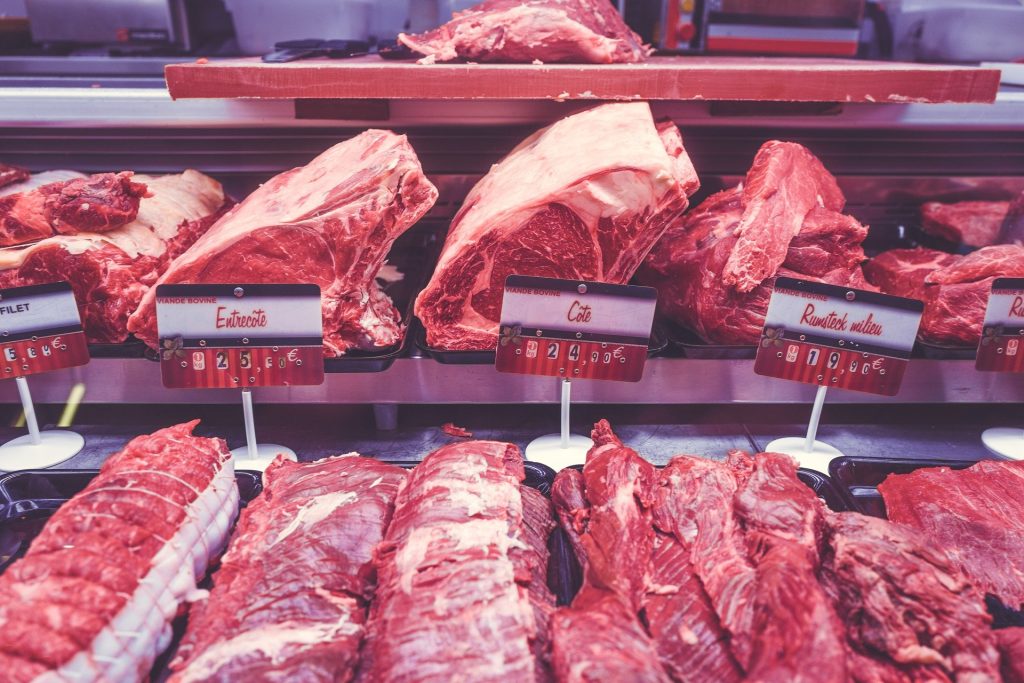
Thanks go out to Food & Wine magazine, which has laboriously compiled a list of the 100 most essential butcher shops and meat markets in America. There was, pre-pandemic, an encouraging renaissance of the local butcher shop—driven by the converging trends of farm-to-table, a millennial up-valuing of artisanal production and a generalized rejection of our industrial food supply—which were a vanishing species since supermarkets and pre-cut meats commandeered the American diet. Civil Eats, which is an invaluable “daily news source for critical thought about the American food system” writes of some local butchers who are “regaining a foothold by offering restaurants alongside whole-animal butchery.” You may be thinking of how this is trend orthogonal to veganism and vegetarianism among Millennials—but when has any generation, or any individual, been wholly consistent? Purity of values, actually, is the link.
I’m optimistic that this reinvention will continue post-pandemic, as the millennials who are departing cities (see the “Flight of the Hipsters,” below) will want to support local butchers, bakers and the occasional candlestick maker as their preferred mode of shopping. In 1272, the York Butcher’s Guild was established; today, it has a website and a few years back, named its first woman as master of the guild. So, the craft isn’t going anywhere, but you can sure help it by supporting those on the Food & Wine list—and so many others—either in-person or through e-commece, for those who offer animal-to-FedEx service.
No Means No

Peter Attia is a physician, podcast host—his show focuses on maximizing health, longevity and critical thinking—and an luxuriantly free-associative mind.
In a recent newsletter, he discusses the power of saying no and why he’s keeping a “No Journal” with a friend to hold him accountable. Peter describes why yes is so seductive and no can be disturbing.
“When we say yes to an invitation to a future event, we often discount the demands it will place on us when the time comes to attend it. Call it a form of future discounting. The other reason is that most of us want to be liked and don’t want to disappoint other people. By saying no, we think that the person on the receiving end is going to think negatively of us.”
His newsletter also introduced me—and now you—to the Daily Stoic, whose wise counsel about the power of “no” is summed up aphoristically as “don’t let them steal what can’t be replaced.”
So, say “yes” to Peter’s podcast and “no” to anything that you won’t be able to justify, once done.
The Miracle That Is Brainpickings

So endless and unstoppable are the treasures that pour out of Marina Popova’s online project—she calls it an “inventory of a meaningful life” that started as an email to seven friend. I can only urge you to join the million monthly readers, if you haven’t yet, and discover why this is the shortest entry I’ve yet written: I would only do injustice to it by summary.
Maria’s Masks
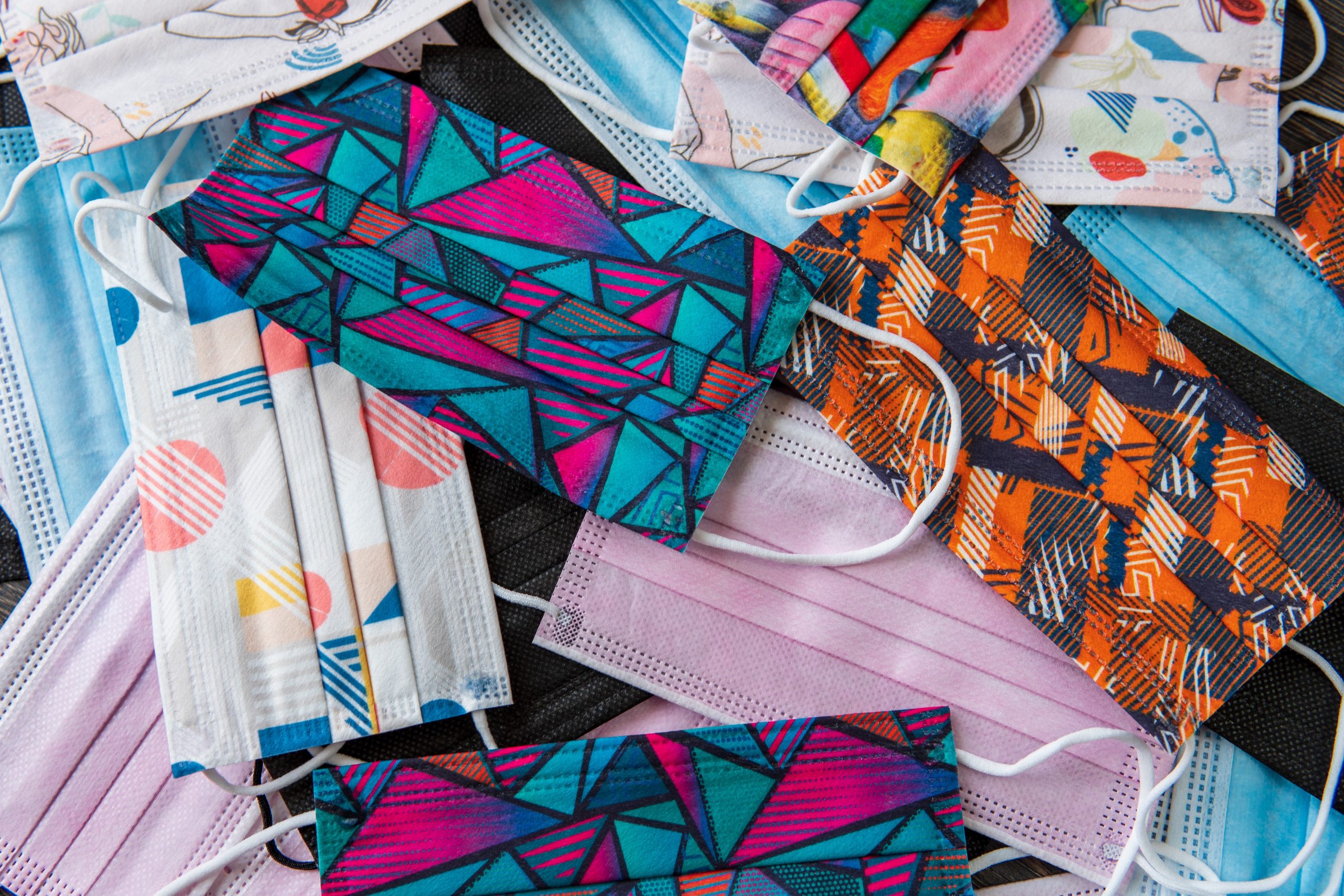
Continuing in the manner of all things Popova, you can find a selection of face masks inspired by vintage science prints and etchings—chosen by Maria—as well as masks by contemporary artists, on a design site called Society6, which supports and provides visibility to independent artists. You’ll find wall art, tech products, tapestries, pillows and some oxymoronic blackout curtains that can brighten your world from the inside.
The Trampoline—Winning the Backyard Like It Won World War II

The trampoline, our vertical escape from the G-force of the pandemic, requires no additional equipment other than the imaginations of children and a “be careful” Greek chorus from spectating parents. That’s why they are largely sold out, as The New York Timesurges “Turn Your Backyard into a Vacation Spot.”
These objects of neighborhood backyard envy, and triggers of rapid increases in liability insurance, go back to the Intuits and the tradition of the Nalukataq blanket toss. Flash forward to the 20th century, and we have George Nissen, who invented the modern trampoline and named it after the Spanish word, trampolin, which means a diving board.
The trademark has been lost, anyone can make a trampoline, but in the early days, the generic term was “rebound tumbler”—which sounds like something that was arrived at during a whiteboard naming exercise.
You might not know that trampolines were an essential part of physical training for naval aviation cadets and that astronauts used trampolines to prepare for their missions. Unrelated to this, in 2014, Russia’s deputy prime minister mocked Elon Musk’s SpaceX by tweeting that he might as well us a trampoline to get to the Space Station. That accounts for Musk’s mysterious comment made during the successful launch of his mission: “The trampoline is working.”
The Flight of the Hipsters

As co-author (with my great friend Faith Popcorn) of Dictionary of the Future, I am always on the prowl for words that capture a moment. The portmanteau word “hipsteaders” includes those urbanites who have fled the city for safer areas, including rural areas, small towns and the spurned suburbs.
The Hill notes that more than a quarter of a million New Yorkers are moving upstate for good, while two million may leave for other states.
Jenni Avins, who writes for Quartz, archly describes the behaviors of these hipsteaders, who are a decades-later version of the bourgeois bohemians, or “Bobos” that David Brooks described in his pre-New York Times pundit days book, published back in 2001, Bobos in Paradise.
Avins writes: “These hip homesteaders use the energy—and money—they might otherwise have put into social outings in stylish outfits at Instagrammable locations into transforming their home-lives into what writer Heather Havrilesky described as ‘a group hallucination of some Little House on the Prairie lifestyle.’”
Far Better Humor
Last summer, Good Humor—which invented the ice cream truck in 1920 (an early last-mile, direct-to-consumer innovation)—announced it was replacing its long-standing but deeply racist “Turkey in the Straw” jingle with a new one, written by Wu-Tang Clan’s RZA. The NPR blog Code Switch dug into how this 19th century folk song, which “riffs on an Irish fiddle song,” acquired racist lyrics and came to be associated with minstrel shows. You can hear the new jingle—which RZA donated, here—and in a few months, on the streets of America, signaling a much-awaited spring.