
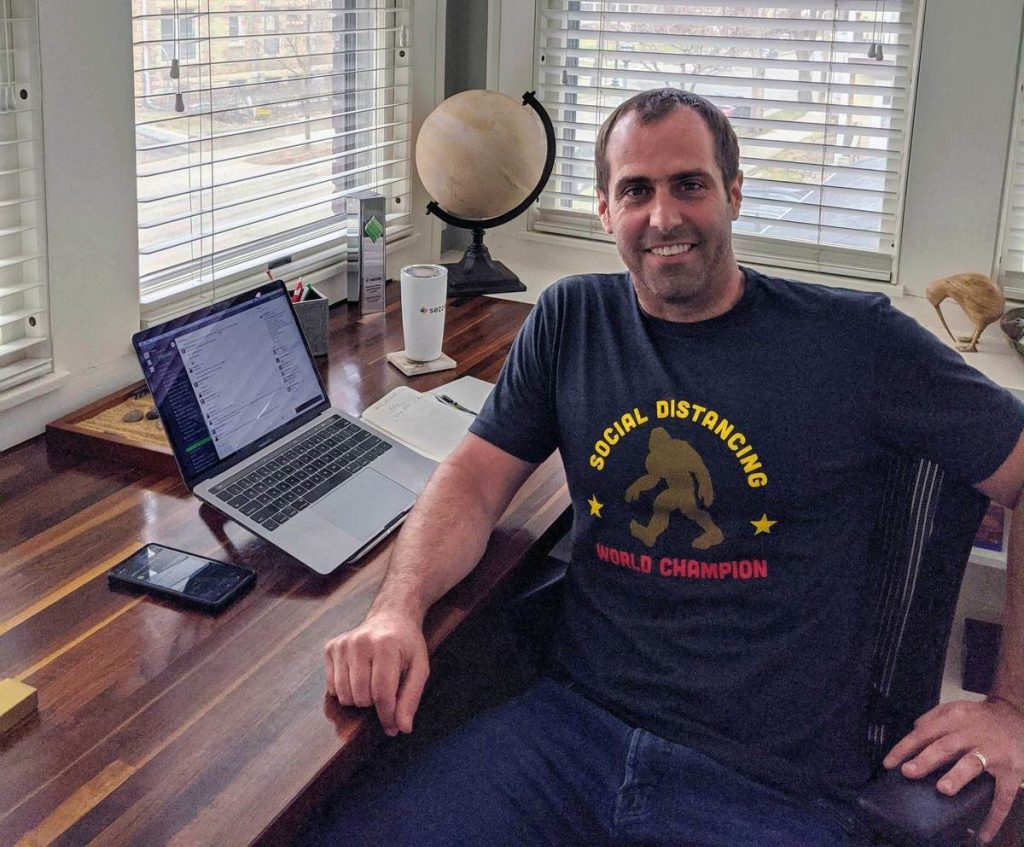
It is 6:45 a.m. on an unusually warm late spring morning in the tony Lowry Hill neighborhood of West Minneapolis, and Charlie Youakim is already awake, sitting on his porch and sipping a frothy cold brew coffee. The blue light beaming off his laptop bathes his face as the first rays of sunlight manage to sneak past the horizon, around the surrounding structures and over his shoulder.
It was quite a stunning sight as a collage of orange, yellow and blue light basked Youakim in an effulgent, golden hue. An image of King Midas—the figure in Greek mythology known for his ability to turn everything he touched into gold—rushed into my head; I wished I had brought a decent camera; it would have been the perfect way to capture the man who some say has the ‘golden touch’ when it comes to tapping into and channeling the young consumer mindset.

“Good morning—you’re late,” he bellowed with his signature toothsome smile. And indeed, I was running behind; the scheduled time had been 6:30 a.m., which I thought was quite early by recent work-from-home standards. It reminded me of an insanely early 4:30 a.m. meeting in New York back in 2004 to which I had been summoned by the late Si Newhouse—the eccentric billionaire chairman of the Condé Nast publishing empire, back when publishing things on paper was still a prevalent business. I was late for that one too.
Fortunately for me, Youakim was in good spirits. “I said 6:30 a.m. thinking you wouldn’t show up until seven o’clock, so you’re actually early,” he soon confessed. We were meeting on his front porch to make sure we could speak one-on-one yet still obey what were the then fairly strict social distancing guidelines that had been put in place by Minnesota’s governor.
I had first met Charlie Youakim and his cofounder Paul Paradis the year before when I was writing a piece about the burgeoning ‘buy now, pay later’ payments sector, which was beginning to gain traction among online shoppers as an alternative way to pay for items without using traditional credit or debit cards. The segment, often abbreviated by its initials BNPL, is a family of payment solutions that enables shoppers the ability to make purchases without having to lay out cash for the full price up front.
Typically, this type of deferred payment tools appeals to younger consumers who lack the financial wherewithal or credit history to obtain a credit card, don’t have enough cash on hand to use their debit card or simply would rather pay for an item over time in interest-free installments. It began as a solution primarily focused on online shopping, but firms such as Sezzle have begun piloting in-store applications for traditional brick-and-mortar retailers as well.
Youakim and his team have been on a tear since going public in July of 2019; to say that Sezzle is simply coming off a solid 12 months of growth would be pretty much akin to the understatement of the year.
Investors have taken notice, and Sezzle’s stock price has responded in kind, posting an astounding 1,200 percent rise since March.
When I met Youakim back in April 2019, Sezzle, which is headquartered in Minneapolis, was gearing up to go public on the Australian ASX—a rather unusual move for a U.S.-based company that had no operating business Down Under. At the time, Sezzle had signed up just over 3,000 online retailers and was busy growing a consumer base which, back then, numbered roughly 250,000. Now, 12 months later, the company just announced that it has corralled over 16,000 retailers and is fast approaching 1.5 million active users across the U.S. and Canada.
And while growing at an impressive clip, investors appear delighted to learn that the company is also becoming more efficient as it has scaled, improving what economists like to call its “unit economics”—the profitability of each transaction. Investors have taken notice, and Sezzle’s stock price has responded in kind, posting an astounding 1,200 percent rise since March.
“There is no question that the ‘buy now, pay later’ segment is expanding quickly in North America,” observed legendary Wall Street tech insider Gene Munster, who famously predicted the resurgence of Apple back in 2004 when the company’s share price was trading at less than the equivalent of two dollars a share—well before the first iPhone was unveiled—and has gone on to make equally bold calls on Facebook, Alphabet and Tesla which have proved right on the money. “Some of Sezzle’s recent share price move is largely related to the market rebound after the sell-off that swept across the entire market in the early days of the pandemic. That being said, the company is still undervalued relative to its fintech peers.”
“If in quarters ahead, Sezzle proves it can consistently deliver revenue growth consistent with other fintech notables like Lemonade, Brex, and Robinhood, that valuation gap should close,” added Munster, whose investment firm Loup Ventures does not hold a stake in Sezzle.
If Munster’s prophecy pans out, Sezzle may soon be entering the rarified airspace of fintech companies with billion-dollar valuations. At present, Lemonade, Brex and Robinhood—all unicorns in their own right—have a collective valuation in excess of $12 billion.
The Growth of ‘Buy Now, Pay Later’
Although Sezzle’s key growth metrics have been in triple digit territory, the rest of the sector is also expanding at a brisk pace. Competing companies, such as Sweden-based Klarna, Australia-based Afterpay and Zip Pay, New York-based Quadpay and San Francisco-based Affirm, also saw significant growth in the previous 12 months with the entire sector emerging as arguably the most exciting and dynamic niche within all of fintech. A recent report put out by industry trade publication PYMNTS.com and Australian juggernaut Afterpay suggested that the entire BNPL solutions industry grew nearly 40 percent year-over-year between 2019 and 2020.
At a widely attended June industry event, acclaimed generational researcher Jason Dorsey from the Austin, Texas-based Center for Generational Kinetics made a bold prediction that caused many retailers’ ears to perk up. “By 2023, I predict 95 percent of all direct-to-consumer retailers will be offering some form of installment-based payment solution for both online and in-store checkout,” acclaimed Dorsey in a globally broadcast event for e-commerce and retail executives that was cohosted with Sezzle.
For Dorsey, who has appeared on 60 Minutes, The CBS Early Show, CNBC’s The Closing Bell, and countless other news programs as one of the nation’s foremost authorities on generational trends, the success of BNPL is directly linked to the growing emergence of Generation Z—individuals born between 1997 and 2012—and their growing impact as active members of the economy. “A product of growing up after the Great Recession, [Gen Z] is wary of credit and worries about their finances more than any other generation. For retailers, it is critically important to understand how these unique attitudes shape young consumers’ attitudes,” explained Dorsey.
In preparing for this article, I canvassed contacts and industry insiders who closely follow the world of fintech and specifically BNPL. Many pointed out that what they found most compelling about Sezzle’s story was that, as opposed to its closest competitors—some of which are considerably older and larger—Sezzle had made a big bet on appealing to Gen Z, and, so far, it has been paying off in spades.
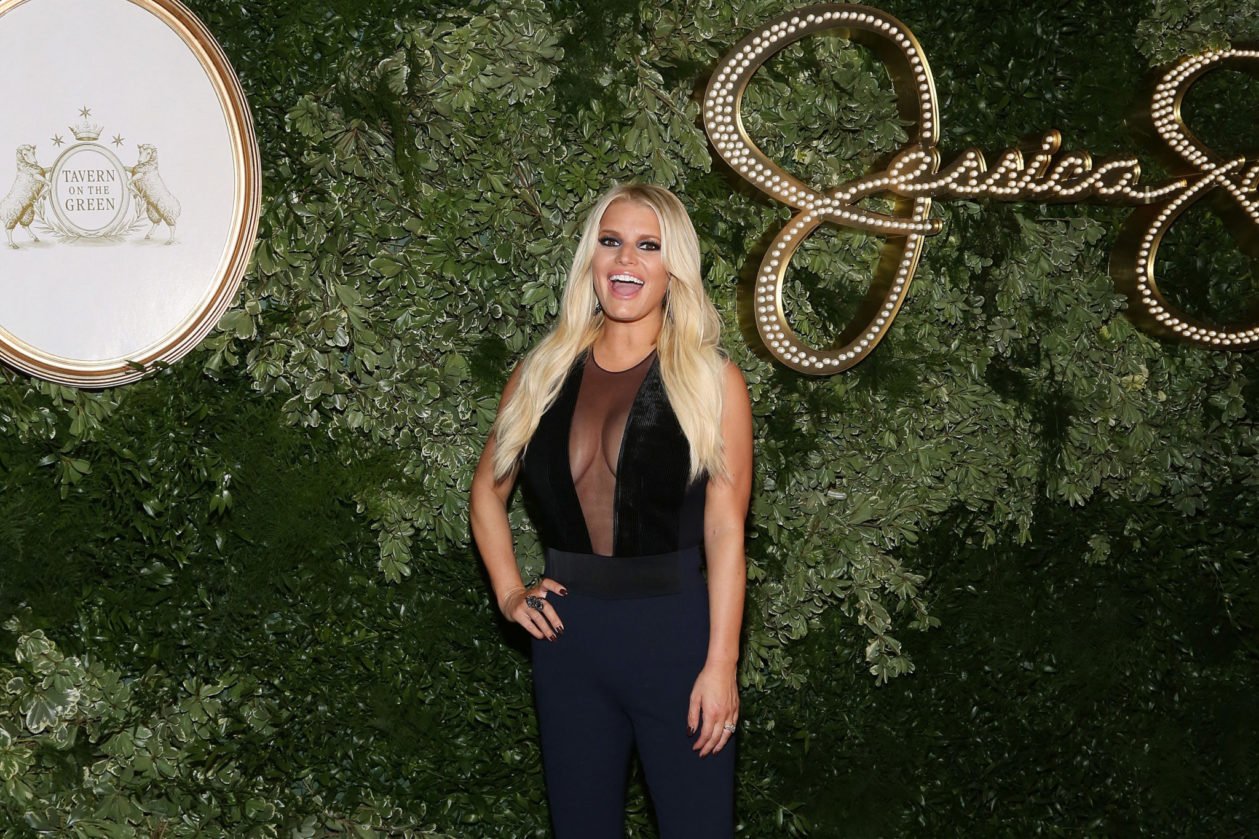
Brands big and small have flocked to Sezzle, making the Minneapolis startup the marquee alternative payments solution for brands looking to connect with Gen Z. Jessica Simpson, part of the Sequential Brands fashion empire, launched with Sezzle in June 2019, making the platform its go-to ‘buy now, pay later’ solution. Other top brands as varied as Touch of Modern, Bodega, Proozy.com, Akira, Bass Pro Shops and Altitude Sports have followed suit, giving Sezzle a tremendous amount of street cred among young millennials and Gen Z shoppers.
“Sezzle definitely has their finger on the pulse of the Gen Z mindset,” commented Proozy.com CEO and founder Jeremy Segal, who runs one of the fastest-growing deal-based e-commerce sites in North America. “We have definitely seen an uptick in Gen Z and young millennial shoppers ever since we launched Sezzle on our checkout page.”
To say that Sezzle is simply coming off a solid 12 months of growth would be pretty much akin to the understatement of the year.
I was really looking forward to catching up with Youakim. Over the years, I have met and interviewed countless startup tech founders, but the Sezzle CEO is one entrepreneur who always stood out from the crowd with his mix of midwestern pragmatism, middle-class humbleness and nearly boundless optimism.
Greeting me with board shorts, a Sezzle T-shirt and sandals, Youakim doesn’t exactly give off the vibe of some Madison Avenue soothsayer or Silicon Valley oracle who can divine the way trends are blowing, but his endless curiosity and compunction for doing deep dives on the data is what gives this son of a Palestinian immigrant his edge. Sezzle cofounder and chief revenue officer, Paul Paradis describes Youakim as “the type of CEO who will listen to the topline takeaways of a survey, and then ask to see the crosstabs. He is a data guy through and through and that is why he rarely—if ever—misses the mark when it comes to the big picture. He sees how data flows and uses that to frame out our broader strategy.”
“Our big bet to focus on and own Gen Z was really the result of Charlie pouring through the data and seeing a big white space in the market. That so many other solutions are now playing catch up is both somewhat amusing and a validation that Sezzle is on to something big,” added Paradis.

Youakim believes so staunchly in the strength of Gen Z as a market differentiating factor that he reportedly asked the architects designing the company’s downtown Minneapolis headquarters to literally chisel the company’s mission—”financially empowering the next generation”—into its stone walls, as if to tell the world that the mission isn’t changing anytime soon. As it turns out, the company’s HQ is located in a landmarked building, and so he had to settle for etching the corporate mantra into the company’s glass partitions.
My goal for the interview was to get Youakim to dissect his company’s focus on young consumers—the same ones who have been in the news as of late leading the protests for equality and social justice reform. They are also a cohort that consumer brands have famously struggled to understand.
I also wanted to hear what Youakim had to say about the burgeoning BNPL sector—particularly in light of COVID-19. And, closer to home, I wanted to learn how the impact of the riots and protests after the death of George Floyd was affecting his business and personnel. Much of the looting and more violent protests had occurred only a mile or two away from where Charlie and his wife live and within a few blocks of Sezzle’s downtown Minneapolis headquarters.
Q: So, first of all, is it fair to say 2020 is unfolding exactly as you thought it would?
A: (Laughing) 2020 is barely half over, and I believe, in a historical context, it will be a year that we end up talking about and analyzing for decades to come. Even future generations who have yet to be born will learn about this year in school. It’s quite something.
Before we dive in, on a personal note, we all know that Minneapolis has been at the epicenter of a lot of the protests and rioting over the past month or so—much of it not far from here. How are you and your family doing?
Thankfully, we have been OK. It’s been painful to watch everything going on in Minneapolis. My wife and I are expecting our first child later this year, so we have a lot to worry about as it is. As the crow flies, a lot of the most intense action was probably only a mile or two to the southeast from my home, but as is the case in most large cities, a mile or two can seem a world away.
Congratulations on the baby! That’s going to be a big change.
Thank you! It’s a pretty exciting time, both personally and professionally.
Back to the oddity that is 2020—how has Sezzle responded to all of these events that have unfolded thus far?
I would guess that anyone who doesn’t work closely in the epidemiology or scientific fields wouldn’t have ever fathomed that in a few short months large swaths of the economy could be shut down due to a global pandemic. I thought Contagion was a work of fiction when I saw it—not a preview of 2020!
Do you feel that you are stronger for having gone through this? Sort of baptism by fire?
There is no question that we responded really well to all of these unique challenges that were thrown in front of us. I am really proud of the leadership team. They have been incredibly adaptive, agile and creative in dealing with all this turbulence. As a team and as a company, we are really coming through this much stronger than we were going into it. And that will pay dividends for years to come.
And your employees at Sezzle—how have they been holding up?
By and large I think our team has been extremely resilient. When COVID popped up, we quickly transitioned to a completely virtual work environment which was, frankly, a lot easier to get used to than I anticipated it would be. And then, just as we were getting ready to move people back into the office after the governor began easing restrictions, the protests and riots broke out stemming from the death of George Floyd.
Our headquarters are right downtown, and we have a number of employees who live in that area of the city as well; so, naturally, I was very concerned for their physical safety when a lot of this erupted. Fortunately, everyone is fine, physically.
And emotionally? How has your team held up through all of this?
That’s harder to say, for sure. Everyone reacts to these things differently, and our employees are no different. We have a very young staff, so going through a major event like COVID or the GFC is new to many of them. As a result, we’ve increased our frequency of communications to the team and we hold regular virtual town halls to keep everyone updated.
GFC? Are you referring to the Global Financial Crisis of 2008?
Exactly. Most team members have only known prosperity and economic expansion since they have been part of the workforce. They never lived through an economic downturn much less a global pandemic or widespread racial tension. So, naturally, this was a scary time for them. Yet our team powered through and probably became more united because of this.
I have noticed that for young employees at a tech startup—particularly for younger millennials and Gen Z workers—the workplace takes on a much bigger role than it does for people in their 30s, 40s and 50s. Work becomes sort of a social glue that binds them together, sort of like a continuation of the college atmosphere.
That’s so true. Particularly for the younger employees who are not married or don’t have kids—a lot of their social life is intermingled with their work life, so being away from the office was somewhat difficult for them. I know some tech companies in Silicon Valley have made a big deal about working remotely for the rest of the year, but I am still a big believer in the value of face-to-face contact—even if it is conducted six feet apart.
The toothpaste is not going back into the tube. The installment payment option—BNPL—is here to stay and its role across all of commerce will only grow.
Do you feel that the recent events in Minneapolis—which have spread across the country and the world—will impact your approach to your business?
Earlier this year, we unveiled the fruits of a six-month, in-depth project aimed at reimagining our corporate brand. It wasn’t just about updating our logo and the company’s look and feel—although that was certainly perhaps the most visible part of the brand update. What was really at stake with the rebrand was our being more explicit—in fact, doubling down on—our corporate values and being more purpose-driven.
Meaning what, exactly?
At the end of the day, we are a payments company, but Sezzle has always had as its central mission the goal of “financially empowering the next generation.” Where we took this theme with the rebranding effort was to fully embrace the concept of stakeholder value—the idea that we are looking to create value not only for our shareholders, but for our employees, our retail customers, consumers and our community. And a big part of that is embracing the concept of inclusiveness. In other words, being an active and contributing member to our community is a major part of who we are as a company.
Is that why Sezzle recently became a public benefit corporation?
Absolutely. Purpose-driven companies like Sezzle need to safeguard their ideals to stay true to their core values—the PBC designation enshrines our mission into our charter and ensures that we are not just paying ‘lip service’ to the mission of financial empowerment, but that we are ‘walking the walk.’ I think it is a big differentiator.
I understand you have a corporate charitable matching program; that is rather unusual for a young company such as Sezzle.
You’ve done your homework. (Laughing) Sezzle has a policy of matching each employee’s charitable contributions to certified nonprofits and causes up to a certain amount a year. We will support our employees in their efforts to back the issues they care about most. For some, it might be donating to cancer research; for others, it might be about lending a hand to causes that fight for equality and social justice. As long as it’s a legitimate nonprofit organization verified by Gusto Giving, we will match our employee’s contribution 100 percent.
Purpose-driven companies like Sezzle need to safeguard their ideals to stay true to their core values.
And how has the business side been going through all of this? It sounds like you have really been delivering some impressive numbers. Your stock is up over 1,000 percent since March.
Well, two things—stock prices go up and down all the time and oftentimes very little of it has to do with the actual performance of the company, at least that’s been my observation with Sezzle. I would look at long-run equity pricing as a better indicator of a company’s performance, not the day-to-day ebb and flow of trading. I don’t think that looking at a stock price is the best proxy for measuring the health of the company or its business, but if you look at our KPIs, we have really been on a tear.
Active Sezzle users are now approaching 1.5 million. When we last sat for a formal interview a year ago, I believe you hadn’t even broken the 300,000 mark. How do you nearly quintuple your user base in less than 12 months at this type of scale?
Great question. And if I knew this was a “formal” interview, I would have gotten more dressed up! (Laughing as he futilely attempts to straighten the round collar of his Sezzle T-shirt.)
Here’s the deal: We have a great product. We have, in my opinion, best-in-class tech. But, our secret sauce that not everyone picks up on immediately is that Sezzle basically sells itself. Our attachment rate for inbound inquiries from merchants that want to adopt our payments solution for checkout far outpaces our concerted outbound sales efforts. That’s not because we don’t have a good sales team—we do; in fact, we actually have a great sales organization led by my cofounder Paul Paradis, the company’s chief revenue officer.
Is it easy for retailers to understand the intrinsic value you bring?
Most merchants and retailers immediately see the value of offering our transparent and easy to integrate installment-based payments solution. It enables them to increase average basket sizes, lower their abandoned shopping carts and increase sales. I would say that the ‘perceived value’ we bring has only increased since the onset of COVID, as some traditional retailers have really struggled.
And I suppose there is some element of FOMO among retailers.
Merchants talk amongst themselves and certainly notice what others in their space are doing.
You mean the network effect?
Exactly. More merchants beget more customers which in turn drives more merchants to adopt Sezzle. And when other merchants see that their closest competitors are offering a BNPL solution, they want to get on board as well, which brings their customers into the network.
And so on.
And so on.
[T]he payments industry in the United States evolved very little since the 1950s and 1960s when credit cards first became popular. The sector was long overdue for major disruption and innovation.
Diverse forms of retail-enabled layaway programs, installment schemes and various ‘buy now, pay later’ solutions have been in place for years in other parts of the world. It seems that now, really in just the past two years, these concepts are gaining a lot of traction in North America. Why is that?
American and Canadian shoppers have been loyal to more familiar payment methods, such as credit cards, for years. However, due mostly to a variety of cultural and structural reasons, North American consumers have long been resistant to innovation in payments—especially where convenience is concerned. If you were to travel and live in Brazil, for example, most Americans would be amazed to see how much more advanced the banking system is there than here in the U.S.
What is changing now in North America is Gen Z. This cohort represents a new class of consumer that is quick to embrace technology and demands seamless payment integration into their lifestyle. They are a ‘mobile-first’ generation and, by and large, they find conventional analog payments such as physical credit cards cumbersome.
So, is Gen Z the force that is fueling the fast-growing BNPL sector?
It’s certainly a factor—and not an insignificant one either. But it’s certainly not the only contributing vector of influence; there are a multitude of structural changes, cultural issues and other forces at play as well. Keep in mind that the payments industry in the United States evolved very little since the 1950s and 1960s when credit cards first became popular. The sector was long overdue for major disruption and innovation.
What is the state of BNPL right now?
The toothpaste is not going back into the tube. The installment payment option—BNPL—is here to stay, and its role across all of commerce will only grow. I expect to see one, two or even three BNPL options offered at check-out on most sites within the next two years. And in-store check-out options will not be far behind. The coronavirus pandemic, as awkward as this may sound, forced millions of more shoppers online and, as a result, many stumbled across installment solutions sooner than they would have otherwise. It was a big boost to our sector.
A recent 2020 industry study conducted by WorldPay suggests that BNPL in North America will grow over 300 percent between 2019 and 2023. Do you agree with this prediction?
We obviously have our own internal modeling, but directionally, we think these estimates are in line with our view of how we see the market evolving. We see credit card usage steadily falling over the next five years, while a panoply of alternative payment solutions—led by BNPL—will be picking up most of that drop off.
I think it’s also important to highlight that some of the growth of the “buy now, pay later” sector will be structural, while a lot will depend on the effectiveness of—not only Sezzle, but of our major competitors as well—selling the benefits to merchants and consumers, and performing.
Sezzle may soon be entering the rarified airspace of fintech companies with billion-dollar valuations.
Are you worried about some bad actors out there tarnishing the sector?
We’ve been working towards creating a self-regulating body to reduce the risk of a “bad apple.” I’m excited at the progress we’re making there. But I think the key point is that BNPL is not a monolith—even though the media likes to group us together. We are generally considered to be in a competitive set that includes Klarna, Afterpay and a few others, but there are some rather significant differences in our product offerings.
Such as?
Well, it’s not my place to talk about other specific brands; they can do that for themselves.
But there are some clear differences?
Sezzle has a few key areas of focus that differentiate our brand, starting with our mission. We’re a mission and stakeholder focused as a company—the only public benefit corporation in the BNPL space. Because of our commitment to our mission to financially empower the next generation, we’ve taken a different approach from much of our competition.
What role does the end-consumer play in all of this?
We want our consumers to love us, so we continue to differentiate by offering our users features that our competition does not. We allow for free rescheduling of installments, and we waive account reactivation fees if our shoppers fix problems quickly. We’ve focused on the customer so much that we’re starting to be seen as a social-good type product, which makes me proud of what we’ve accomplished.
What about credit-building?
Absolutely. We’ve also embraced the fact that we’re a credit product, and we’ve made a commitment to helping our young consumers build their credit file. If I had an 18-year-old kid, I’d be teaching them to build their credit score, so why would I do anything different with our customers? We will soon be unveiling a major initiative with one of the major credit bureaus—so more on that soon.
Every year for the next three years, an estimated new 4.5 million Gen Z shoppers will become economically active in the U.S.
How did Sezzle become known as the so-called ‘preferred payment engine for Gen Z’?
Well, we hear that a lot from merchants and retailers. The first thing I like to say is that we have robust adoption across all key demographics. From Gen Z, millennials, Gen X and even boomers, we see widespread adoption. But you’re right—Gen Z is a special group for us. We have taken great care to position our brand to align it with the values of our youngest shoppers.
What do Gen Z consumers look for in a brand?
Gen Z is looking for more from the brands they trust. They want to work with brands that give back to the greater good, and we believe we are offering that, as evidenced by our becoming a public benefit corporation. Our rebranding was focused around supporting inclusion and diversity, which is paramount during these times. We’re winning with Gen Z because we’ve built a brand around this generation’s values.
So, you are betting big on Gen Z.
We’re excited about the potential that Gen Z represents. They’re the largest demographic group in the U.S. Every year for the next three years, an estimated new 4.5 million Gen Z shoppers will become economically active in this country—meaning they turn 18 and begin to spend and have a certain level of financial independence. These millions of new consumers have a lifetime of economic activity in front of them and no real brand loyalties when it comes to financial products—which is why have made it a very big priority to deeply understand and connect with this group.
Your decision to go public in Australia and not the U.S. is rather unique. Are there plans for a U.S. IPO sometime in the near future?
Deciding to go public in Australia was actually a pretty easy decision. We didn’t think about a U.S. IPO very much, because we knew that getting American investors to understand the “buy now, pay later” segment would be an uphill battle. But in Australia, investors were already very familiar with BNPL. Looking ahead, I think that there are a number of attractive possibilities on the horizon, and that’s all I should probably say for now.
Final question: Which is your favorite retailer on Sezzle?
That’s like asking a father of four to choose his favorite kid. I love them all equally. They are great partners, and we love being able to support them and contribute to their success.