

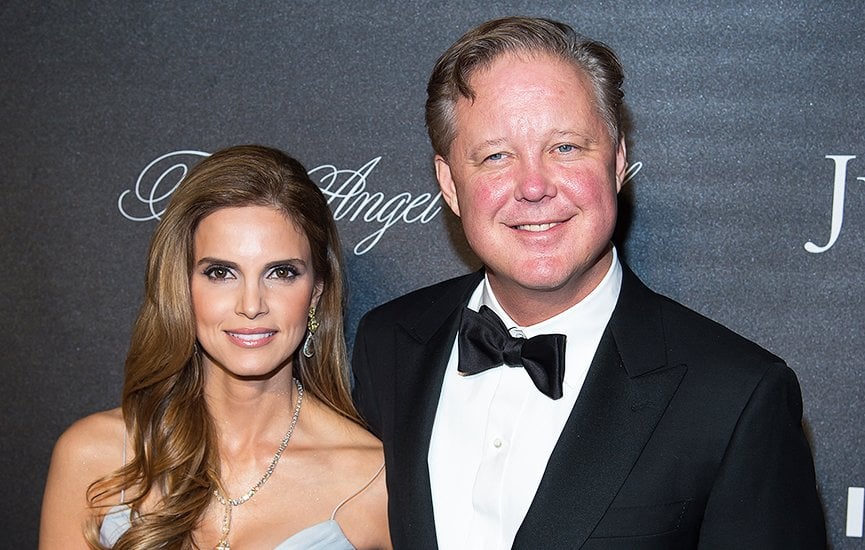
Chairman and CEO of NASCAR Brian France—the third generation of the France family to lead the motorsport league—and his wife Amy have emerged in recent years as major national philanthropic donors. Their philanthropy, The Luke and Meadow Foundation, makes millions of dollars of donations annually to organizations including Autism Speaks, Gabrielle’s Angel Foundation, the Humane Society, Lincoln Center for the Performing Arts and the Michael J. Fox Foundation, with a primary focus on the needs of children and families. Amy takes the lead on the family foundation and Brian, as head of NASCAR, is able to help coordinate the activities of the sport’s foundation with those of the family foundation. Brian and Amy met with Worth in their Upper East Side apartment in New York to share their advice on running an effective family foundation:
1. INVEST IN WHAT YOU’RE PASSIONATE ABOUT.
“Living here in New York City, there have been a lot of ideas floated across my desk about getting involved in the arts and in theater,” says Amy. “I support a variety of causes, but I go to what I’m passionate about. Because I’m a mom with young kids, for me it’s anything related to young children and then—of course—to children who are suffering from disease or sickness.

2. GET ON-THE-GROUND EXPERIENCE WITH THE CAUSES YOU FUND.
“Whatever the cause is, we’ll write a check, that’s obvious,” Brian says. “But, more importantly, we’ll get in there and be part of whatever their challenges are.” Firsthand knowledge of the challenges facing organizations can often make giving more effective or reveal opportunities for greater collaboration.
3. LOOK FOR OPPORTUNITIES TO COLLABORATE WITH OTHER DONORS AND FOUNDATIONS.
“We strategically use NASCAR as an advantageous platform to support what we believe in,” says Amy. In the case of the annual Autism Speaks gala at the Metropolitan Museum of Art, which the family foundation sponsored in 2013, they were able to engage NASCAR to support the event. “We brought them in with our drivers and some of their resources so that we can make that kind of event a ‘one and one makes three,’” says Brian. “NASCAR is doing its own thing, and sometimes we’ll do our own thing, and then we’ll bring them together.”

4. IF A CAUSE—NO MATTER HOW WORTHY—DOESN’T ENGAGE YOU ON A PERSONAL LEVEL, DON’T BE AFRAID TO SAY “NO.”
If you’re not personally connected with a cause, you’re “not going to be an effective contributor of resources, time and effort,” says Amy.
5. BE FLEXIBLE IN YOUR APPROACH TO A PROBLEM; SOMETIMES GIVING TO AN ESTABLISHED ORGANIZATION IS BEST, AND OTHER TIMES YOU MAY HAVE TO START A PROGRAM OR PROJECT YOURSELF.
“Occasionally we’ll do something that we would design, develop and fund,” says Brian. “But most of the time, we’re looking to bolt onto something that’s been established, that is highly effective and will deploy our resources that way.”
6. DON’T BE AFRAID TO LET YOUR PRIORITIES SHIFT WITH THE ENVIRONMENT.
“As we go into different stages of our life, the foundation will work with our ebbs and flows. Right now I’m chasing little kids all day long, but one day they may become more independent from me. That will change my availability as well,” says Amy.
7. INTEGRATING YOUR CHILDREN INTO THE WORK OF A FOUNDATION CAN HELP GROUND THEM IN VALUES OF SOCIAL RESPONSIBILITY.
“One of the goals I have as a mother is to teach my children to be compassionate and empathetic to the world outside of their own. They were born healthy. They have a lot of privileges and luxuries. That can distort a child’s sense of the world. I don’t want that result,” says Amy. “We did take our children with us when we hosted a large group of cancer survivors and their children. And we explained well in advance and talked about cancer with them.” The Frances even met with a child therapist to help with prepare Luke and Meadow, who are both five, for challenging topics such as child cancer.
Contact: Rick Pendrick, director corporate communications, integrated marketing communications, NASCAR, [email protected], 212.326.1838; lukeandmeadowfoundation.com