
Erick Schonfeld is the former Editor in Chief of TechCrunch, where he oversaw the editorial content of the site, helped to program the Disrupt conferences and CrunchUps, produced TCTV shows, and wrote daily for the blog. He is also the father of three adorable children. He joined TechCrunch as Co-Editor in 2007, and helped take it from a popular blog to a thriving media property. Prior to TechCrunch, he was Editor-at-Large for Business 2.0 magazine, where he wrote feature stories and ran their main blog, The Next Net. He also launched an online video series with CNN/Money and hosted regular panels and conferences of industry luminaries. Schonfeld started his career at Fortune magazine in 1993. In 1999, he won the prize for best information technology submission at London’s Business Journalist of the Year Awards, and in 2001 he won the prize for best space submission at the Aerospace Journalist of the Year Awards in Paris. In 1996 and 1997, Schonfeld was recognized in the TJFR Business News Reporter’s list of the best and brightest financial journalists under the age of 30. He appears regularly on CNBC, CNN, and NY1, and is a frequent speaker at industry conferences.

 3D printing
Turning Makers Into Middle Class Manufacturers
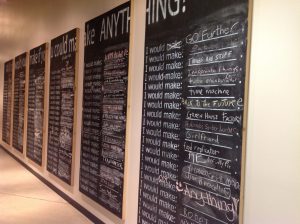
When you walk through TechShop just outside of Detroit, you see all sorts of contraptions and manufacturing projects—from bipedal robot legs hanging off a wooden stand to super-stretch cargo bikes that can carry big loads. Wind your way past the laser cutters, 3D printers, CNC machines—past the wood shop and the metal-bending station—and you will find a hallway hung with a half-dozen blackboards from floor to ceiling.
 Analytics + Data
Putting A Human Face on Big Data
Big Data is a hard concept to grasp because it applies to so many things in our digital world: the exabytes of information produced every year, the digital exhaust of a billion cell phones, the GPS coordinates tracking everything from trucks and trains to the migratory patterns of ocean life, the inventory data spewed by RFID tags, the measurement of our quantified selves through apps and devices that can track every footfall. Rick Smolan, the photographer and mass media coordinator who brought us the Day in the Life books, is embarking on one of his biggest projects yet: The Human Face of Big Data. Smolan sent a hundred photographers around the world to make sense of big data and capture the human side of the equation. In the video above he explains the project and takes a stab at defining big data.
cities
Reimagining Detroit
Where most of us see abandoned lots and vacant buildings, Jerry Paffendorf sees a blank canvas. Paffendorf drove me around Detroit when I was there last week for the Techonomy conference. In the video above (shot and edited on my iPad, thank you very much), he takes me on a tour of Detroit, land use, and Chia houses. During this tour, he explains how he thinks the Internet, data, and crowdfunding can help not just reimagine Detroit, but redevelop it.
cities
Ghosts Of Detroit
What draws creative types to Detroit? It's all the possibilities. I got a tour of the city yesterday from Jerry Paffendorf, a local resident and entrepreneur I met on Twitter. Paffendorf is the co-founder of Loveland Technologies, a startup with grand ambitions to help citizens reclaim their neighborhoods and redevelop plots of land. In the video above, he explains why he left New York City and Silicon Valley for Detroit.