

| Brooks Bell is an established leader in the emerging industry of conversion optimization. She started her firm, Brooks Bell, in the early 2000s to help bring a data-driven mindset to digital marketing departments, and quickly became the leading organization in the industry. Today, her goal is still the same: to help companies discover the people behind the data using advanced analytics, optimization and personalization strategies. The Brooks Bell team has generated more than $500 million dollars in value for industry leaders in retail, financial services, media, and technology.
A recognized thought leader in analytics and entrepreneurship, Brooks has been featured in publications including Inc. Magazine, Forbes, Washington Post, and Techonomy. Most recently, Brooks spoke at the 2016 Democratic National Convention and has moderated events for Bill Clinton, venture capitalist Chris Sacca, and Chelsea Clinton. Brooks co-founded HQ Raleigh and ThinkHouse Raleigh—two communities that help empower, foster, and cultivate companies that produce long-term job growth and positive social impact. She is dedicated to social issues and serves on the board of WalkFree.org, the largest movement in the world dedicated to ending modern slavery. She has also served as the president of the Entrepreneurs Organization, and as a board member of the Digital Analytics Association and the Raleigh Chamber of Commerce. A native of Alaska, Brooks earned her B.A. from Duke University in 2001. |
 Community Insights
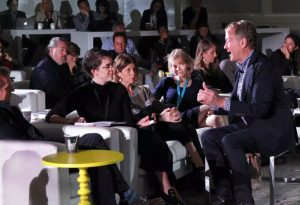
Why I Keep Coming Back to Techonomy’s Conferences
A tech executive explains how being at the right conference--at the right time--can be the route to building powerful relationships.
 Advertising
How Data Is Failing Marketers
For decades, data has promised to revolutionize business, allowing marketers to become more customer-centric, develop more personal campaigns, and create more efficient processes. In the early 1990s, Don Peppers and Martha Rogers predicted the impact of data and the Internet, outlining the end of mass marketing and the dawning of a “one-to-one” age. But this glorious future remains a fantasy. Instead, companies spend less time than ever interacting directly with customers. Rather than offering an easy means of communicating with customers, data has encouraged us to chase quick wins and marginal gains in revenue.
 Amazon
How Data Will Drive Business Strategy in 2014
Among all the recent year-end roundups and summaries was a surprising piece of business news. Blockbuster, the last surviving sentinel of the video rental industry announced that it would close its remaining 300 or so company owned stores across the United States. Many have been quick to credit Netflix with the decline of the once formidable Blockbuster. The case of Netflix versus Blockbuster shows that disrupting an entrenched industry requires much more than competitive pricing and improved service: it requires a complete reorientation of business strategy based on a more thoughtful use and understanding of data.
 Analytics + Data
How Soon Will Big Data Yield Big Profits?
Big Data is “the next frontier for innovation, competition, and productivity,” says McKinsey & Company. But companies and executives rushing into data collection and analysis expecting immediate payoffs are bound to be disappointed. Most companies are years away from being able to effectively profit from data—and not simply for a lack of technology. Instead, at least three entrenched challenges need to be addressed before Big Data can have real impact.
Brooks Bell on Stopping Colon Cancer
Last year long time Techonomist Brooks Bell was diagnosed and successfully treated for colon cancer. But the entrepreneur was shocked a disease that often strikes younger people is treated as a disease of the old. Now she campaigns for a new approach to examination and treatment.
21st Century Alchemy: Open the Data and Stir…
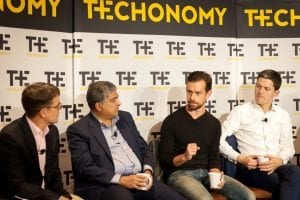
Brooks Bell of Brooks Bell, Inc., McKinsey's Michael Chui, Stephen Messer of Collective[i], EMC's Bill Schmarzo, and Walter Scott of Digital Globe discuss data analytics at the Techonomy 2013 conference. Watch video and read the complete transcript here.
 Conferences
Techonomy 19
The theme for Techonomy 2019 in Half Moon Bay, California was “Reset and Restore: Governing Tech, Retrieving Ethics, and Acting on Climate.” We are in a unique period when corporate responsibility and big-picture thinking is absolutely essential.
 Conferences
Techonomy 18
Techonomy 2018 was a probing, wide-ranging conversation about the tech-inflected issues that affect business and our world. This year’s theme was Harnessing Tech for Responsible Growth, and as always we addressed many of the issues facing leaders today.
 Conferences
Techonomy 15
Technology as scapegoat has driven fears since at least the industrial revolution. That is as true as ever today, with fears of privacy intrusion, our devices inducing inattention, withdrawal from human contact into screens, job-killing robots, and innumerable business models being destroyed.
 Conferences
Techonomy 14
This year Techonomy moves to the beautiful Ritz-Carlton Half Moon Bay, November 9-11, on the cliffs south of San Francisco, near Silicon Valley.