The other day, I received a text message from an unknown number. An increasingly familiar experience, as more companies use SMS to sell curated products to their customers, bypassing the storefront entirely. In my case, the message was from Williams Selyem, a winery that has never used a storefront to sell anything. Their Fall allocation was opening soon, the text said, and prompted me to make sure my details are current, so I don’t miss out.
It’s a small thing, a two-line nudge from a number I hadn’t saved. But it’s also an example of how the wine world is shifting: new release announcements are made via direct line to the customer who has become a member by signing up to be “on the list”. Williams Selyem has been operating this way, in one form or another, since 1987—long before “curation” was a word wineries reached for in marketing copy. Understanding why reveals something the rest of the wine industry is only now catching up to.


For decades, the wine club worked the same way: sign up in a tasting room, get upsold into quarterly boxes of whatever the winery needed to move, and forget to cancel. Now, that supply is shrinking, and the model built on top of it is going with it. What’s replacing it looks nothing like what came before.
The New Wine Club
The shift is visible in the numbers, but they’re really just confirming what’s already happening on the ground: the club is being rebuilt around access instead of volume. The old version shipped whatever was available and hoped members wouldn’t notice. The new version curates allocations of wine a member cannot buy anywhere else, guided by someone who knows the wine and, increasingly, knows the people behind it. That distinction is the whole story. It’s the difference between a subscription and a relationship, and it’s turning out to be the difference between wineries that are shrinking and wineries that aren’t.
Large producers, selling primarily through wholesale distribution, saw direct-to-consumer volume drop 23% last year—a third straight year of underperforming the broader market, according to the 2026 Direct-to-Consumer Wine Shipping Report from Sovos ShipCompliant and WineBusiness Analytics. The smallest wineries, those producing fewer than 1,000 cases a year, saw volume dip just 5%, while the value of their shipments actually grew 10%, the same report found. Those are the wineries with no distributor to fall back on—almost entirely dependent on direct sales, whether shipped or sold out of the winery itself. Distributors make their margin on volume and velocity, moving cases through a warehouse to hundreds of accounts; a winery producing 800 cases a year simply can’t supply enough inventory to make that math work, no matter how good the wine is. So for the smallest producers, the list wasn’t a growth channel added on top of a wholesale business. It was the business, out of necessity, years before the rest of the industry started paying attention to that model. What’s new is how many other wineries are being pushed toward the same setup—not by choice, but because the alternative is disappearing.

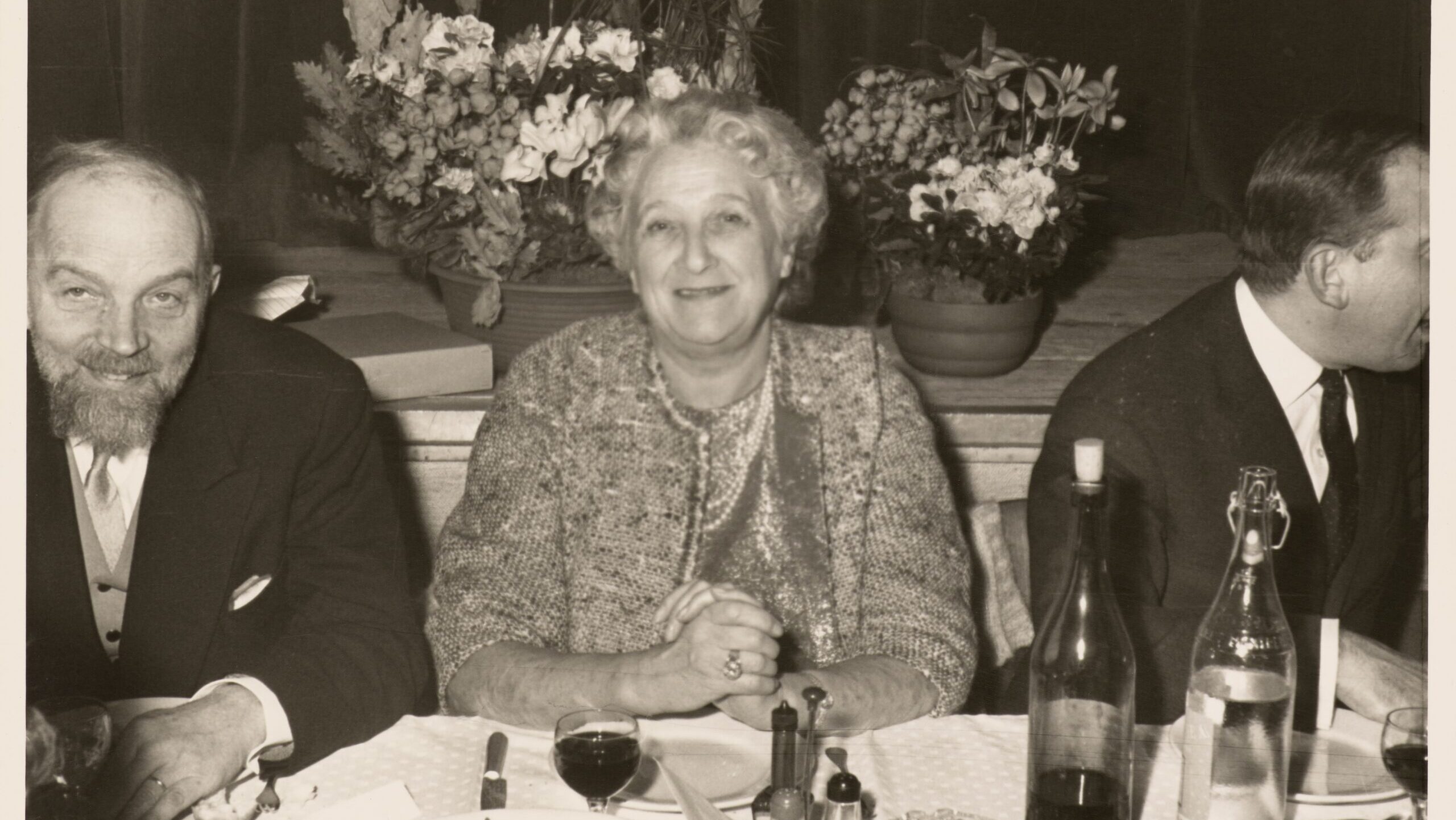
Williams Selyem is one of the clearest examples of what this model looks like once it’s fully built out. Founders Burt Williams and Ed Selyem started the winery in a two-car garage in the 1980s, making wine in repurposed dairy tanks because they couldn’t afford real equipment. They had no tasting room, no storefront, and no outside capital, which meant there wasn’t a way for customers to walk in and purchase their wine. When their Pinot Noirs started drawing serious critical attention in the mid-1980s, demand outran what a few hundred cases a year could satisfy almost immediately. Selling through a distributor would have meant giving up margin they couldn’t spare and still not solving the basic problem: there wasn’t a place for anyone to buy the wine.

So in 1987, after their Rochioli Vineyard Pinot Noir won the Sweepstakes Prize at the California State Fair, demand for a wine they were making only a few thousand cases of instantly outran supply. Ed Selyem started a handwritten register of customer names, not as a marketing strategy, but as a way to fairly divide a tiny amount of wine among the people already asking for it, and to lock in sales before the wine was even bottled. The wait to get on the list stretched to two or three years at its peak. By 1998, when the founders sold the winery, production had grown to around 8,000 cases—still nowhere near enough to satisfy demand— and the list wasn’t a supplement to a traditional sales strategy—it was the primary business.
Today, the winery reports that roughly 95% of its wine still goes directly to list members. That’s the model in its most mature form: scarcity managed through relationships rather than through retail, built not out of ambition but because there was genuinely no other way to sell the wine.
Distributor consolidation has been building for years, but 2025 delivered a genuinely startling marker: Republic National Distributing Company, long the industry’s second-largest wholesaler, announced it was exiting the California market entirely, according to this year’s BMO Wine Market Report. Nearly a quarter of all wineries surveyed for that report said they’d lost a primary distributor in the past year. The club isn’t just competing with the retail wine shop anymore. For a growing number of producers, it’s replacing the distributor outright.

Total U.S. wine spending actually grew 3% in 2025, to more than $115 billion, even as the market logged its second consecutive year of declining volume, per the BMO report. The pressure is sharper still in direct-to-consumer specifically, where volume has now fallen for four straight years, according to the DtC shipping report—and the decline isn’t people trading up to better bottles.
The membership on-ramp cuts both ways. It’s not just teaching new drinkers; it’s exposing longtime ones to producers they’d otherwise never encounter. Meghan Zobeck, who spent seven years negotiating player contracts for the Denver Broncos before leaving football for wine in 2012, worked her way through Screaming Eagle and years as winemaker at Burgess Cellars before Opus One named her its first-ever director of winemaking this year. Her day job is one of the most visible in Napa.
Her own label, M. Zobeck Wines, is the opposite: a personal project sold entirely through her own list—I’ve been on it myself, and there’s no retail shelf where you’d stumble onto the wine—in quantities smaller even than the sub-1,000-case tier discussed above; a single vintage of Gamay Noir came to just 107 cases, and a Cabernet Sauvignon to 42.
It’s an extreme version of the same mechanism, but that’s what makes it worth noting: the same allocation model built out of necessity by a garage winemaker in 1987 is now, at its smallest scale, the only way to discover some of the most interesting winemaking happening today, regardless of how long someone’s been drinking or how deep their cellar already runs.
Whether that rebuilding scales into something genuinely new is still an open question. A curated, allocation-based membership could become the on-ramp a skeptical, price-conscious younger drinker actually needs. In the current economy, finding a way to build trust in a $60 bottle before being asked to trust an entire cellar makes a lot more sense. Or it could settle into something narrower: a model that rewards people who already have the money and the relationships to get on the list. At the same time, everyone else is left with whatever’s still on a shrinking shelf.

Much of the industry frames this as a recovery story. The BMO report found 71% of wineries surveyed expect the broader market to improve within three years. But “recovery” implies a return to something, and it’s not clear that’s what’s actually underway. What the numbers describe looks more like survival: producers figuring out, in real time and without a guarantee it pays off, which parts of the old model are worth keeping and which ones simply aren’t coming back.
Membership, done well, is one of the few things so far proving it can hold. The more interesting question isn’t whether wine recovers. It’s whether the version of the industry that makes it through this stretch is one built to bring in the next generation of drinkers—or just built to keep serving the ones who already found the list.