Tell a cardiologist that a 45-year-old woman is having heart palpitations, and the differential moves fast. Heart attack. Arrhythmia. Anxiety. The cardiologist will almost certainly not ask whether she has been bleeding heavily for months and is anemic. Which means a company that built a diagnostic for that pathway has nowhere obvious to sell it.
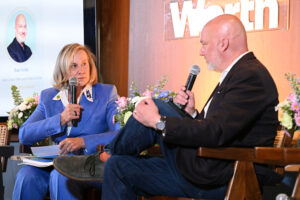
The example comes from Caitlin MacLean, Managing Director of Innovative Finance at the Milken Institute, who walked me through it at the 2026 Global Conference. It is her shorthand for everything broken about the women’s health market—a market that’s large and growing, and structurally mispriced.

“It’s not a niche market,” she said. “It’s been niche-marketed.”
A PwC report issued in March 2026 estimates the current global women’s health market at $430 to $440 billion, with a projected growth to over $600 billion by 2030 at a 6-8% CAGR. This broadens the scope beyond reproductive care to include conditions like cardiovascular disease, autoimmune disorders, Alzheimer’s, and mental health, which affect half the population and have been historically mispriced by the system.
There is a reason for this. The World Economic Forum’s January 2026 outlook estimates women’s health receives only 5-6% of global healthcare R&D and investment dollars. The clinical infrastructure was built on male physiology, partly because of the NIH Revitalization Act of 1993, which mandated the inclusion of women in NIH-funded research. Consequently, many drugs, diagnostic thresholds, and symptom guides are calibrated to male baselines, creating a significant gap in effective care for women.

Both of my Milken conversations landed on the same example. Menopause—a stage of life every woman in the world goes through—was treated as a non-market by venture capital for 50 years. In the last five years, it has become one of the fastest-growing segments in the entire healthcare investment landscape. PwC pegs the annual growth rate at 13%.
The companies that proved out the category are recognizable now. Midi Health has raised $100 million across its first three rounds, with Series B led by Emerson Collective. Evernow raised $28.5 million in a Series A round, backed by Gwyneth Paltrow, Drew Barrymore, and Cameron Diaz. Elektra Health, Maven Clinic, and Carrot Fertility expanded coverage. Corporate benefits packages added menopause as a line item.
Jenica Patterson, PhD, Senior Director of the Women’s Health Network at Milken, called the shift a stigma reduction that finally unlocked the spend. “Every woman goes through menopause at some point,” she told me. “We’re 51% of the population, and 100% of women go through this.”
Patterson pointed out that while venture funding for menopause has accelerated, the underlying science has yet to catch up. The category broke through commercially before fully understanding the biology. Supplements arrived first, but clinical trials are still catching up, highlighting a critical area for future research and investment.
The Commercial Valley of Death
Menopause is the part that worked. The rest of women’s health is stuck in what Patterson—borrowing a phrase she earned, having spent a decade at NIH before joining ARPA-H to lead its $113 million Sprint for Women’s Health—calls “the commercial valley of death.”
The pattern is well documented. Silicon Valley Bank’s 2025 report put women’s health venture funding at $2.6 billion in 2024, a 55% jump from the prior year. The early-stage numbers look like a sector finally getting its due. The exits do not. Most women’s health companies hit a wall somewhere between Series A and the kind of late-stage round that requires a billion-dollar comp to justify itself. The digital health IPO window has tightened across the board—Hinge Health filed an S-1, then paused—and women’s health, with no clear pattern of large outcomes, gets hit harder than the rest of the digital health sector.
MacLean confirmed the diagnosis. “We’re hitting a billion dollars, but the later-stage capital market investment has stalled. It has not really seen its final potential.”
The mechanics underneath the stall are the cardiologist’s problem at scale. The buyers of women’s health products—health systems, employers, and insurers—lack the framework to evaluate them because their clinicians’ medical training didn’t include the underlying conditions. A company building a women-specific pathway faces a discount that a gender-neutral company does not. The fix isn’t more early-stage capital. It is a generation of clinicians, payers, and category infrastructure that doesn’t yet exist.
Catalytic Capital, Blended
This is where Milken is making its bet. The Women’s Health Network—launched in April 2025, chaired by former First Lady Jill Biden, with more than 130 member organizations—is designing a catalytic philanthropic fund to bridge funding gaps. This effort aims to create a more equitable and innovative women’s health landscape, inspiring confidence in collective action.

“This could be everything from having a rural clinic in the United States be able to purchase the next generation of a mammogram machine, finally,” MacLean said. “This could be an investment into an entrepreneur who’s saying, let’s actually provide the right type of services for women in midlife, not just around menopause, but looking at it comprehensively as a whole person.”
The structure is concessionary. The fund is not chasing venture-grade returns; it is de-risking the middle of the curve so that venture capital can underwrite later rounds with comps that wouldn’t otherwise exist. And it is not alone. Melinda French Gates has pledged $1 billion over two years to women and families. Pivotal Ventures, the Nuttall Foundation, and the Gates Foundation are writing checks in adjacent territory.
Patterson, who spent a decade inside the federal version of this problem, is clear-eyed about the shift in burden. “I hope what’s happening now is that a lot of philanthropies are picking up the opportunity to fund that early-stage research to inform better what’s happening in the commercial market,” she said.
The Hole That’s About to Get Wider
The 2025 federal research cuts hit women’s health harder than almost any other category. A March 2026 analysis published in PNAS counted 2,291 NIH grants terminated and 1,534 frozen between February and August of last year, eliminating roughly $2.5 billion in committed funding. The breakdown matters. Among terminated active projects, 57.9% were led by women, compared to 48.2% led by men. Among assistant professors who lost grants, 59.8% were women. The Women’s Health Initiative—the longest-running federal study of postmenopausal women, with 42,000 active participants—had its regional center contracts terminated in September. HHS has said it is working to restore funding, but the chilling effect on the field is already on record.

Patterson’s framing was characteristically careful. “I don’t think we’re going to see the issues with the cuts until later on,” she said. The early-stage discovery work that fed into the current commercial pipeline came from NIH and ARPA-H labs. It takes a decade to show up in a Series A. The 2025 cuts won’t appear in venture decks until the early 2030s.
Which is what makes the Milken bet a thesis and a hedge at the same time. If catalytic capital can hold the middle of the curve long enough for venture and corporate buyers to come in behind it, the $600 billion market grows into itself. If it can’t, women’s health becomes the first part of healthcare innovation to lose its supply chain at exactly the moment its demand is being recognized.