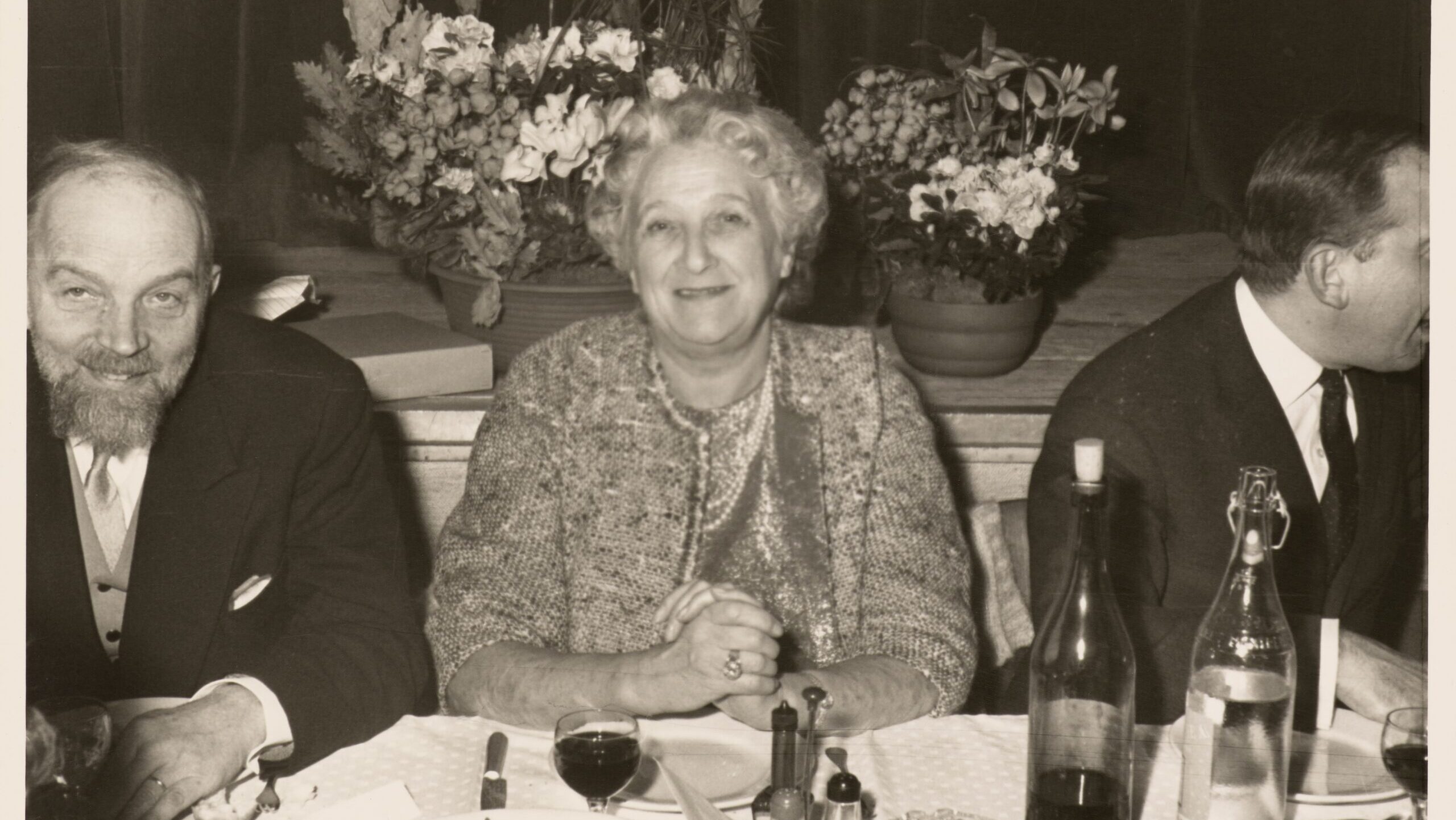
If you travel to Northern California in February, expect moody weather. Before I’d even picked up my rental car, I received a text from Marla Bedrosian, co-founder of Domaine de la Rivière, warning about flooding in the Russian River Valley. Luckily, the rental agency handed me a Jeep Renegade to navigate the surprise flooding I would indeed encounter.
You might be inclined to write off wine country in winter, or off-season, but that’s exactly when you should go. The damp conditions spin out a bold, saturated version of the landscape: grass is emerald green, mustard-colored wildflowers dot the fields, and the vines are a deeply textured dark brown. Most importantly, it’s less crowded, allowing more time with the people who shape this part of the world.

Before check-in at the Farmhouse Inn, my first stop was Marla’s kitchen table. Over a glass of Shoshana Rosé, she and her husband, Geoff, described what it meant to leave New York and build a wine business in Sonoma.
Working within a tightly defined five-mile stretch of the Russian River’s Middle Reach, the Bedrosians produce about 1,200 cases annually. Their focus is on low-alcohol, Burgundian-inspired wines that express both site and vintage, not a fixed house style. When they started making wine, others seemed to be moving toward bigger, higher-alcohol Pinots built to be opened immediately. They went the other direction: harvesting with lower sugar, creating lower-alcohol wines built to last.

The fruit is grown by Kent Ritchie, whose name is shorthand for a certain standard of quality in the Russian River Valley. As Geoff explained, “Everyone who has ever made wine from [his] vineyard has made a great wine.” Kent’s parting words at harvest are always the same: Don’t fuck it up.
Marla described the neighborhood’s location along the Russian River as creating a striking microclimate. “I could be riding my bike here in the morning when it’s cold, and suddenly hit a wall of heat.” That contrast, plus old riverbed soils and regular flooding, gives the wines both ripeness and tension.
They came from the worlds of hospitality and finance, and built the business through relationships. It started with meeting planners and hotel clients. Now, they focus on an experience-driven tasting model. Marla sees hospitality as inseparable from the product. “If we don’t make experiences matter, then we’re not doing it right. You have to be enjoying the surroundings while you’re drinking the wine.”
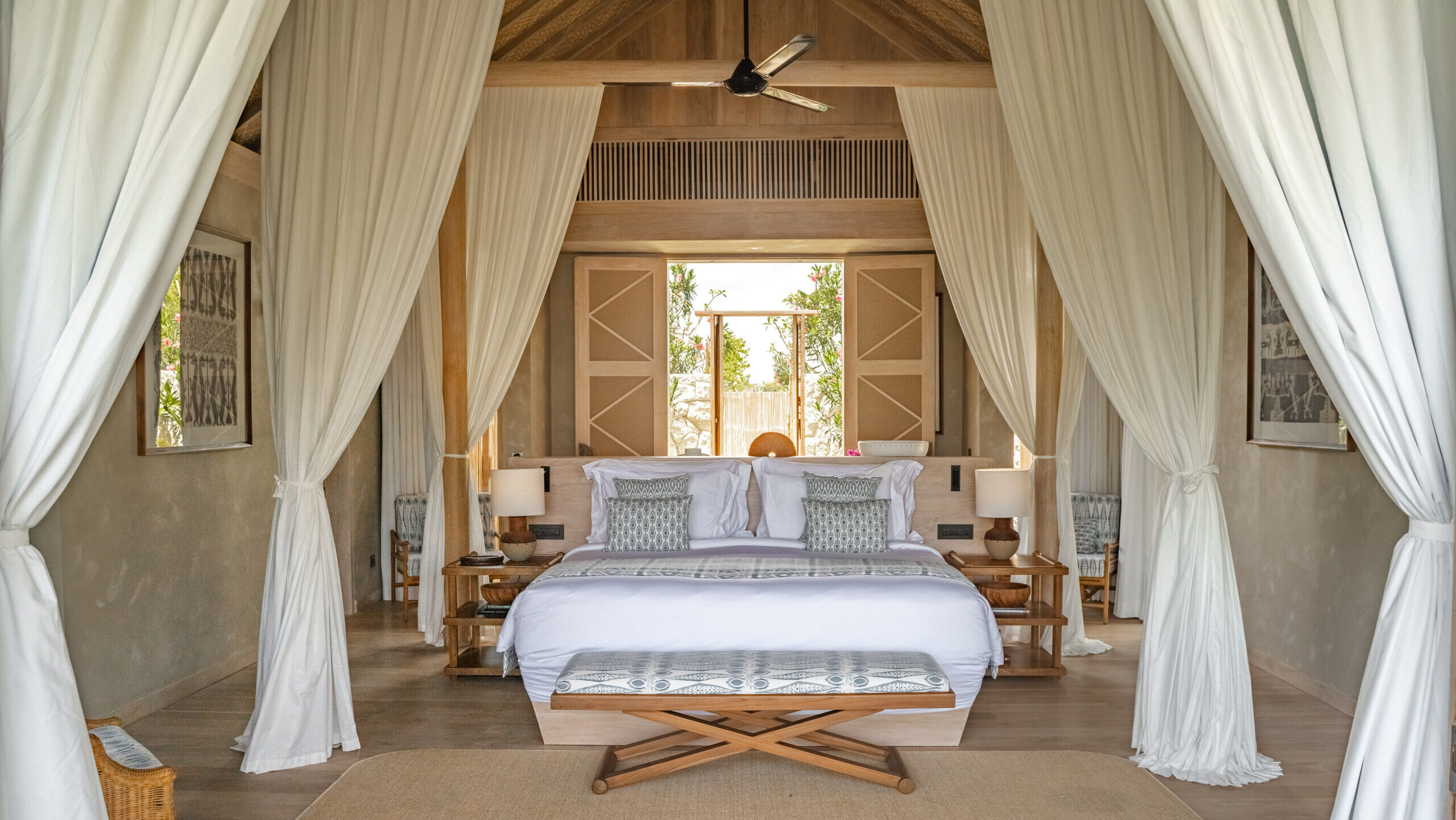
That evening, I checked into the Farmhouse Inn, a revamped 19th-century farmhouse that is, somehow, both centrally located and tucked away. With just 25 guest rooms, The Farmhouse Inn is meant to feel like staying in a private wine country home. The property functions as a kind of concierge-led basecamp for the Russian River Valley, particularly for guests who want curated, appointment-driven winery visits over the tasting-room-hopping circuit.
Hotel GM Giovanni Prada encourages guests to shift from “seeing” to feeling the region. Prioritizing one or two elevated, relationship-based winery visits rather than stacking tastings and letting food and wellness lead. “Less checklist, more intention,” as he put it. “The most underrated luxury here is how profoundly it can recalibrate you—especially when you pair days built around the landscape and local makers.”

Winemaking Begins with Farming
That perspective came into sharp focus the next morning at Bacigalupi Vineyards. This year, Bacigalupi Vineyards is celebrating its 70th harvest. The family has been on this land since 1956, when Dr. John Bacigalupi—a dentist, not a farmer—bought a ranch property to have a pasture for his horses, with grapevines included as part of the deal. Around 1963, the purpose shifted when he decided to start planting grapes. He and his wife, Helen—a tenacious businesswoman who, by all accounts, was the operational force behind everything—secured Chardonnay and Pinot cuttings from Wente Vineyards.
The block they planted in 1964 is still producing grapes today, and it’s likely you may have tasted its fruit without knowing it. In 1976, at the Paris Tasting—the blind competition that rewrote the global reputation of California wine and was dramatized in Bottle Shock—Chateau Montelena’s Chardonnay took first place over the top white Burgundies in the world. Remarkably, roughly 40% of the grapes in that wine came from the Bacigalupi property.
The winery is now run by Katey and Nicole Bacigalupi, who manage to embody both the rootedness of a multigenerational farm family and the enthusiasm of producers who are committed to sharing their family’s specialties with modern wine drinkers.

Bacigalupi grows what they call big vines. Each plant develops its own ecosystem, root system, and claim on the soil. Nothing is standardized. Instead of pulling and replanting the whole vineyard as vines age, they replace vines individually. The oldest ones stay in place. The result is a field blend of ages: vines planted last year grow beside vines that are sixty years old. Their root systems are intertwined; their contributions to the wine are layered in ways that could never be engineered from scratch.
Nicole poured the Rosé—her personal favorite, she admitted. Delicate, citrusy, with something like strawberries and cream. “Even when there’s snow outside, it works,” she said. Hard to argue. Just before I left, their father appeared from the vineyard in work pants and good gloves, and poured Helen’s favorite: a single-clone Pinot Noir. “For approachability,” he said, “you just can’t ask for a better red wine.”
If Bacigalupi represents one version of Sonoma’s story of family farming and winemaking, Marimar Estate offers another. After leaving Bacigalupi, I drove south toward Sebastopol. Here, the road opened up; the redwood corridor gave way to rolling hills and apple orchards. Soon, Marimar Estate, a mustard-yellow building reminiscent of a Spanish farmhouse, appeared on a hill overlooking its vineyards.
Marimar Torres arrived in California in 1975, leaving behind her family’s legacy in Spain when few expected it. “She left Spain under Franco and moved to San Francisco. It was just a world of opportunity then,” her daughter Cristina told me. Cristina is now the winery’s GM. “It’s very much about being involved in every step of the process,” she explained, “from the farming right through to the cellar and what we’re sharing with guests.”
The estate reflects both sides of that history. Two vineyards—Don Miguel and Doña Margarita, named for Marimar’s parents—are farmed with the same attention to detail used in Spain. Chardonnay and Pinot Noir anchor the production. Albariño, Godello, and Tempranillo push the wines into less familiar territory for Sonoma. The approach is European in sensibility, but rooted in the local landscape. The result is a place which feels like an extension of Spain rather than a translation.
The tasting room is decorated with antique winemaking equipment and crockery from Catalonia. I glimpsed a photograph of young Cristina with the Prince (now King) of Spain. We walked to the spacious dining table for a tapas lunch, paired with the wines. We began with an Albariño, bright and saline. Next came a varietal that was new to me: Godello: intense lemon verbena, citrus zest, and herbal notes of lavender. There are also hints of almonds. The palate is round and flinty. It’s intense, with refreshing minerality and excellent acidity. In other words: perfect with tapas.
When I asked Cristina about plans for the winery’s future, she said, “What we have here, the wines and the identity of the wines, is so special. I just want to build and polish and elevate it.”
After a day of slow wine tasting, the place that you want to retreat to is a luxury cabin in the woods. The Stavrand in Geyserville is exactly that—tucked into the redwoods, removed from the wine country circuit but not the glory that is Northern California. Elegant, tall trees surround the Mediterranean-style property that was built in 1922 as an apple ranch. My room was modern and spacious, with an in-room fireplace and a patio with a hot tub from which I could gaze at the stars.
The Stavrand was formerly the Applewood Inn, completely reimagined during the pandemic by owner Emily Glick, who saw something worth saving in the property’s tile roofs and center courtyard. “The Applewood Inn had good bones,” she told me. She considered naming the new hotel “Serendipity”—a word that captures the unhurried current running through Guerneville and the surrounding area. The philosophy here is what she calls “relaxed luxury”: stylish and thoughtful, but without the crystal chandeliers or the staff working overtime to use your name three times in a scripted greeting.
It’s an approach shaped by the community itself. As Emily describes it, the locals in West Sonoma County are welcoming and free of pretense, and the hotel takes its cues from that. For guests with time to explore, the Stavrand sits about 25 minutes from four distinct towns in every direction: west to the coastal hamlet of Duncans Mills and the views at Jenner, south to the maker culture of Sebastopol, east to Santa Rosa, and north to the upscale polish of Healdsburg. But the best recommendation she offered was also the simplest: show up without a plan and let the day unfold.

Open the Aperture
Aperture Cellars has the kind of origin story that sounds like it’s out of a novel. Founder and winemaker Jesse Katz grew up traveling the world with his father Andy, a renowned photographer whose work took them through the wine regions of Tuscany, Burgundy, and Bordeaux. Those early experiences formed Jesse’s instinct for terroir—specifically, for finding sites that others had overlooked. The winery itself feels more like a gallery than a tasting room with an aperture motif that runs through the architecture: the angles of the buildings, the shape of the bar, and a skylight above the tasting space. Andy Katz’s photographs line the walls. The design is intended to slow visitors down before they ever pick up a glass, encouraging the same kind of attentiveness that drives the winemaking.
“The moment you step foot on Aperture’s property,” Jesse says, “You’re surrounded by art and vineyards, but in a beautiful, relaxed format where the music is bumping, you have your own private space and dedicated host, with an array of experiences that change throughout the year.” Indeed, my tasting took place in a private space overlooking the vast vineyards, and our host adjusted the playlist to the tastes of the guests I was with (Toto, FWIW).
When I asked Jesse how Sonoma fits into the wider luxury wine conversation, he explained that the best sites in Napa have largely been identified. Sonoma’s potential, by contrast, is still being discovered, and his generation of winemakers is exploring new vineyard sites across the county’s diverse microclimates, crafting wines that are site-driven and expressive rather than built to a house formula.
“I treat terroir like storytelling and each vintage as its own chapter,” Katz says. The Chenin Blanc—made from one of the last remaining Chenin Blanc vineyards in California—is exactly the kind of wine someone makes because they want to, not because anyone asked for it. As does his assessment of his own trajectory: “We still have a lot to prove and know that we have not made our best wine yet.”

That ambition extends beyond Aperture’s own property. In 2016, Jesse designed the vineyard at what would become Montage Healdsburg, identifying volcanic hillside sites and tucked-away blocks across the estate’s 258 acres before the hotel itself was even conceptualized. The vines came first. Today, Aperture produces a private label for Montage Healdsburg called Surveyor that you can only taste on the property. It’s a detail that changes what you think of when you imagine a resort smack in the middle of wine country. The vines you gaze at from the hotel lobby are also what you taste in the glass.

Montage Healdsburg earns its place at the top of the Sonoma accommodation hierarchy not through spectacle, though the property is stunning, but through an elegance that considers the surrounding landscape. My room was a standalone bungalow in an eco-friendly, modern design with floor-to-ceiling windows, a deck with an outdoor fire pit, and a view of the Mayacamas Mountain Range, which, to the delight of everyone, was snowcapped while I was there. The property offers enough activities on-site to justify never leaving, though downtown Healdsburg is ten minutes away.
While Montage Healdsburg is a Sonoma experience at its most visible, my final winery visit involved some research, good timing, and a bit of luck. I texted Williams Selyem with the hope that we could get in at the last minute, and was rewarded with the closing slot on my final day in Sonoma.
The Place for Pinot
Williams Selyem was founded in 1981 by Burt Williams and Ed Selyem out of a garage in Fulton, CA. They were just trying to make wine that they wanted to drink, and along the way, became one of the most sought-after names in American Pinot Noir before most people had heard of the Russian River Valley, not through advertising or a PR campaign, but through a mailing list. If you weren’t on it, you weren’t getting the wine.
The last appointment of the day turns out to be the best possible time to taste wine. There is a specific generosity that comes out at the end of an afternoon—bottles come off the shelf that weren’t on the original list. The tasting took place in a private space on the estate, also with a view of the snow-capped mountains.

We started with the Estate Chardonnay, bright without sharpness, structured but not overworked. Then, we shifted to several bottles of the infamous Pinot Noir. A 2023 Rochioli Riverblock carried depth, dark fruit layered with something herbal and slightly wild. Then, a 2023 Bacigalupi Vineyard Zinfandel closed us out, with mulberry, plum, cracked pepper, but with a lift that kept it from settling into anything heavy.
What makes Williams Selyem feel different isn’t just the wines, but the way the reputation has been carried forward. The founders sold the winery in the late 1990s, and later stewardship expanded the estate—adding vineyard holdings and building a state-of-the-art facility—without fundamentally changing the character. More recently, a majority stake was acquired by the Burgundian house Domaine Faiveley, a producer with nearly two centuries of history. The message, from both sides, was simple: nothing about the wines would change.
You don’t have to love wine to love Sonoma any time of year. The landscape alone makes the case. But in the off-season, the hiking trails aren’t crowded, and you can get a table at a Michelin-starred restaurant like SingleThread or Enclos without much fuss. We ate at Enclos—two Michelin stars, tucked inside an 1880 Victorian just off Sonoma Plaza—and the food was stunning. What struck me was the service: convivial and unhurried, giving us room to enjoy the meal without being rushed along or distracted by presentation (and the presentation was mind-blowing). We opted for the wine pairing, as you should. One course arrived with a sake created in Sacramento, which happened to be the same sake that appeared as an ingredient in the dish. The kind of connection I never would have made on my own. Before we left, we met Chef Brian Limoges, whose kitchen, visible from the dining room, was a place of unbelievable calm. Limoges matched the energy. Cool, easy to talk to, no performance.
That’s what the off-season gives you. More time with the people who live and work here, and the space to discover that Sonoma’s small producers—the winemakers, the farmers, the chefs, the hoteliers—are not in the business of selling you an experience. They’re in the business of making something that reflects a specific place, then sharing it with the rest of us. At Bacigalupi, that means a sparkling wine finished with winter honey from a beekeeper down the road. Star thistle. Darker and richer than summer. You can smell it when you open the bottle, and it brings you right back to where it’s from as it should.