Some of our friends and colleagues argue hat’hat technology has been dehumanizing, robbing people of human interaction and making them incapable of enjoying a meal without looking at a smartphone.
In some ways, that’s true; I’ve been guilty of looking at my phone during dinner. I can’t remember the last time I asked someone for directions, because I always have a GPS in my pocket. And I never have to call a restaurant to order food or make a reservation. Why wouldn’t I just do it online?
But, in other ways, technology has made us more human. For example, a dishwasher allows me to spend no time hand-washing dishes, giving me more quality time with my wife and daughter. Or that same GPS that may be “depriving me of human contact” gives directions faster and better than a person or paper map can, so I can get to my destination—often to spend time with friends, family, or colleagues—as efficiently as possible.
Financial services innovation is no different. Like the dishwasher and GPS—devices that have become an integral part of our daily lives—automated advice is re-humanizing people. It’s giving them more time to spend on what they want to be doing, and it’s tailored to them; it’s based not just on their personal goals, but also on what fits into their lives.
How We Got Here
It’s not technology that dehumanizes us, but rather tedious tasks like personal finances themselves. And that’s not just because working on them takes time out of our day. We’re simply not evolved to plan perfectly for the future.
If we had evolved in a state where we expected to live forever, this might not be the case. But our ancestors evolved in a world where they had children and died by the time they were 30, so it didn’t make sense to think longer-term.
Research has shown that humans hyper-discount the future. We are conditioned to think about what will happen today and tomorrow, not in a few months, let alone decades. For example, would you rather have $100 now, or $105 next month? The $5 gain may not seem worth the wait, making it easier to just take the $100 that’s in front of you.
However, would you rather have $100 a year from now, or $105 a year and a month from now? Suddenly, the wait seems more worth it. You’re already waiting a year—what’s one more month? We discount differences that are near to a much higher degree than those that are far. And that just doesn’t make mathematical sense in today’s world.
Technology, created for humans by humans, helps bridge this gap, making us appreciate the changes that our bodies and minds just aren’t adapted to understand.
Setting Your Own Hours
Traditional financial services have historically required people to manage their finances during hours that are convenient for the provider. For example, financial advisors typically operate during normal business hours, so that’s what their clients have to do. Even DIY brokerage accounts, while online, require people to spend much more time managing their investments than if they were using an automated service.
People today don’t have that kind of time. They have jobs and kids and school—they have lives. Today’s tech services are changing the old-school model of making people tailor their lives to the provider, and instead they are tailoring the service to the customer.
For example, at Betterment, the automated investing service I started in 2010, we’ve learned that our busiest time for customer calls is Tuesday mornings. We’re not exactly sure why, but one theory is that Monday mornings are especially busy for people at work because they’re catching up from the weekend. On Tuesday mornings, they have a bit more time to engage in personal tasks, like checking if their rollover has completed.
Regardless of why people have chosen Tuesday to use our service the most, it’s their choice. And for that reason, we limit meetings and team activities on Tuesdays to make sure we are ready to answer phones and emails to keep up with demand.
Setting a Purpose
People tend to think of investing as selecting a portfolio, taking on a certain level of risk for that portfolio, and putting money into the market.
But why are they investing? That’s what gets lost—the reasons, the goals. Data suggests some investors aren’t even sure why they invest. In a September 2015 Betterment survey, 29% of people said they invest because it “seems like the right thing to do.”
The abstract idea of creating a portfolio doesn’t relate to anyone’s lives. So, many people either invest because it seems like the right thing to do, or they don’t want to invest at all because it feels complicated and ambiguous.
Automated advice gives people a purpose for saving. The automated investing business is giving them a destination: their child’s college education, retirement at a reasonable age, or purchasing their first home. It’s turning an abstract experience into something real. And that is profoundly humanizing.
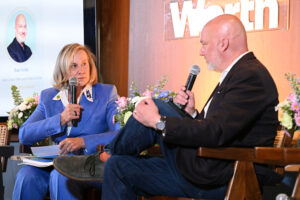
Jon Stein speaks on the “Intelligent Business Machines” session at Techonomy 2015. He is CEO and founder of Betterment, the largest and fastest-growing automated investing service. His interests lie at the intersection of behavior, psychology, and economics. Learn more about Betterment here.
Business + Innovation
The Re-Humanizing Impact of Robo-Advice
It’s not technology that’s dehumanizes us, but rather tedious tasks like personal finances themselves. And that's not just because working on them takes time out of our day. We’re simply not evolved to plan perfectly for the future. Automated advice is re-humanizing people. It’s giving them more time to spend what they want to be doing, and it’s based not just on their personal goals, but also on what fits into their lives.