A recent video of a backhoe tearing through a French vineyard captures something larger about the state of wine today. The industry is under pressure from multiple directions—shifting climate patterns, changing consumer habits, uncertain markets—and the strain is visible even to the casual observer. For some French vineyard families, who have tended the same land for generations, that pressure has become overwhelming, with tragic consequences.
Two forces in particular are reshaping the landscape.
The first is a steady erosion of demand. Global wine consumption has fallen to levelsnot seen since 1961, and the trend shows no signs of reversing. The U.S., the world’s largest wine market, saw consumption drop more than 5% last year alone. The reasonsare layered: a broader cultural shift away from alcohol, growing competition from craft beer—a trend that has taken hold even in France and Italy—the rise of alternative beverages, and inflation that has quietly squeezed discretionary spending.

The second pressure comes from the supply side. Wine is now produced in more corners of the world than ever, and nearly every major producing country has ambitions to grow its exports. Italy, Spain, France, South Africa, Argentina, Chile, and Australia are all competing for a shrinking pool of buyers—and they’re being joined by newer entrants. Armenia, for example, now has bottles on Costco shelves. Global production still grew 3% last year, even as demand fell.

There is one corner of the wine world that is actually growing—in both production and demand: ethical wine. This covers grapes grown organically or bio dynamically, wines made naturally without intervention in the cellar, wines from regenerative vineyards, or some combination of all of the above.
The trade publication Drinks Business lays it all out. “The organic wine market is increasing year on year with younger consumers driving the growth.” They cite a recent report by Insight Ace Analytic stating the ethical wine market was valued at $9.84 billion in 2021 and is set to reach an impressive $25.07 billion by 2030, growing at a CAGR (compound annual growth rate) of 11.3%.
We spoke with several U.S. wholesalers and retailers to learn how this macro movement affects them on a personal level. We selected a wide range of industry. Leaders—from relative newcomers (five years in business) to very established ones (40+years).
The path into ethical wine—whether as a wholesaler or retailer—looks different for everyone. But a common thread runs through their stories: a desire to educate drinkers while doing right by the planet. For those who have been at it longest, patience has proven its worth. In the early days, it was an uphill push. Now, the wind is at their backs.
A leading light in the ethical wine world, Jenny Lefcourt of Jenny & Francois Selections, whose Brooklyn Spring Portfolio Tasting is a must-attend for wine retailers and sommeliers, told Worth, “I have been importing natural, organic, biodynamic, and sustainable wines since 2000. I wouldn’t have gone into business selling conventional wines.
“I believe in farming that leaves the world better for the next generations,” Lefcourt continued. “I also believe the wines are more delicious than conventional wines, because they are better balanced.”
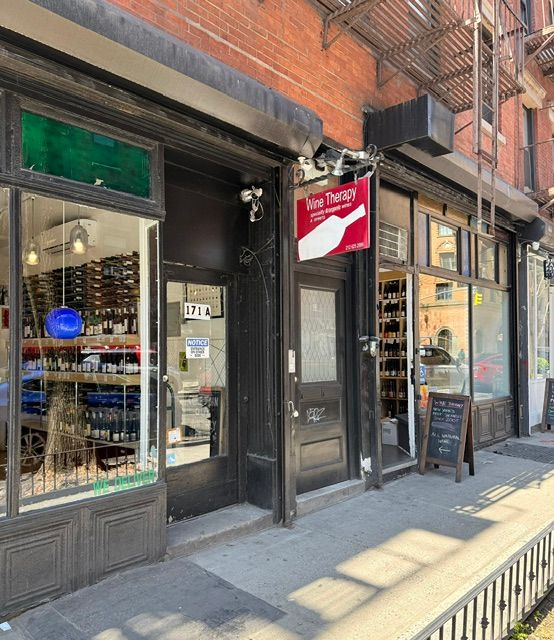
Jean-Baptiste Humbert’s retail store, Wine Therapy, in New York City’s trendy Nolita has one of the largest selections of ethically made wines in the country. Visiting is a crash course in the scope and depth of the organic, Biodynamic, and natural wine worlds. Hundreds of different wines, all artfully displayed, their graphically innovative bottle labels decorate the floor-to-ceiling shelves. Jean-Baptiste, who transitioned from running a vintage furniture store to becoming a wine merchant, told us, “I always wanted to open a wine store focused on these wines. My parents [in France] taught me about natural wines by taking me to the Parisian restaurants le Verre Volé and le Baratin before they became famous in the natural wine world.”

Even though Bowler Wines was a well-established importer/distributor, they saw an opportunity to enhance their ethical portfolio. Evan Springer, their NY Portfolio Manager, explained, “We partnered with the importer Louis/Dressner Selections as a main supplier. They pioneered the importing of conscientiously made wines to the U.S., which steered our whole ship in that direction.”
In an unlikely location, abutting a Native American casino in Northern New Mexico, Kokoman Fine Wines and Liquor punches above its weight on so many levels. From the outside, the non-descript tin building looks like a local tire shop, and not a high end one. But, inside, after passing through the hard liquor and beer sections, is a vast array of unique, curated, non-commodity wines, selected by Mark Spradling and his partner, Marco Marcello. They’ve been at it for decades. What’s their motivation? Mark answered, “For one thing, Marco and I seek out ethical wines because we prefer as little exposure to chemical additives as possible, for ourselves and our customers. We also like supporting wine makers who are farming their own grapes—wines that do not come from factories.”
These wine merchants view themselves as green ambassadors. Mark told us, “It is more difficult, but wine education is something Marco and I embrace wholeheartedly. If we can achieve having a customer understand the not-so-subtle differences betweenthe two options [conventional vs. ethical], we’ve done work we can be proud of.”
Mark has tasted hundreds, if not thousands of wines seeking quality goods to fill his shelves. “There’s a huge amount of ‘ethical wine’ available now and more coming all the time. Even some larger producers are taking up the cause.”
Along with being educators, there is excitement for the product. Two thousand miles from Santa Fe, Eastern Long Island wine merchant Tyler Armstrong, whose curated shop is the antithesis of the supermarket wine experience, expressed it well. “I was aware it could be more difficult, but I hoped my own passion would help, and that we could focus on customers who want better wine. The small size of our business makes it easy to present people with alternatives to big brand name wines.”
Until fairly recently, “organic” on a wine label was, for many consumers, a near-synonym for disappointing. That perception has shifted—thankfully—but the question worth asking is whether it has shifted enough tomake an ethical wine seller’s job meaningfully easier than it once was.
With 20 years’ retail experience, Jean-Baptiste has seen the wine world evolve significantly. He told us, “It was not easy at all at the beginning. A lot of people thought. that organic and natural wines were bad. I recall opening a bottle of Syrah from Hervé Souhaut, and I was the only person around the table who thought the wine was delicious. Now he is a Rhône Valley superstar. Sometimes it’s a matter of time. I don’t think his wines are better now than before, but they’re certainly more in the ‘air temps’ today.”
He continued, “It is easier to sell them now because there are so many ethical vignerons and tons of importers. I think a possible danger is that there might be market saturation with too many offerings. It’s hard to keep up. However, if we run out of a small producer, there is most likely another allocation in the pipeline. It allows us to keep the flow going with new, exciting wines.”

Because many ethical wineries produce very small quantities, we were surprised to learn that no one viewed this as a serious inventory issue. Pragmatically, Evan told us, “We primarily work with small family growers, and there are some supply issues. That’s just part of the wine business. Big suppliers run out of wine, too. Any one brand of wine is a finite commodity.
Mark had a slightly different take. “There’s a huge amount of ‘ethical wine’ available now and more selections all the time. Even some larger producers are taking up the cause. While there may be limited quantities from smaller producers, it’s easier than ever to keep our shelves full owing to the expanding number of ethical wine makers found today.”
Are these retailers catering to customers who are there because of their store’s ethical focus? Yes and no. We were surprised to learn that everyone had customers who only drink ethical wines, but also some for whom this is not a priority. Several sellers exhibited an almost religious zeal when describing how they were pleased whenunknowing buyers show up because it gives them a proselytizing opportunity. As an aside, two retailers with stores thousands of miles apart used Josh Cabernet Sauvignonas an example of the type of wine they were trying to steer their customers away from.
We learned that as passionate as these wine sellers are, not everyone applies all it must test to the ‘purity’ of their product. For example, Evan stated, “If the grower used fungicide in a wet year to save the crop from mildew, so be it. We are not in the position of telling the growers what to do. We trust them to work thoughtfully and conscientiously in the vineyard and cellar to do what they must to thrive and make great wine. We find that good farming, smart resource management, and less manipulation in the cellar makes better wine.”
The nature of selling has changed. Decades ago, when we were discovering wines, the goal was to identify a label we enjoyed and to return to it over and over again. In contrast, Mark said, “The availability of natural wine has brought more young people into this store than I could have imagined 10 years ago. But they can be a fickle lot—trying something once and absolutely loving it yet never wanting the same thing again. They ask, ‘What else have you got in the category?’
Who would have thought ethical wines are a growth business, something few would have forecasted a decade ago. The stars have aligned. The quality of ethical wines is as good as, or according to our interviewees, better than, conventional wines. Consumers are focused on the planet’s health as well as their own. Luckily, dedicated and successful distributors and retailers are there to facilitate this ethical transition.