For decades, the traditional publishing industry operated like a gated institution. A small number of major publishing houses controlled access to distribution, media attention, bookstore placement, and ultimately, legitimacy. Authors spent years chasing literary agents, navigating opaque acquisition processes, and waiting through publishing cycles that often moved more slowly than the news cycle itself.
That model is no longer the only path to influence, highlighting how authors now prioritize direct engagement and strategic partnerships over traditional gatekeeping.
The modern publishing landscape has undergone a profound transformation, driven by digital distribution, direct-to-consumer marketing, social media amplification, podcasts, newsletters, and the growing realization that authority no longer flows exclusively from Manhattan publishing offices. Increasingly, authors with established platforms, engaged audiences, and specialized expertise are rethinking what they actually need from a publisher.

For many high-profile business leaders, academics, and entrepreneurs, the question is no longer simply, “Can I get a traditional publishing deal?” The more important question has become, “Who can I partner with for my book to succeed?”

That shift has fueled the rise of hybrid publishing models, which combine elements of traditional publishing support with the speed, flexibility, marketing collaboration, and entrepreneurial mindset often missing from legacy houses.
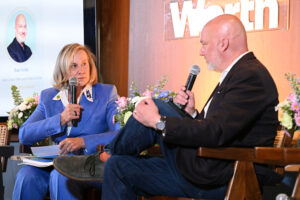
One of the most notable recent examples is Jeffrey Sonnenfeld, whose hybrid publishing approach with Worth Books led to bestseller status on both the New York Times and USA Today lists shortly after release, exemplifying the hybrid model’s success.
Rather than working exclusively through a traditional legacy publisher, Sonnenfeld partnered with Worth Books, a joint venture between Worth Media and hybrid publisher Forefront Books. This shift reflects a broader industry evolution where authors increasingly prioritize strategic alignment, speed-to-market, audience access, and collaborative partnerships over prestige alone, creating exciting new opportunities.
“The publishing world is changing rapidly,” Sonnenfeld said. “I chose Worth because they understood not only the importance of the content, but also how to position it within the broader business and leadership conversation. The experience was highly collaborative, nimble, and deeply aligned with the audiences we wanted to reach. To the amazement of larger publishing houses, Worth turned the book around in a breathtaking time, receiving a final manuscript in early December, with the high-quality edited, beautifully bound book on shelves and in distributors’ hands by late March. No corners were cut in paper quality, graphics, cover design, and lush cloth binding.”

Traditional publishers still offer tremendous value in certain circumstances, particularly for fiction, celebrity memoirs, and mass-market commercial titles. Yet many business and nonfiction authors have discovered that even major publishing deals often come with limited marketing support unless the author is already expected to drive sales independently.
Hybrid publishers have emerged to fill a gap between self-publishing and traditional publishing. Unlike pure self-publishing models, hybrid publishers typically provide editorial guidance, design, production, distribution support, media strategy, and marketing infrastructure. Some hybrid publishers, like Worth Books, even have traditional-level distribution through a partnership with Simon & Schuster. Unlike traditional publishers, however, they often operate with greater speed, closer collaboration with authors, and a more entrepreneurial approach to promotion.
“Jeff is one of the foremost leadership thinkers in the country, so we were incredibly honored that he chose to work with Worth Books,” said Josh Kampel, CEO of Worth Media Group. “Our goal was never simply to publish the book; it was to help amplify an important conversation and bring Jeff’s insights to audiences in a meaningful and impactful way. Watching the book achieve New York Times and USA Today bestseller status was tremendously rewarding for everyone involved.”
The success also reflects a larger blurring of lines between media companies and publishers. Increasingly, media brands are leveraging their editorial ecosystems, audience relationships, events businesses, podcasts, newsletters, and video platforms to support books in ways traditional publishers often cannot.

And as Sonnenfeld’s success demonstrates, authors today have more leverage, more options, and greater control over how their ideas reach the world than ever before, fostering confidence in their publishing journey.
To learn more about Worth Books, visit worth.com/books or email books@worth.com