OK, Beirut, Lebanon may not yet be a startup hub like Silicon Valley, Silicon Alley, or even Dubai. But recent success stories suggest that the Middle Eastern city is emerging as a serious contender. They include event-ticketing and crowfunding platform Presella, mobile music app Anghami, and local tech darling Instabeat, a swim-goggle-mounted heart-rate monitor.
“You can get a feel that there is a community developing,” says Rabih Nassar, founder of element^n, a company that provides cloud platform services. “There are a lot of ideas, a lot of young people who want to jump in.”
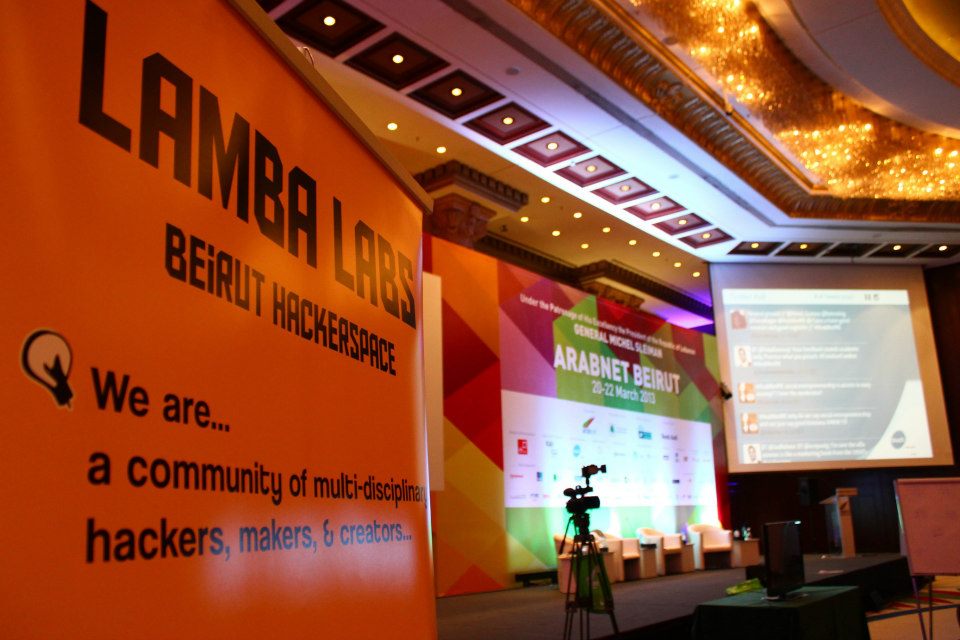
On a recent “build night” at Lamba Labs, Lebanon’s first hacker space, young techies worked on projects including solar panels and anaerobic digesters. Emily, a drink-serving tele-present robot, was built to wander around the lab on her own. Housed on the ground floor of an old apartment building in Mar Mikhael, the space features classic wrought-iron window casements, pinched archways, and marble floors.
Launched eight months ago, the group holds fundraisers in a backyard that boasts an Akindeh tree, and solicits individual donations and subscriptions. Without nonprofit status, the lab cannot solicit commercial funding, but members say that’s better for maintaining transparency.
“A big part of the hacker space is open access to information,” says Maya Kreidieh, the lab’s director of digital identity. “Technology is making that a lot easier. It is democratizing everything. Once you have access to information, your environment is not as deterministic.”
In the decade since Nassar launched element^n, he has seen broadband speeds ramp up and venture capital firms step in, including MEVP, The Abraaj Group, and Berytech Fund.
Nassar says the venture funds have fueled the start of several companies and the emergence of accelerators, incubators, and shared spaces like Seeqnce, Alt City, and Berytech. A recent hack-a-thon also helped further energize the tech community in Beirut.
Still, the young professionals at Lamba Labs see a shortage of funding as a major barrier to the rapid growth of a tech culture here. “If it is always a matter of survival, people will not be able to focus on what is really important,” says Bassem Dghaidy, systems architect at Lamba Labs. Lack of capital, he says, will limit “the level of experimentation that we will be able to do and the level of complexity we will be able to tackle.”
Nassar argues that the kind of “smart VC money” that’s needed is only available from one place: the United States. “Until you can get [American funds] to be interested, you won’t have a real industry,” he says.
Talent is another obstacle. Finding and recruiting people with industry experience—a problem for any tech company—is even tougher in Lebanon, Nassar says.
Select Lebanese universities such as American University Beirut, Lebanese American University, and University of St. Joseph offer computer programming curriculums, but jobs that enable people to develop high- or even mid-level skills and experience aren’t available in Beirut, he says. “When we hire somebody fresh, it takes two years for him to be useful,” says Nassar. “It is a big investment.”
Senior staff need to be imported from outside the country, which Nassar says was easier before the 2006 Israeli/Lebanese war and the series of car bombings that followed the assassination of former Prime Minister Rafik Hariri in 2005.
The young professionals at Lamba Labs feel the lack of a large, experienced tech community as well. “Being an entrepreneur is not about coming up with an idea,” says Dghiady. “It requires a lot of life experience—managing a team, knowing how to talk to people, communication skills … understanding how a company grows.” Although “some organizations are teaching these skills,” Dghaidy feels that there is not enough experienced talent for the younger generation to look up to.
“There is no hierarchy of good developers to go to for advice,” says Marc Farrah, co-director of Lamba Labs. “You see them as sources of revenue instead of mentors.”
Farrah and others maintain, however, that with a few more success stories like Instabeat’s, the tech scene here “will just snowball.”
“We have the community; we have the people,” says Bassam Jagha, a Lamba Labs hacker. “The political instability and the situation in Lebanon is not a reason [to give up]; on the contrary, it is reason to try to excel.”
Alexandra Talty is an American journalist living Beirut covering technology and culture.
Business + Innovation
Beirut—yes Beirut—Has a Vibrant, Growing Tech Scene
OK, Beirut, Lebanon may not yet be a startup hub like Silicon Valley, Silicon Alley, or even Dubai. But recent success stories suggest that the Middle Eastern city is emerging as a serious contender. They include event-ticketing and crowfunding platform Presella, mobile music app Anghami, and local tech darling Instabeat, a swim-goggle-mounted heart-rate monitor. “You can get a feel that there is a community developing,” says Rabih Nassar, founder of element^n, a company that provides cloud platform services. “There are a lot of ideas, a lot of young people who want to jump in.”