Barcelona has always made its history visible. Every era that ruled the city left something you can still stand in front of—the Romans who laid the first grid, the medieval builders who raised the Gothic Quarter stone by stone, the Modernist architects who turned the turn-of-the-century boom into façades that seem to breathe.
No one understood that better than Antoni Gaudí, whose buildings remain the most extreme expression of Barcelona’s belief that art and architecture are how a place declares who it is. This year, that belief is everywhere: 2026 marks the centennial of Gaudí’s death, and the city has spent the year in tribute. It is the perfect time to visit.

What to Do
It was the 100th anniversary of Gaudí’s death on June 10, and dedications and celebrations spread across the city. The Tower of Jesus Christ, the basilica’s tallest spire, was structurally completed on February 20, 2026, bringing Sagrada Família to its full height of 172.5 meters and making it the tallest church in the world; Pope Leo XIV led a ceremonial blessing to mark the occasion. But “finished” is relative—interior work on the tower continues through 2027 and 2028, and the Glory Façade, the main entrance, isn’t expected to be complete until 2034 or 2035. The building has been under construction for 144 years and counting, which is either the least or the most Barcelona thing about it, depending on how you look at it. Book an early morning audio-guided tour where the detail and level of obsession behind the design reveal themselves up close.
To understand not only the architect’s evolution but also that of Barcelona, a walking tour of Gaudí’s lesser-known work provides perspective. Casa Vicens, Gaudí’s first commissioned work, was a summer house designed for a wealthy tile and brick merchant. Completed when Gaudí was in his early 30s and already rejecting architectural convention, the house shows him working out his visual language before he fully found it, which makes it a fascinating place to start. From there, tracing his work through the city becomes its own kind of map: Casa Batlló on the Passeig de Gràcia, its facade so encrusted with scales and curves that locals call it the House of Bones; Casa Milà just up the street, all undulating stone and surreal rooftop warriors, was his last secular building.

Following Gaudí through the neighborhoods is a way to understand the city’s ambition. In the late 19th and early 20th century, Barcelona was asserting itself culturally, economically, and politically—and Gaudí was the most extreme expression of that energy.
The Modernista movement wasn’t just aesthetic; it was Catalan identity making itself visible in stone. The men who commissioned his buildings—Güell, Batlló, Milà—were the industrial bourgeoisie who built modern Barcelona, and their choices tell you exactly who had power and what they wanted to signal with it.
Where to Eat and Drink
Barcelona’s food scene has evolved dramatically in the last two decades. When elBulli, Ferran Adrià’s legendary restaurant up the coast, closed in 2011, the talent dispersed and Barcelona absorbed it. Younger chefs reconnected with Catalan tradition, natural wine bars multiplied, and serious coffee finally arrived. The city that once felt like a backdrop to one chef’s culinary revolution turned out to have plenty of its own.
Bar Alegria Gràcia, Gràcia—the sister spot to the popular Bar Alegria, headed by chef and restaurateur Tomás Abellán, serving contemporary tapas and small plates in what was formerly restaurant Can Tosca. The room feels exactly like Barcelona is supposed to feel: neighborhood-y, lively, warm, and buzzy. Reservations are essential.

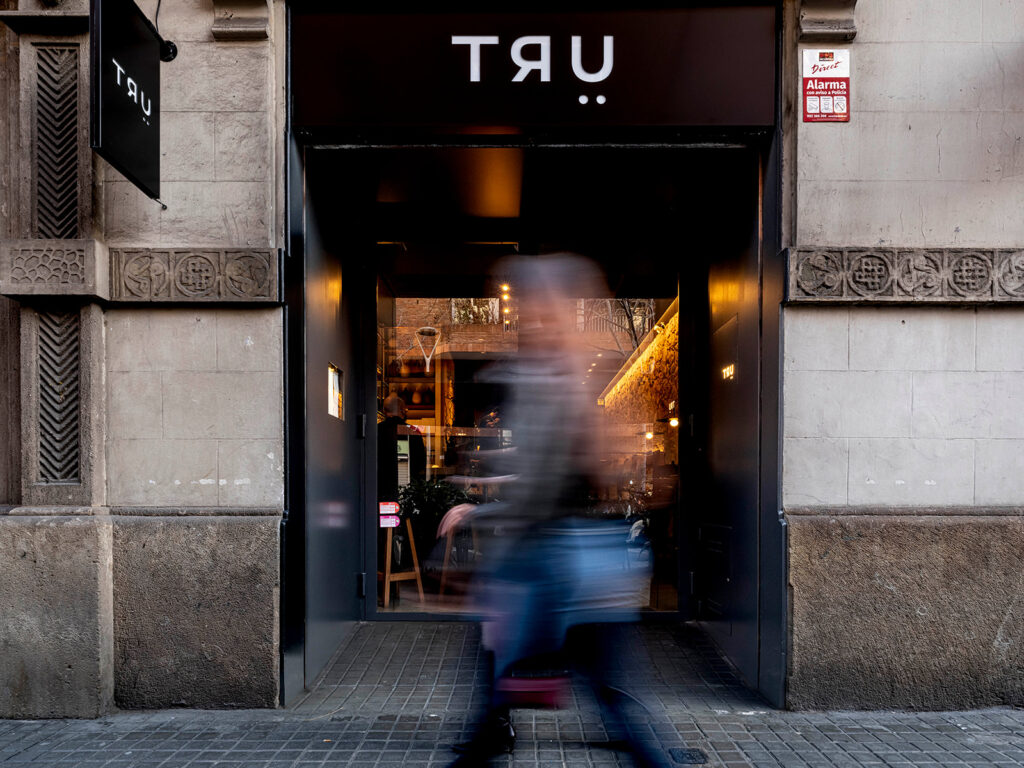
TRÜ, L’Antiga Esquerra de l’Eixample—a new project from chef Artur Martínez, and a standout. Martínez temporarily closed his Michelin-starred restaurant Aürt to find a better location, and TRÜ is where he and his team are cooking in the meantime. Their modern riffs on traditional Catalan dishes are inventive, gorgeous, and delicious. The kitchen—visible from the dining room—is the epitome of chill focus, and the restaurant carries a cool but approachable vibe. Ask the server for recommendations: our server described the Mediterranean rockfish soup as something his grandmother would have made, though the version on the plate is anything but traditional. The wine list also delivers, with enough variety to match the dishes on the menu. Here, we also asked for a recommendation and were surprised by a light red from Mallorca called Soca-Rel.
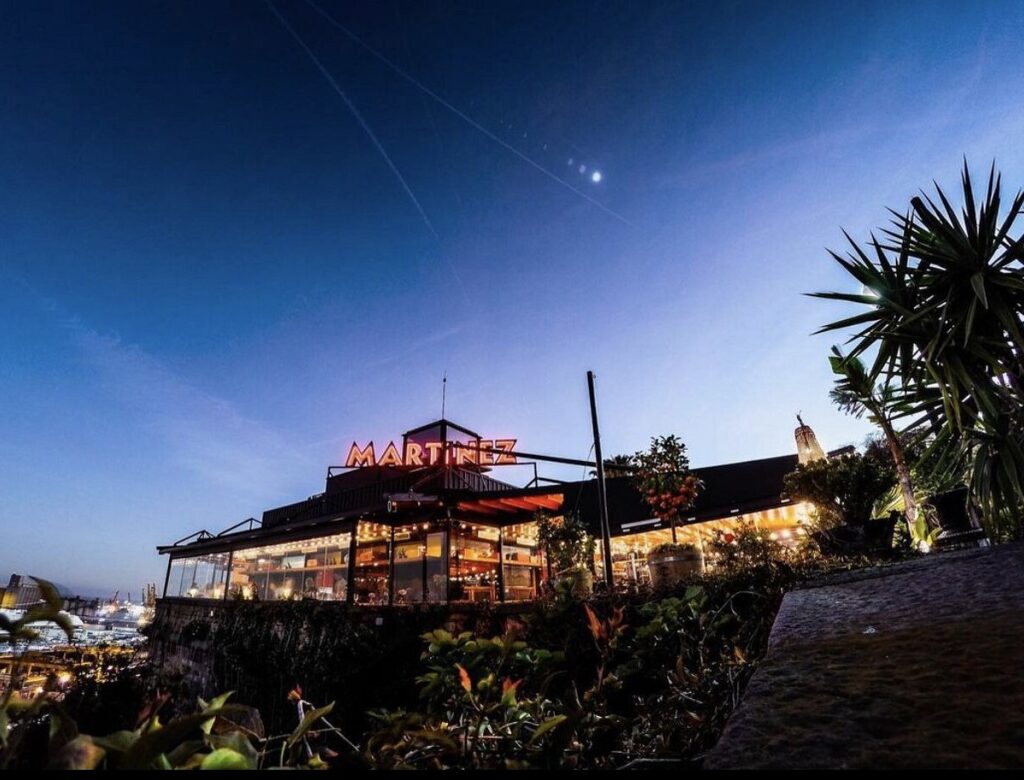
Martínez, Montjuïc—Martínez is a chic, high-end “chiringuito” (beach-style shack) overlooking the city, and the views are stunning. Mussels and paella are excellent here, and at 62 euros, the tasting menu with wine is a worthwhile way to go. Before dinner, walk the gardens of the five-star Hotel Miramar Barcelona, an urban resort tucked into the Montjuïc hillside, where the grounds look out over both the Mediterranean and the city—a good spot to sit above Barcelona and watch the light change over the water before dinner.
Lascar 74, Poble Sec—a ceviche and pisco bar located in the lively El Poble-sec neighborhood known for its high-energy, intimate vibe and masterful Latin American-Asian fusion seafood. A neighborhood favorite that is anything but touristy.
Bar Pimentel, El Born—chic and vibrant, Bar Pimentel is tucked into the heart of El Born. An elevated homage to traditional Catalan market cuisine, serving up modern dishes like patatas bravas and razor clams to pair with the wine of the day—for us, it was a perfectly chilled Catalan rosado, which truly helped offset the summer heat.
La Violeta, Barceloneta—in the Ciutat Vella district, one of the city’s best wine bars: rustic and unpretentious, with a fantastic list and the best gazpacho around (the rest of the food is equally good). Time your visit for vermouth o’clock, typically noon to 2 p.m. Served over ice, usually with a splash of soda and an olive or a slice of orange, the drink comes with something small to eat—anchovies, chips, olives, or a bi—af cheese. The point isn’t the drink exactly; it’s the pause. A reminder to stop moving for an hour or two and watch the city go by.

Day Trip: Penedès Wine Country
A day trip worth adding to any Barcelona itinerary: Penedès wine country, an hour by train from the city. Penedès has a winemaking history that stretches back roughly 2,700 years, to Phoenician traders who first planted vines here—one of the oldest wine cultures in Catalonia, if not quite Spain’s oldest (that distinction belongs to Jerez, settled by the Phoenicians a few centuries earlier).
The vineyards here today, however, are considerably younger: phylloxera wiped out most of the region’s plantings in the late 1800s, forcing a near-total replant that also shifted the region from mostly red grapes to the white varieties now used in cava. Familia Torres, founded in Vilafranca del Penedès in 1870 and now run by its Forneration, is one of Spain’s most celebrated producers. For good reason: the estate’s 1970 Mas La Plana Cabernet Sauvignon beat a lineup of Bordeaux first-growths at a blind tasting in Paris in 1979 and put Spanish wine officially on the world map.
The vineyard is so expansive it requires a tram to drive visitors around the property, cutting through terraced rows that climb from the coast toward Montserrat’s jagged silhouette on the horizon. The visit ends with a four-glass tasting paired with tapas bites. The tasting draws from vineyards spanning sea level to 700 meters in the Upper Penedès, a range that explains the breadth of what the region produces in a single afternoon’s driving distance. The place is always booked, so make a reservation, and plan to stay for lunch if a table opens up.
Where to Stay
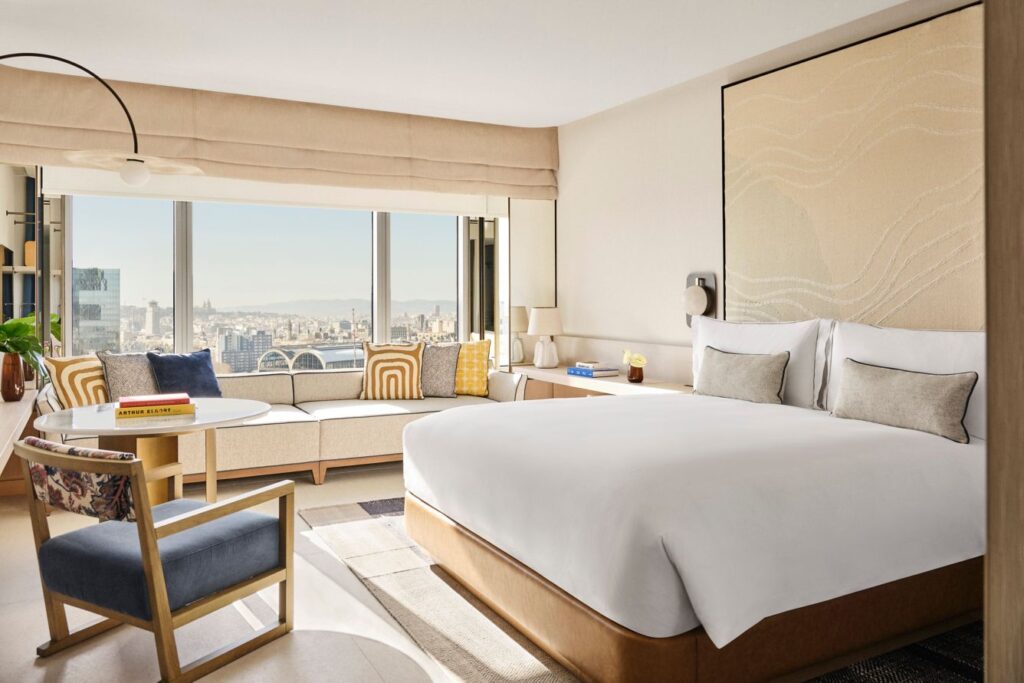
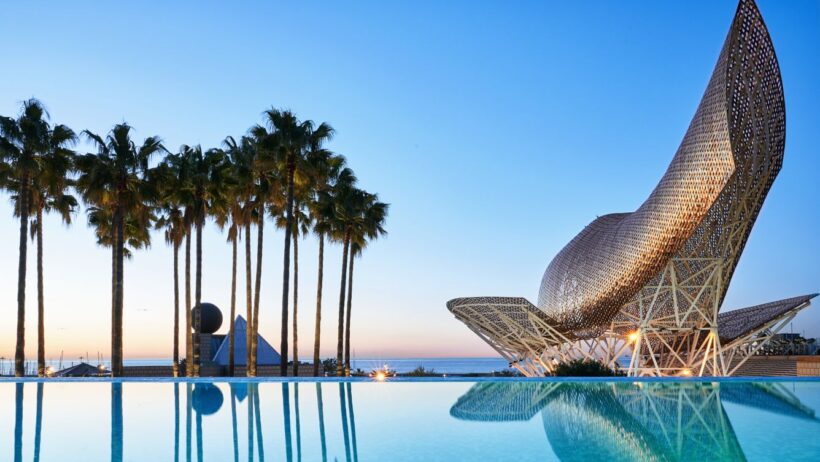
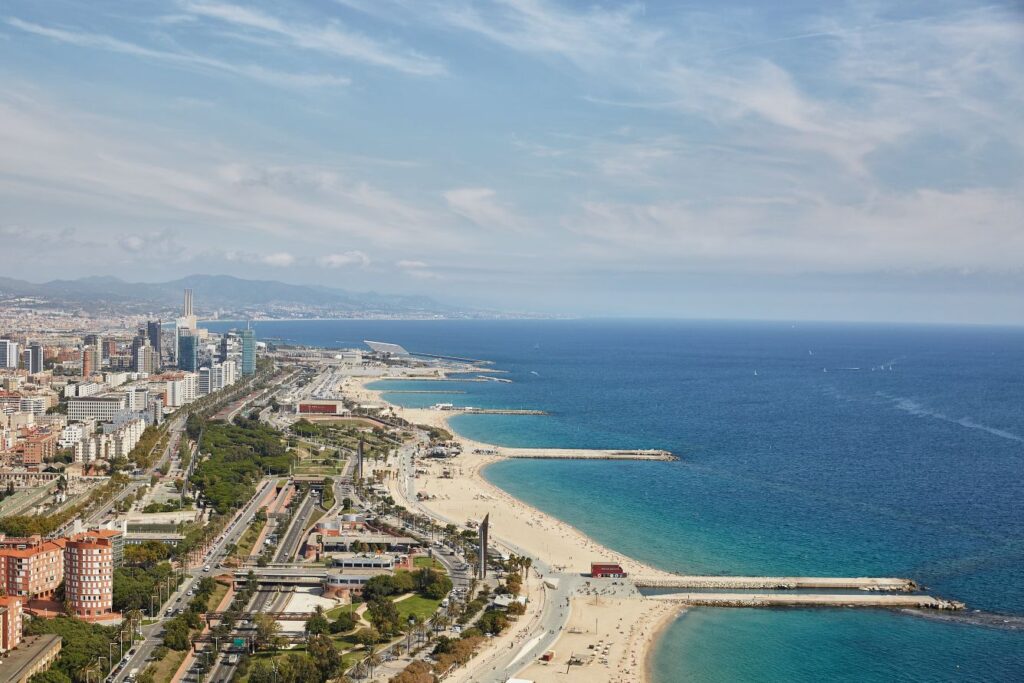
Hotel Arts Barcelona, a Ritz-Carlton property, occupies a 44-story tower on the seafront at Vila Olímpica, built for the 1992 Games and still one of the few true skyline landmarks the city allows itself. The location trades the Gothic Quarter’s tangle for direct beach access and unbroken sea views. Frank Gehry’s golden fish sculpture, El Peix, sits just outside; all 483 rooms have been fully reimagined in a recent redesign by Meyer Davis, and the two-Michelin-starred Enoteca, chef Paco Pérez’s dining room, anchors the food program.