The Power 100
The 100 Most Powerful People In Finance


From hedge funders to prosecutors, big bankers to regulators - plus a new #1 - here is Worth's annual list of the most powerful people in finance.


Portrait illustrations by Filip Peraić.
  •  

    Path to Power: A former Goldman Sachs bigwig, Draghi was head of Italy's central bank before becoming president of the European Central Bank in 2011.

    Power Play: Draghi oversaw the ECB's $640 billion loaan package to European banks in December 2011, and the Long-Term Refinancing Operation loan facility two months later. In early July 2012, he announced that the euro was "irreversible" and that the ECB would commit to a massive bond-buying program in order to save the eurozone. Despite some nitpicking, sighs of relief were emitted around the globe and international markets soared. The impact on Draghi's fortunes was equally significant: His announcement showed that he had corralled enough members of the ECB's governing board to form a consensus—not an easy bit of internal politicking. And by decisively committing the ECB to forceful intervention in the eurozone crisis, Draghi showed that he is more powerful in economic matters—and, by extension, the future of Europe—than any individual head of state. That influence carries across the Atlantic as well; Europe's uncertainty has placed a heavy drag on the U.S. recovery. Draghi's plan still faces challenges, in particular from the internal politics of participating countries. But there is more hope for an end to Europe's debt crisis now than there has been since it began, and much credit for that goes to Draghi.

  •  

    Path to Power: Gensler went from Goldman Sachs (where he spent 18 years and rose to co-head of finance) to government, working with former Treasury secretaries Robert Rubin and Lawrence Summers before being named CFTC chair in 2009.

    Power Play: Thanks to Gensler, both Wall Street and Washington are taking the CFTC seriously these days. The regulatory agency is investigating high-profile cases such as the MF Global collapse and the trading losses from JPMorgan Chase's London Whale. It's also pushing through new guidelines, including the Volcker Rule's proprietary-trading ban, stress tests for banks and firms that trade derivatives, and a segregation rule that protects customers from the risks of swaps trading.

  •  

    Path to Power: A graduate of Harvard Business School and Harvard Law School, Romney helped found Bain Capital and served as CEO of consulting firm Bain & Company. Shifting to politics, Romney lost a 1994 senate election in Massachusetts to Ted Kennedy before winning a gubernatorial campaign in 2002. He lost the GOP presidential primary to John McCain in 2008 before winning this year.

    Power Play: Romney has so far declined to elaborate on the specifics of his economic plans, but he has made clear that as president he would retain the Bush-era tax cuts, scale back President Obama's healthcare plan and minimize regulation of Wall Street, business and the environment. But he has been unable to convince voters that he can do a better job managing the economy than Obama can, and to some extent his own economic ideas have been upstaged by the more detailed plan of his running mate, Paul Ryan.

  •  

    Path to Power: After growing up on a Minnesota dairy farm, Stumpf started his banking career as a repo man for First Bank in St. Paul before making his way to Wells Fargo predecessor Norwest. After overseeing several mergers and acquisitions, he became CEO of Wells Fargo in 2007 and has since turned Wells into one of the country's biggest and healthiest banks, with a market value of $178 billion (the largest in U.S. and Europe).

    Power Play: Wells Fargo is one of the few banks that hasn't been stained with scandals this year, making Stumpf one of the few bank leaders who's actually leading. With a focus on service (each employee receives a 37-page book detailing how to treat customers), the bank has also gained traction in the U.S. mortgage market, now controlling one-third of all the country's mortgages.

  •  

    Path to Power: A graduate of Tufts and HBS, Dimon hitched his postcollegiate wagon to banker Sandy Weill and eventually helped him form Citigroup. Weill fired after a falling out in 1998, and Dimon became CEO of Bank One. When that bank was bought by JPMorgan Chase in 2004, Dimon became its president and COO.

    Power Play: Dimon led his bank largely unscathed through the financial crisis, but his halo imploded this year after reports of a JPMorgan trader making huge bets in London. In one of banking's great false prognostications, Dimon called the buzz over the London Whale "a complete tempest in a teapot." About $5.8 billion in losses later, that teapot tempest had knocked Dimon off his holier-than-thou pedestal and dicredited his antiregulatory rhetoric. Dimon's fall from grace seems to be weighing on him. When asked about speaking his mind by a reporter for New York magazine, he loudly declared, "This is not the Soviet Union... It's a free fucking country."
  •  

    Path to Power: After teaching at Harvard Medical School and working at the World Health Organization, Kim became the president of Dartmouth College in 2009. Three years later, he jumped ship to take the top job at the World Bank.

    Power Play: Kim, the candidate of the United States, was criticized early as having insufficient experience for the job, and his early moves seem crafted to shore up his international support.

  •  

    Path to Power: New York governor Andrew Cuomo appointed Lawsky to head the new state-created agency, overseeing banks and insurance companies, in the spring of 2011. A graduate of Columbia College and law school, Lawsky was an assistant U.S. attorney for over five years before becoming an aide, then chief of staff to Governor Cuomo.

    Power Play: In early August, Lawsky announced that his office had been investigating British bank Standard Chartered for "willful and egregious violations of law"—specifically, laundering some $250 billion of dirty money from Iran. The move shocked the cozy banking world and angered federal regulators, who whispered to helpful reporters that Lawsky was a "rogue" regulator who had "jumped the gun" and was sabotaging existing investigations. That argument collapsed within days when Standard Chartered agreed to pay the state a $340 million fine.

  •  

    Path to Power: U.S.-educated (Bryn Mawr, HBS) Botín worked at JPMorgan in the U.S. and Banco Español de Crédito in Spain and joined the board of the Santander Group in 1989. She became CEO of the Spanish bank's British division in late 2010.

    Power Play: Botín is a daughter of Santander Group's chairman Emilio Botín, and her ascendance to her current role is a strong sign that she will succeed him.
  •  

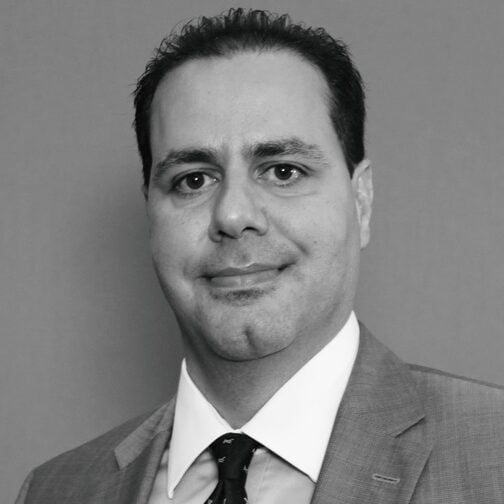
    Path to Power: Brainard was an economics professor at MIT and worked at McKinsey and the Brookings Institution before becoming deputy national economic advisor and deputy assistant to the president on international economics during the Clinton administration. She was confirmed to her current post by the U.S. Senate in 2010.
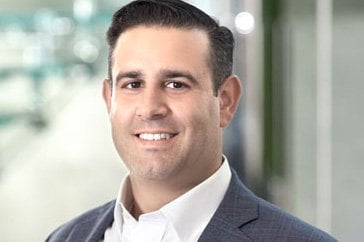
    Power Play: Brainard has worked quietly but forcefully behind the scenes in Europe this year, trying to make the case for bailouts to ease the eurozone's sovereign debt crisis. She is considered a critical force behind the International Monetary Fund's announcement that it would raise up $500 billion in new lending capital.

  •  

    Path to Power: As Drexel Burnham Lambert's M&A head, Black invented the notorious "highly confident" letters that his firm and other junk-bond-backed raiders used in the 1980s to batter down the defenses of corporate America. With Drexel circling the drain, he founded private equity firm Apollo Management in 1990.

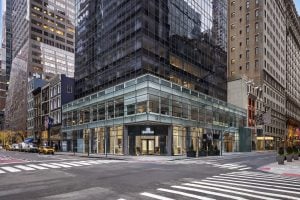
    Power Play: Apollo's investors have had a stomach-churning ride since the company went public in March 2011; its stock fell from $18 to $8.85 before recovering to about $13.50 this August. Black remains an aggressive bidder, acquiring Hotel Novotel New York Times Square, Taminco Group Holdings, Stone Tower Capital and EP Energy, all in the first half of 2012.

  •  

    Path to Power: Soros survived the Nazi occupation of Hungary and eventually fled to England, where he graduated from the London School of Economics. After making his way to New York, he founded Quantum Fund, an early hedge fund, in 1973. Quantum evolved into Soros Fund Management, which Soros converted into a family office last year after returning $1 billion to outside investors.

    Power Play: The billionaire still actively invests via his $25 billion SFO; in August, he nabbed an almost 8 percent stake in Manchester United, upped his investments in Walmart and Facebook, and dumped positions in JPMorgan, Goldman Sachs and Citigroup. The same month, the 82-year-old also began planning his third trip down the aisle after proposing to 40-year-old consultant Tamiko Bolton.

  •  

    Path to Power: The founder of financial information company Bloomberg LP, Bloomberg—at a reported worth of about $22 billion, one of the richest people in the country—won his first term as mayor in 2001, was reelected in 2005 and then successfully advocated a change in the New York City charter that allowed him to run for (and win) a third term.

    Power Play: Freed from the restraints of worrying about reelection and unlikely ever to run for president, the 70-year-old Bloomberg clearly feels liberated to push whatever issue he wants, from gun control and economic paralysis in Washington to the case against supersized sodas.